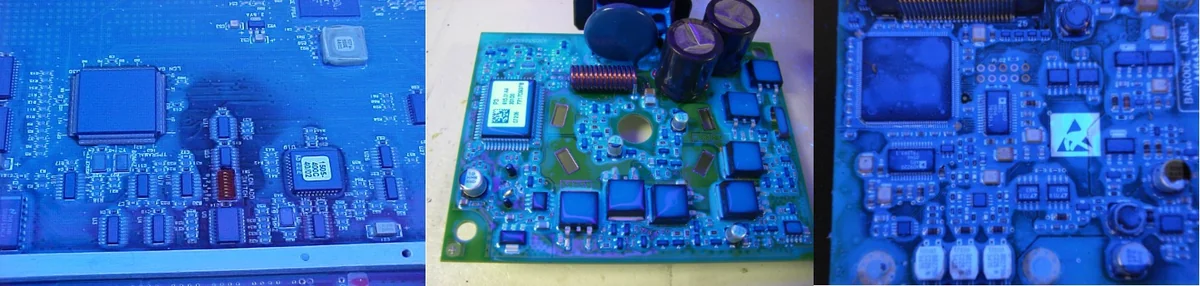
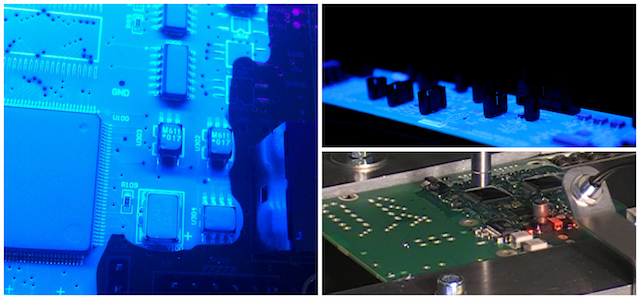
Understanding the difference between moisture resistance, water repellency and hybrid coating strategies for PCB protection
Many engineers choose conformal coatings to improve insulation performance, reduce moisture-driven failure risk and provide a protective barrier against contamination. However, standard liquid conformal coatings are not automatically hydrophobic in the true surface-energy sense, and that distinction matters when water exposure is part of the design concern.
Acrylics, polyurethanes and similar coatings can perform well against humidity and general environmental exposure, but they do not usually cause water to de-wet and roll away from the surface. Where that behaviour is required, the conversation shifts from conventional conformal coating performance to surface energy, hydrophobicity and, in some cases, hybrid coating strategies.
This article explains why standard acrylic conformal coatings are not normally water-repellent, where hydrophobic behaviour comes from, and when a hybrid approach may be worth considering.
What problem are engineers really trying to solve?
When users ask for a “hydrophobic conformal coating”, they are often combining two related but different requirements. One is conventional conformal coating performance such as dielectric protection, edge coverage and environmental shielding. The other is surface water repellency, where droplets bead on the surface rather than spread across it.
These are not identical properties. A coating can have strong moisture resistance without being strongly water-repellent, and a very thin hydrophobic treatment can repel water without delivering the same barrier behaviour or film build as a conventional conformal coating.

Hydrophobic performance is usually linked to low surface energy chemistry rather than standard conformal coating chemistry alone.
Key point: moisture protection and water repellency are related, but they are not the same engineering requirement.
Why standard acrylic coatings are not usually hydrophobic
Acrylic conformal coatings are widely used because they are practical, repairable and effective in many electronics protection applications. They can provide good insulation performance and useful resistance to humidity, particulates and general atmospheric exposure.
What they do not usually provide is a very low surface energy finish. Without that low-energy surface, water is more likely to wet the coating rather than ball up and move away from it. In practical terms, that means water droplets can spread across the surface instead of forming a more mobile bead.
This is why a standard acrylic coating may still be the right choice for many assemblies, but it should not automatically be described as hydrophobic unless that behaviour has been specifically designed into the coating system.
What makes a coating hydrophobic?
Hydrophobic behaviour comes from surface chemistry that makes it energetically unfavourable for water to wet the surface. Instead of spreading out, the water forms droplets with a higher contact angle and is more likely to roll or shed from the coated area.
This type of behaviour is commonly associated with fluorinated or other low-surface-energy thin-film technologies rather than traditional bulk conformal coatings. In electronics, that can include ultra-thin hydrophobic systems sometimes described as nano coatings, depending on the chemistry and application method involved.

Standard conformal coatings can resist moisture exposure, but a hydrophobic surface changes how water interacts with the coating. The left side shows an acrylic conformal coating. the right side shows a hydrophobic coating over the top of the acrylic coating.
Can acrylic and hydrophobic performance be combined?
In some cases, yes. The practical question is whether the assembly needs the film-build and protection profile of a conventional conformal coating plus an added hydrophobic surface effect. That leads to the idea of a hybrid system rather than a simple one-material answer.
A hybrid approach may involve a conventional coating layer supported by a low-surface-energy top surface or treatment. The goal is to retain useful conformal coating properties while improving surface water repellency. This is not automatically the best option in every application, but it can be valuable where both barrier protection and de-wetting behaviour matter.
For a broader engineering discussion of this approach, see our article on hybrid conformal and nano coating strategy for PCBs.
Reality check: a hydrophobic coating is not the same as immersion protection, and water beading alone should not be used as proof of long-term reliability.
Where hydrophobic behaviour may be useful
Hydrophobic behaviour can be useful where assemblies may see intermittent water contact, splash exposure or condensation events and where rapid shedding of water from the surface is desirable. It may also help reduce the tendency for water films to remain on the surface for extended periods.
Typical reasons for specifying this type of performance include:
- Reducing surface wetting in condensation-prone environments
- Supporting contamination resistance where water carry-over is a concern
- Combining conventional PCB protection with improved water shedding
- Exploring lower-profile alternatives to thick conventional coatings in selected cases
Comparison: standard acrylic vs hydrophobic thin film vs hybrid system
| Feature | Standard Acrylic Coating | Hydrophobic Thin Film | Hybrid Approach |
|---|---|---|---|
| Film build | Moderate conventional coating thickness | Very thin | Depends on system design |
| Water repellency | Usually limited | Usually strong | Potentially improved |
| Barrier-style protection | Strong in many applications | Application-specific | Can be balanced |
| Rework / handling implications | Generally familiar | Depends on chemistry | Needs evaluation |
| Best use case | General environmental protection | Ultra-thin water-repellent surfaces | Applications needing both functions |
Specification caution: do not confuse moisture resistance with hydrophobicity
This is one of the most common specification mistakes. A coating may pass internal moisture or insulation expectations without behaving as a visibly water-repellent surface. Equally, a coating that repels water may not replace the need for conventional thickness, coverage control or broader environmental testing.
The right solution depends on the real failure mode. If the problem is humidity-driven leakage, a conventional conformal coating may be entirely appropriate. If the problem is surface water retention or repeated wetting events, a hydrophobic or hybrid approach may deserve investigation.
For related process thinking, you may also find our article on nano coating PCB limitations useful when comparing ultra-thin and conventional protection strategies.

Surface wetting behaviour can look very different even when two coating systems are both described as protective.
Related articles
Why Choose SCH Services?
SCH Services supports customers with practical coating selection, process guidance and application support across conventional conformal coatings, advanced functional coatings and specialist protection strategies.
If you are comparing standard coatings, hydrophobic coatings or hybrid protection strategies, contact SCH Services to discuss the application in practical engineering terms.
This article is provided as general technical guidance only. Coating selection, hydrophobic performance and long-term protection suitability should always be validated against the actual operating environment, material compatibility, qualification requirements and relevant test standards.