Conformal Coating Removal Equipment
Controlled equipment for conformal coating and Parylene rework
When electronic assemblies require repair, modification, refurbishment or failure analysis, the coating often needs to be removed before work can begin.
SCH supplies specialist conformal coating removal equipment for both selective micro-abrasive rework and larger-area wet stripping. The appropriate method depends on the coating type, assembly construction and area that needs to be exposed.
SCH also uses coating removal and rework processes within our own technical and coating operations, allowing customers to evaluate representative assemblies before purchasing equipment where required.
Why Remove Conformal Coating?
- Component replacement, repair or modification
- Local access to pads, leads and solder joints
- Coating defects identified during inspection or testing
- PCB refurbishment and product life extension
- Engineering modifications and upgrades
- Failure analysis and reliability investigations
The objective is not simply to remove coating quickly. The removal method needs to provide sufficient access while minimising unnecessary damage to the PCB, components and surrounding materials.
Choosing the Removal Method
SCH supports two principal equipment routes:
- Micro-abrasive removal – primarily for selective, localised coating and Parylene removal
- Wet stripping – for larger-area or complete removal of compatible liquid-applied coatings
Coating chemistry, thickness, PCB construction, component sensitivity and the area requiring rework should all be considered before selecting the process.
Vaniman Master Problast ESD Micro-Abrasive Systems
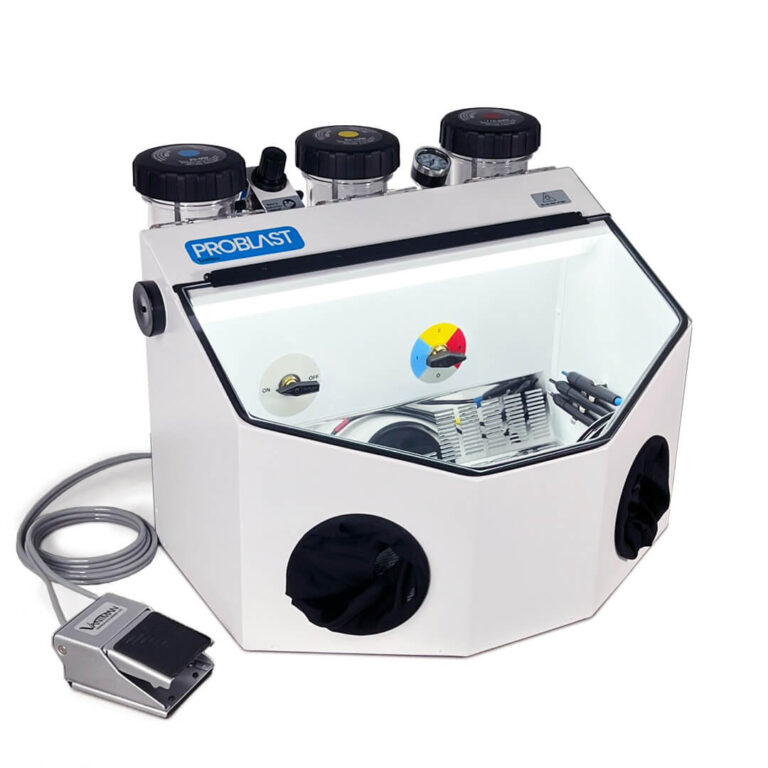
The Vaniman Master Problast ESD systems use controlled micro-abrasive blasting to progressively remove coating from selected areas of electronic assemblies.
Adjustable blasting pressure, precision handpieces and interchangeable tips allow technicians to expose components, pads, leads, solder joints and localised PCB areas while maintaining control over the removal process.
- Selective coating removal – suited to local PCB repair, modification and inspection
- Multiple coating types – applicable to Acrylic, Urethane, Silicone, Epoxy and Parylene, subject to process development
- ESD-controlled design – grounded work environment with ionised airflow
- Adjustable blasting pressure – parameters can be developed around the coating, media and assembly
- Application trials available – representative assemblies can be evaluated before equipment purchase
Dust Collection
Vaniman Problast systems require connection to appropriate dust collection during blasting. The dust collector removes blasting media and generated particulate from the cabinet and helps maintain visibility during the process.
SCH currently supplies the Vaniman StoneVac II as our standard dust-collection configuration for Problast systems, following Vaniman equipment recommendations.
Which Master Problast Do I Need?
For most PCB rework applications, SCH recommends the Master Problast 3 ESD. The larger Master Problast Titan ESD should be considered where the PCB, fixture or assembly cannot be comfortably manipulated within the standard chamber.
- Master Problast 3 ESD (P/N 80056) – internal working envelope approximately 516 mm W × 244 mm D × 241 mm H. View Master Problast 3 ESD →
- Master Problast Titan ESD – substantially larger working chamber for larger PCBs, fixtures and assemblies. View Master Problast Titan ESD →
Important: do not select the chamber solely on whether the PCB physically fits. Sufficient working space is required to manipulate, rotate and access the assembly during rework.
Not sure? Send SCH the maximum PCB, fixture or assembly dimensions and we can help identify the appropriate system.
Master Problast 3 ESD vs Titan ESD
| Best for | Problast 3 ESD: most PCB assemblies and routine selective rework Titan ESD: larger PCBs, fixtures and assemblies requiring additional working space |
| Working envelope | Problast 3 ESD: approx. 516 × 244 × 241 mm Titan ESD: larger chamber for oversized assemblies and fixtures |
| Removal process | Controlled selective micro-abrasive removal |
| ESD control | Grounded working environment with ionised airflow |
| Compressed air | Clean, dry compressed air required. Vaniman specifies a minimum of 90 PSI at 1.5 CFM and recommends 2.5 CFM or greater. |
| Dust collection | SCH standard configuration: Vaniman StoneVac II |
| Media | VanAcrylic is SCH’s standard starting point for many conformal coating and Parylene rework applications |
VanAcrylic Media for Electronics Rework
For many conformal coating and Parylene rework applications, SCH uses Vaniman VanAcrylic thermoset acrylic media as the standard starting point.
VanAcrylic allows coating to be removed progressively rather than relying on highly aggressive blasting media. This provides greater process control when working around components, solder mask and populated electronic assemblies.
Faster removal is not necessarily better. The objective is to remove sufficient coating for the required rework while minimising the risk of affecting the underlying assembly.
Learn more in our VanAcrylic blasting media guide →
Before Requesting a Problast Quote
To help SCH identify the appropriate system, provide:
- Maximum PCB or assembly dimensions
- Fixture dimensions, where applicable
- Coating type, if known
- Whether selective or larger-area removal is required
- Available compressed-air pressure and flow
Where the optimum process is uncertain, SCH can carry out an application trial using representative assemblies before equipment purchase.
WS100 Wet Stripping System
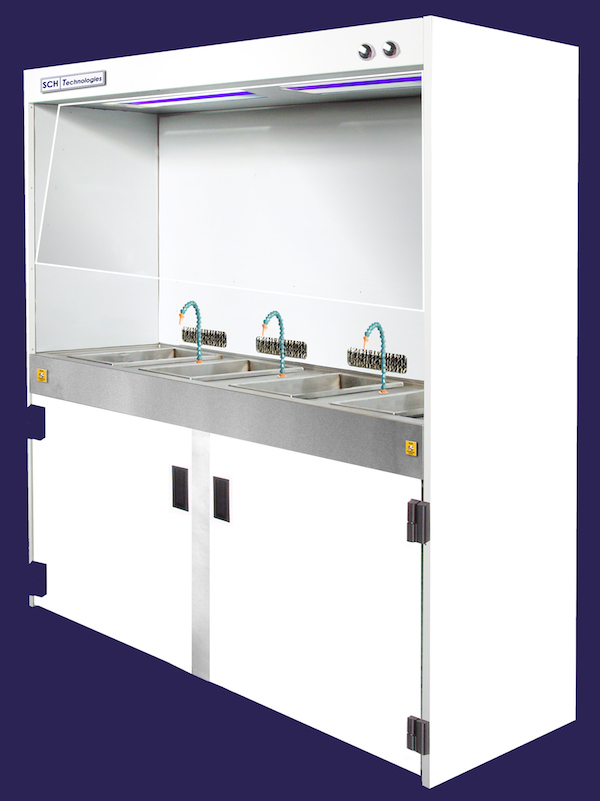
Where larger-area or complete coating removal is required, the WS100 provides a dedicated four-stage wet stripping workstation.
Assemblies are progressively processed through stripping stages, allowing compatible liquid-applied conformal coatings to be removed in a controlled production environment.
- Suitable for compatible liquid-applied conformal coatings
- Four-stage wet stripping process
- Suitable for larger-area removal and PCB refurbishment
- Dedicated process workstation with integrated lighting
- 150 mm extraction connection for integration with site extraction / LEV
Extraction / LEV
Where the WS100 is used with solvent-based stripping materials, suitable site extraction / Local Exhaust Ventilation is required.
The WS100 provides a 150 mm extraction connection. Required airflow and overall site extraction performance depend on the stripping chemistry, process and workplace and should be determined appropriately for the installation.
Parylene Removal & Rework
Parylene’s chemical resistance means that it is generally not suited to conventional wet chemical stripping. Selective micro-abrasion is therefore an important method for exposing pads, leads, solder joints and components for repair or modification.
The coating can be progressively removed from the required area using an appropriate abrasive media and controlled blasting parameters.
Before deciding whether to remove, repair and recoat a Parylene-coated assembly, see our Insight on whether Parylene can be removed and successfully reapplied.
SCH can also provide Parylene coating and technical support →
Equipment or Outsourced Rework?
Not every application requires customers to establish an in-house removal process. SCH can help determine whether equipment purchase or outsourced rework is the more practical approach.
Our UK facility provides conformal coating removal and rework services with inspection and re-coating options where required. Explore conformal coating rework services →
Removal & Rework Training
The removal process needs to be developed around the coating and assembly. SCH provides practical training covering coating removal, equipment operation, process development and rework techniques.
Training can be combined with coating inspection, repair and re-coating modules and adapted to the customer’s own equipment and assemblies.
Which Removal Process Is Right for Your Assembly?
If you are unsure whether micro-abrasion, wet stripping or outsourced rework is appropriate, send SCH details of the assembly and coating.
Useful information includes PCB dimensions, coating type, coating thickness where known, the area requiring removal, photographs and the reason for rework.
Useful Links
Why Choose SCH for Coating Removal Equipment?
SCH combines removal-equipment supply with practical coating and rework experience. This allows us to help customers consider the coating, assembly and removal process together rather than selecting equipment in isolation.
- 🛠️ Practical Rework Experience – Hands-on experience with conformal coating and Parylene processes
- 🧪 Application Trials – Representative assemblies can be evaluated before equipment purchase
- ⚙️ Process Support – Help with equipment, media selection and removal parameters
- 🎓 Training – Practical support for establishing the removal and rework process
- 🔄 Complete Process Support – Removal, inspection, repair and re-coating can be considered together
📞 Call: +44 (0)1226 249019 | ✉ Email: sales@schservices.com | 💬 Contact Us ›
Disclaimer: Coating-removal results depend on the coating material, thickness, PCB construction, components, substrate and removal parameters. Representative testing should be carried out before adopting a removal process for production assemblies. Equipment should be installed and operated in accordance with manufacturer instructions and applicable workplace requirements. Where solvent-based wet stripping requires extraction / LEV, the appropriate site system should be determined for the actual materials, process and workplace.