Hydrophobic Coating vs Conformal Coating for Electronics
Why water repellency is not the same as environmental protection
Hydrophobic coating vs conformal coating is a common comparison in electronics, but the two approaches solve very different problems.
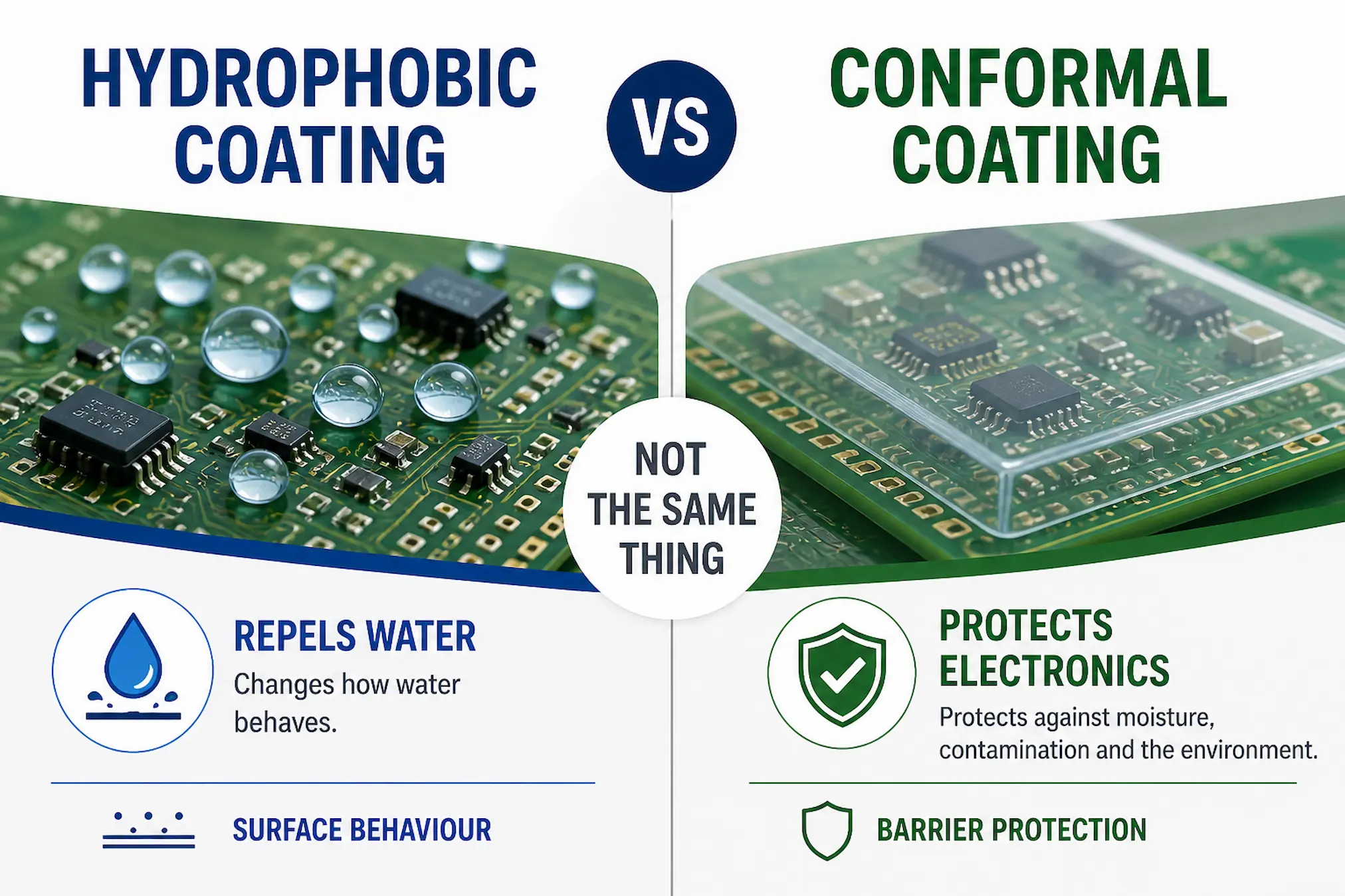
Hydrophobic coatings are designed to modify surface behaviour, causing water to bead and shed from a surface. Conformal coatings are designed to protect electronic assemblies from moisture, contamination and environmental exposure by forming a continuous protective film.
The key difference is simple: hydrophobic coatings change how water behaves, while conformal coatings protect against it. For full coating route selection, see the How to Choose the Right Coating guide.
Hydrophobic coatings and conformal coatings are often confused, but they solve different problems. This graphic shows the core difference between surface behaviour and environmental protection.
What Is the Difference?
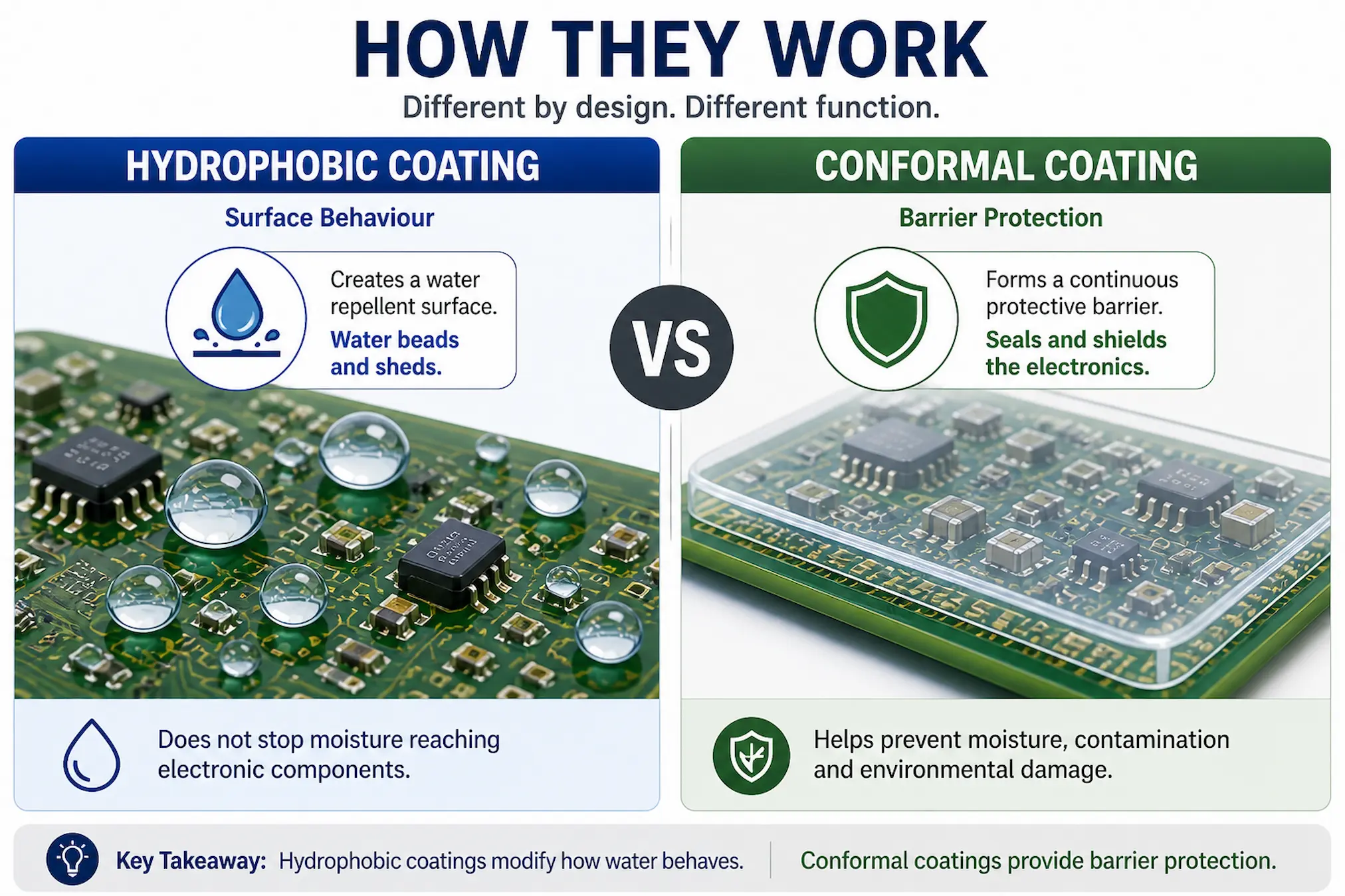
Hydrophobic coatings are surface treatments. Conformal coatings are protective systems. For a broader comparison of ultra-thin coating routes, see nano coating vs conformal coating.
The difference is not just what these coatings do, but how they work. Hydrophobic coatings act at the surface level, while conformal coatings form a continuous barrier that protects electronic assemblies from environmental exposure.
Important: Water Beading Does Not Equal Protection
A surface can repel water and still fail. Moisture ingress, corrosion and electrical failure can still occur. To understand this properly, see the surface vs film vs barrier guide and why hydrophobic coatings don’t protect electronics.
When Hydrophobic Coatings Are the Right Choice
- Water shedding or droplet behaviour is the main requirement
- Contamination or residue needs to be reduced
- Coating thickness must remain extremely low
- Masking must be minimised or avoided
- Surface behaviour is more important than protection
Hydrophobic coatings are often used where wetting control is required, not environmental isolation. See hydrophobic coatings for more detail, or review when to use hydrophobic coatings.
When Conformal Coating Is the Right Choice
- Condensation or humidity exposure is present
- Corrosion protection is required
- Electrical reliability must be maintained
- Contamination + moisture interaction is a risk
- Long-term environmental exposure is expected
Conformal coatings provide a continuous protective barrier designed to prevent failure mechanisms in real environments. See conformal coating solutions for more detail.
Typical Failure Scenario
A common mistake is applying a hydrophobic coating to an assembly exposed to condensation or humidity.
- Water beads initially, but remains present
- Moisture still reaches conductive surfaces
- Corrosion or leakage paths develop
- Electrical failure occurs over time
This happens because the coating modifies surface behaviour but does not provide a protective barrier. For boundary conditions and common misapplications, see limitations of hydrophobic coatings.
A common mistake is assuming that water repellency provides protection. In reality, hydrophobic coatings can allow moisture to remain on or around electronic components, leading to corrosion and long-term failure.
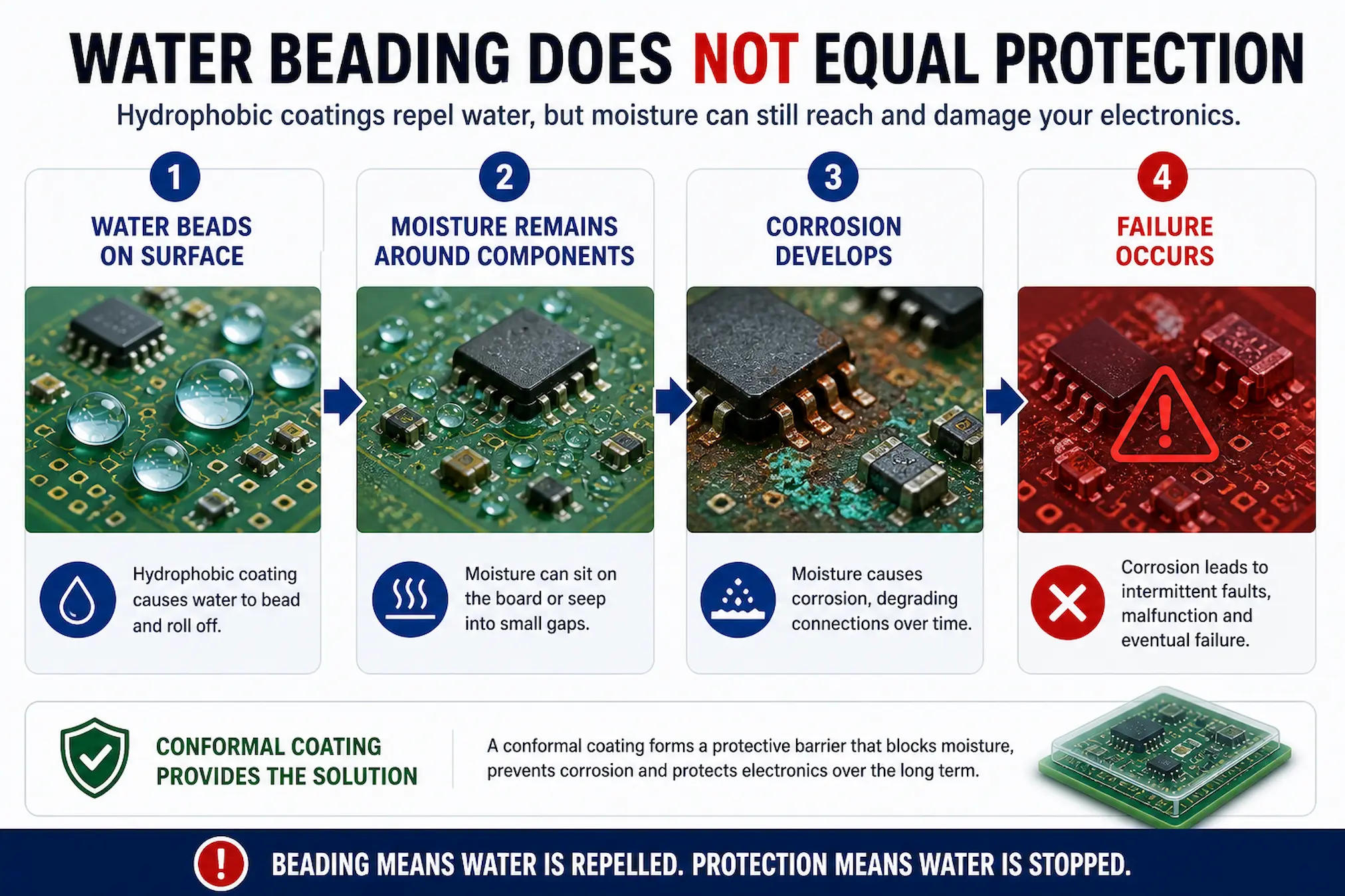
This failure mechanism is why hydrophobic coatings are not suitable for applications requiring environmental protection.
Need Help Choosing the Right Approach?
If you are unsure whether your application needs hydrophobic coating or conformal coating, SCH can review the part, environment and performance requirements before recommending a coating strategy.
Why Choose SCH Services?
SCH supports coating selection and application across hydrophobic coatings, conformal coatings and advanced functional coating systems.
📞 +44 (0)1226 249019 | ✉ sales@schservices.com | 💬 Discuss Your Application ›