Liquid Latex & Hybrid Barrier Systems – Sealing Tapes & Keep-Out Edges
Liquid latex masking and hybrid barrier techniques for conformal coating
Liquid latex masking is used where a simple shield is not enough and a true barrier seal is needed. This is especially important around connector edges, tape boundaries, recessed features and irregular keep-out zones where coating can creep underneath conventional masking.
In practice, liquid latex is most effective when treated as part of a controlled masking system rather than a last-minute fix. Used correctly, it can reduce leakage, edge creep and rework by sealing micro-channels that tapes, dots or boots may not fully close on their own.
This guide explains where liquid latex works, how hybrid barrier systems are built, and what process controls matter most for repeatable results. For broader masking selection logic, see masking material selection for conformal coating.
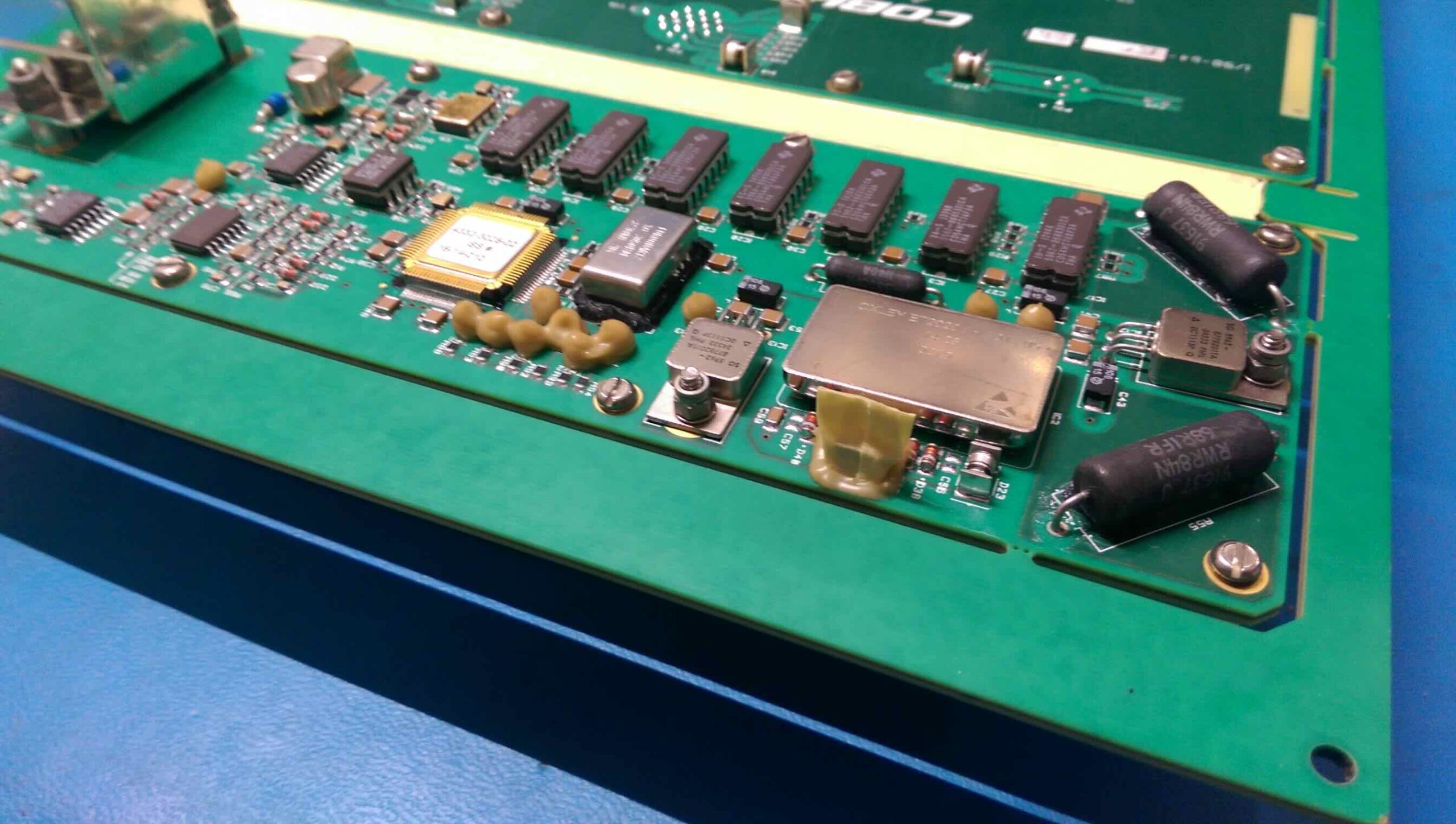
Liquid latex applied with masking tape to create a barrier seal around connector edges and critical keep-out areas.
What liquid latex masking does
Liquid latex masking forms a peelable film that blocks coating from entering defined areas. Unlike a simple masking shield, its value is in creating a continuous barrier where edge sealing matters.
- Seals tape edges and interrupted boundaries
- Protects component bases, stand-offs and irregular geometries
- Helps prevent under-mask creep and localised wicking
- Provides a peelable barrier for later removal
This makes latex particularly useful where coating behaviour is driven by capillary effects rather than simple overspray.
Shield masking versus barrier masking
A useful distinction is the difference between shield masking and barrier masking. Tapes, dots and boots often work as shields. Liquid latex is typically used when a true barrier is needed.
- Shield masking: blocks direct coating contact but may not seal every leakage path
- Barrier masking: closes gaps and channels where coating could creep underneath
In many real processes, the most stable result comes from combining both approaches rather than relying on one material alone.
Reality check: liquid latex is not automatically “better” than tapes or boots. It becomes valuable when geometry or process conditions demand barrier sealing rather than simple coverage.
Hybrid barrier systems: combining tapes and latex
Hybrid barrier systems use the positional accuracy of tapes, dots, shapes or boots together with the sealing performance of latex. This is often the most practical way to control difficult edges.
- Apply latex along tape edges to close micro-channels
- Use latex fillets around irregular bases or stand-offs
- Combine with dots or shapes for repeatable feature masking
- Use with boots where connector shielding is needed but vent paths remain
For general masking method selection, see conformal coating masking methods and materials.
Reality check: Liquid latex improves sealing but often creates a more irregular coating edge. Compared to clean tape or boot boundaries, latex edges are more prone to tearing or lifting during removal, so additional repair using coating or low-lint swabs should be expected. For a controlled repair method, see repairing lifted conformal coating edges.
Where hybrid systems work best
Hybrid latex systems are most useful where standard masking materials alone struggle to maintain a reliable seal.
- Connector edges and interrupted keep-out boundaries
- Recessed features and component bases
- Transitions from flat laminate to three-dimensional features
- Processes with higher risk of wicking or edge creep
Where connector interfaces are involved, this should also be considered alongside the wider guidance in protecting connector interfaces without conformal coating.
Process control and best practice
Liquid latex only performs well when application, cure and removal are controlled. Variation in film build, cure state or compatibility quickly turns it from a barrier into a defect source.
- Apply evenly and consistently to achieve a peelable, continuous film
- Allow full cure before coating to avoid blisters or instability
- Inspect sealing lines before coating, not after failure
- Control removal timing so the latex peels cleanly without residue
- Record materials and batch information where traceability matters
If latex performance varies significantly between shifts or batches, the issue is usually process control rather than the masking concept itself.
Selecting the right latex system
Latex selection should be based on coating chemistry, cure profile, storage stability and removal behaviour. There is no universal latex for every coating line.
- Natural latex: typically offers strong elasticity and peel strength but may be more sensitive to heat or ageing
- Synthetic latex: can offer improved chemical resistance and storage stability
Always validate latex compatibility on representative coupons before release into production.
Common failure points
Latex systems often fail for predictable reasons. Most are preventable if the material is treated as a controlled process input.
- Insufficient cure before coating
- Excessively thin film leading to tears or channels
- Poor compatibility with coating solvent or cure conditions
- Using latex to compensate for badly defined masking geometry
- Inconsistent application thickness between operators
For wider masking-related failure mechanisms, see why masking causes most conformal coating defects.
Related masking guidance
Why Choose SCH Services?
Partnering with SCH Services means more than just outsourcing — you gain a complete, integrated platform for Conformal Coating, Parylene & ProShieldESD Solutions, alongside equipment, materials and training, all backed by decades of hands-on expertise.
- ✈️ 25+ Years of Expertise – Specialists in coating technologies trusted worldwide.
- 🛠️ End-to-End Support – Coating selection, masking, inspection and process validation.
- 📈 Scalable Solutions – From prototypes to high-volume production.
- 🌍 Global Reach – Responsive support across Europe, North America and Asia.
- ✅ Proven Reliability – Built on quality, consistency and customer satisfaction.
📞 Call: +44 (0)1226 249019 ✉ Email: sales@schservices.com 💬 Contact Us ›