Parylene Coating Applications
Where Parylene Is Used Across Electronics, Medical and Harsh Environments
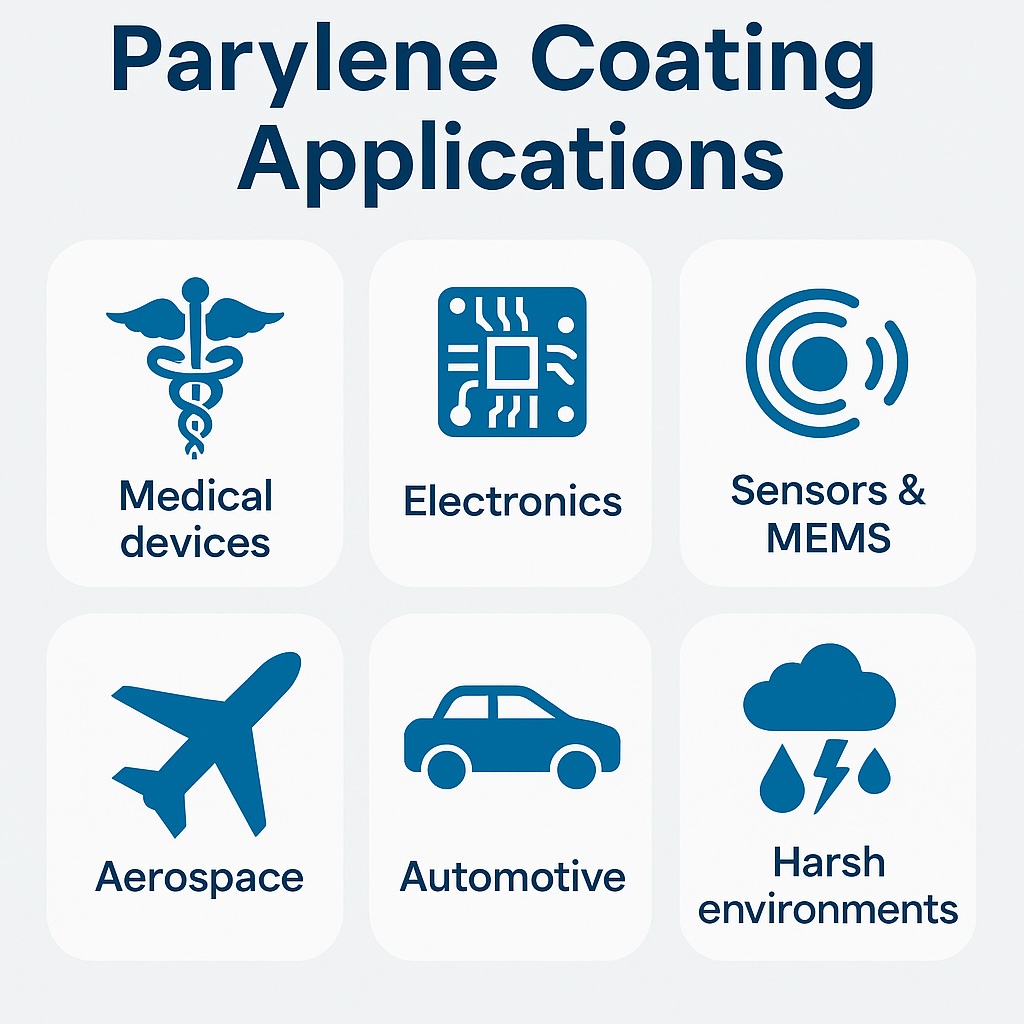
Parylene coating applications span a wide range of industries where long-term reliability, environmental protection and high performance are critical. This hub summarises the main ways Parylene is used across medical devices, electronics, aerospace, automotive, sensors and harsh-environment products.
Use this page as your starting point to understand where Parylene is used and why it is selected, then follow the links into detailed articles for sector-specific design guidance and case examples.
Medical Devices & Life Sciences
Parylene is widely used in medical and life-science applications because it is biocompatible, ultra-thin and chemically inert. Typical uses include implantable components, surgical instruments, diagnostics, wearable devices, neurostimulation hardware and precision medical sensors.
The coating helps medical OEMs manage bodily fluid exposure, cleaning and sterilisation cycles, friction reduction and electrical isolation without changing the form factor of the device.
Learn more: Parylene for Medical Devices
Electronics & PCB Assemblies
Parylene provides pinhole-free, 360° protection for printed circuit boards and high-reliability electronic assemblies. Key uses in electronics include corrosion protection for PCBs, isolation for high-voltage circuits, environmental protection for exposed connector pins and protection of miniaturised components.
Because Parylene is applied from the vapour phase, it coats edges, gaps and cavities that liquid conformal coatings often miss, helping to reduce latent failures in harsh service environments.
Learn more: Parylene Coating for PCB Protection
Sensors, MEMS & Miniaturised Components
Parylene is ideal for sensors, MEMS and miniaturised devices where low mass, stable dielectric properties and precise film thickness are important. Typical applications include pressure sensors, flow sensors, accelerometers, environmental probes, medical sensing elements and small-form-factor industrial sensors.
These Parylene coating applications protect delicate elements from moisture, contamination and handling damage while preserving the sensitivity and response of the sensor.
Learn more: Parylene for Sensors & MEMS
Aerospace & Defence Electronics
In aerospace and defence, Parylene is chosen for mission-critical electronics that must operate reliably under vibration, altitude, humidity and chemical exposure. Typical applications include flight control electronics, avionic modules, environmental monitoring systems, fuze electronics and ruggedised communication hardware.
The coating helps extend service life, support high reliability and reduce field failures in safety-critical platforms.
Learn more: Parylene in Aerospace & Defence
Automotive & EV Systems
In modern automotive and electric vehicle platforms, Parylene is used to protect electronics exposed to temperature extremes, road spray, oils, fuels and vibration. Typical applications include engine bay sensors, battery management systems, power electronics, ADAS modules and under-body electronics.
These uses support long-term performance in demanding under-hood and chassis environments where conventional coatings may struggle.
Learn more: Parylene for Automotive Electronics
Harsh-Environment & Consumer Products
Parylene coatings are also used across consumer, industrial and harsh-environment products where exposure to moisture, salt spray, chemicals or dust can quickly damage electronics. Typical examples include marine instrumentation, outdoor monitoring systems, robotics, agricultural sensors, wearables, hearing aids and drones.
These Parylene coating applications focus on extending service life, preventing corrosion and maintaining performance in aggressive real-world conditions.
Learn more: Parylene for Harsh Environments
Technical Resources Supporting Parylene Applications
For more detailed information on Parylene material properties, coating grades and process considerations that underpin these applications, explore the following resources:
Need Help Evaluating Parylene Coating for Your Application?
Whether you are at concept stage or refining existing designs, SCH can help you assess suitable Parylene coating applications, select the right grade and define masking, thickness and inspection strategies.