Orange Peel in Conformal Coating
Orange peel is a surface texture defect where the cured conformal coating develops a rough, dimpled finish (like orange skin). It’s usually a flow/levelling problem linked to viscosity, wet film build, spray setup, flash-off, airflow and cure behaviour.
For the complete index of defect types and links to each article, use the Conformal Coating Defects Hub.
Related articles: Orange peel is often treated as a material issue, but it is usually driven by process conditions such as viscosity, atomisation, airflow and flash-off control. For a wider explanation of how these factors interact, see Why Conformal Coating Processes Fail.
This is also the kind of finish-control issue that high-reliability workmanship guidance tries to prevent through disciplined process setup, inspection and verification. For the broader NASA-style process view, see What NASA Gets Right About Conformal Coating.
📄 Download:
Orange Peel defect bulletin (PDF)

Article Quicklinks
| Topic | More |
|---|---|
| Definitions: what orange peel is and why it matters | 🔗 |
| How it forms: mechanisms & “tell-tale” signs | 🔗 |
| Root Causes: process, material, equipment, airflow | 🔗 |
| Prevention: control window & recipes | 🔗 |
| Troubleshooting & Diagnosis: isolate the mechanism | 🔗 |
| Repair: when to accept, touch-up vs strip & recoat | 🔗 |
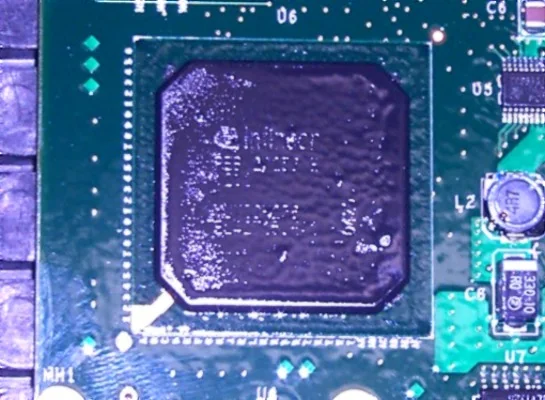
What is Orange Peel in Conformal Coating?
- Definition: a rough, dimpled, pebbled surface texture (often dull) caused by incomplete levelling of the wet film before it “locks”.
- Why it matters: orange peel is evidence the film didn’t flow out correctly. In real assemblies this can mean local thin areas, inconsistent edge build, and a less robust moisture barrier in demanding environments.
- Common on the line: a uniform pebbled texture, sometimes worse in high-airflow zones, around tall components, or where the spray pass is “dry”.
How Orange Peel Forms (Mechanisms)
- Dry spray / pre-flash in-flight: droplets partially dry before reaching the PCB. The deposited film can’t merge into a continuous, smooth surface.
- Levelling stops too early: viscosity/solids too high or rapid surface drying means the film “freezes” before texture can relax.
- Low wet film build: there isn’t enough wet film thickness to self-level (common with aerosols, fast passes, or over-conservative settings).
- Airflow-driven skinning: extraction/drafts accelerate surface evaporation on edges/high points, locking in texture.
- Cure profile locks the surface: aggressive early heat or UV exposure can set the surface before flow-out completes.
Pattern clue: if the texture is worst where airflow is highest or in the direction of the spray pass, suspect dry spray / airflow / distance / atomisation. If you see craters/islands/bare patches, route to de-wetting.
Root Causes of Orange Peel
Spray setup & technique
- Excessive spray distance → solvent flashes in-flight → “dry spray”.
- Over-atomisation / too much air → fine droplets + high shear → rapid solvent loss and texture.
- Imbalanced atomising vs fluid pressure → poor droplet coalescence and weak flow-out.
- Fast passes / low overlap → low wet film build → insufficient self-levelling.
Material condition
- Viscosity too high / solids too high → film resists flow and “freezes” early.
- Solvent imbalance (evaporation in pot/line) → increased texture risk and poor levelling.
- Surface tension gradients (mixed substrates or mild contamination) → uneven flow-out and exaggerated texture at boundaries.
Environment & cure behaviour
- High extraction / local drafts across the wet film → accelerated surface drying and skinning.
- Low temperature / unstable conditions → inconsistent evaporation and levelling.
- Flash-off / cure profile issues → inadequate flash before heat cure, or an oven ramp that skins too quickly.
Sanity check (look-alikes): If you see voids/pits rather than texture, route to pinholes, bubbles & foam. If the surface is rough because the film has micro-cracked, route to cracking.
To verify finish, thickness and coverage acceptance criteria, use a defined inspection plan from the Inspection & Quality Hub.
How to Prevent Orange Peel
Stabilise the control window
- Control viscosity: measure/record and keep within a validated range (manage solvent loss).
- Build wet film correctly: multiple controlled passes with defined flash-off rather than one dry, under-built pass.
- Control flash/cure behaviour: avoid rapid surface locking; use a profile that allows levelling before set.
Remove “dry spray” conditions
- Optimise gun distance: reduce excessive stand-off that causes in-flight flash.
- Balance pressures: avoid over-atomisation; match atomising and fluid settings to the head/nozzle.
- Lock a recipe: record distance, speed, overlap, head/nozzle, pressures, viscosity, flash and cure (then train/audit to it).
Manage booth airflow
- Avoid excessive extraction directly over wet film and reduce local drafts that “skin” the surface.
- Keep conditions stable so evaporation and levelling are repeatable across shifts.
Troubleshooting & Diagnosis
1) Confirm the pattern (fastest win)
- White-light + UV inspection: confirm it is texture (not craters/voids) and map where it is worst.
- Correlation: does it track airflow zones, edges/high points, or gun pass direction?
2) Check the three big levers
- Viscosity/solids: verify the material is inside the validated window.
- Spray recipe: head/nozzle, distance, fan width, overlap, and pressures (compare to the known-good recipe).
- Airflow & flash/cure: look for skinning from drafts/extraction or early ramp/over-aggressive set.
3) Validate the fix with a controlled trial
- Adjust one variable at a time (distance, atomising pressure, viscosity, pass build, airflow).
- Pattern boards: keep a before/after reference set and record settings so the improvement is repeatable.
📄 If you want the condensed version for your team: download the PDF bulletin.
Repair: When to Accept, Touch-Up vs Strip & Recoat
- Cosmetic-only texture: if thickness/coverage are compliant and acceptance criteria allow, orange peel may be acceptable.
- Risk indicators: if orange peel is accompanied by thin areas, poor edge definition, or marginal coverage in required zones, treat as a process defect.
- Robust correction: if the mechanism is “dry spray / locked film”, stripping and recoat is often the fastest route to a consistent finish (then fix the recipe so it doesn’t repeat).
For removal workflows and best-fit methods, see the Removal & Rework Hub.
Looking for Other Defect Types?
This page covers orange peel. For the complete index of defect types and links to each technical article:
Training on Conformal Coating Defects
SCH offers conformal coating training that goes beyond theory—recognising and preventing orange peel, pinholes, bubbles, foam, de-wetting, delamination, and cracking. We cover process analysis, troubleshooting, materials selection, NPI and application methods.
Industry Standards We Work To
SCH Services aligns coating services, training, equipment supply and materials to relevant IPC standards, including:
- IPC-A-610 – Acceptability of Electronic Assemblies
- IPC-CC-830 – Qualification & Performance of Conformal Coatings
- IPC-HDBK-830 – Conformal Coating Handbook (guidance and best practice)
For further details on IPC standards:
electronics.org/ipc-standards ↗
Explore Topic Hubs
Conformal Coating Processes Hub
Conformal Coating Equipment Hub
Conformal Coating Masking Hub
Conformal Coating Design Hub
Conformal Coating Defects Hub
Inspection & Quality Hub
Removal & Rework Hub
Standards Hub
Parylene Basics Hub
Parylene Application Hub
Why Choose SCH Services?
You gain a complete, integrated platform for Conformal Coating, Parylene & ProShieldESD—plus equipment, materials and training—backed by decades of hands-on process support.
- 🛠️ End-to-End Support – Selection, masking, inspection and troubleshooting.
- ✅ Process Discipline – Recipes, control windows and repeatability.
- 🌍 Global Reach – Support across Europe, North America and Asia.
📞 Call: +44 (0)1226 249019 | ✉ Email: sales@schservices.com | 💬 Contact Us ›