How to Spray Coat a PCB | Conformal Coating Step-by-Step Guide
Manual spray and aerosol conformal coating: cleaning, masking, spraying, curing and inspection
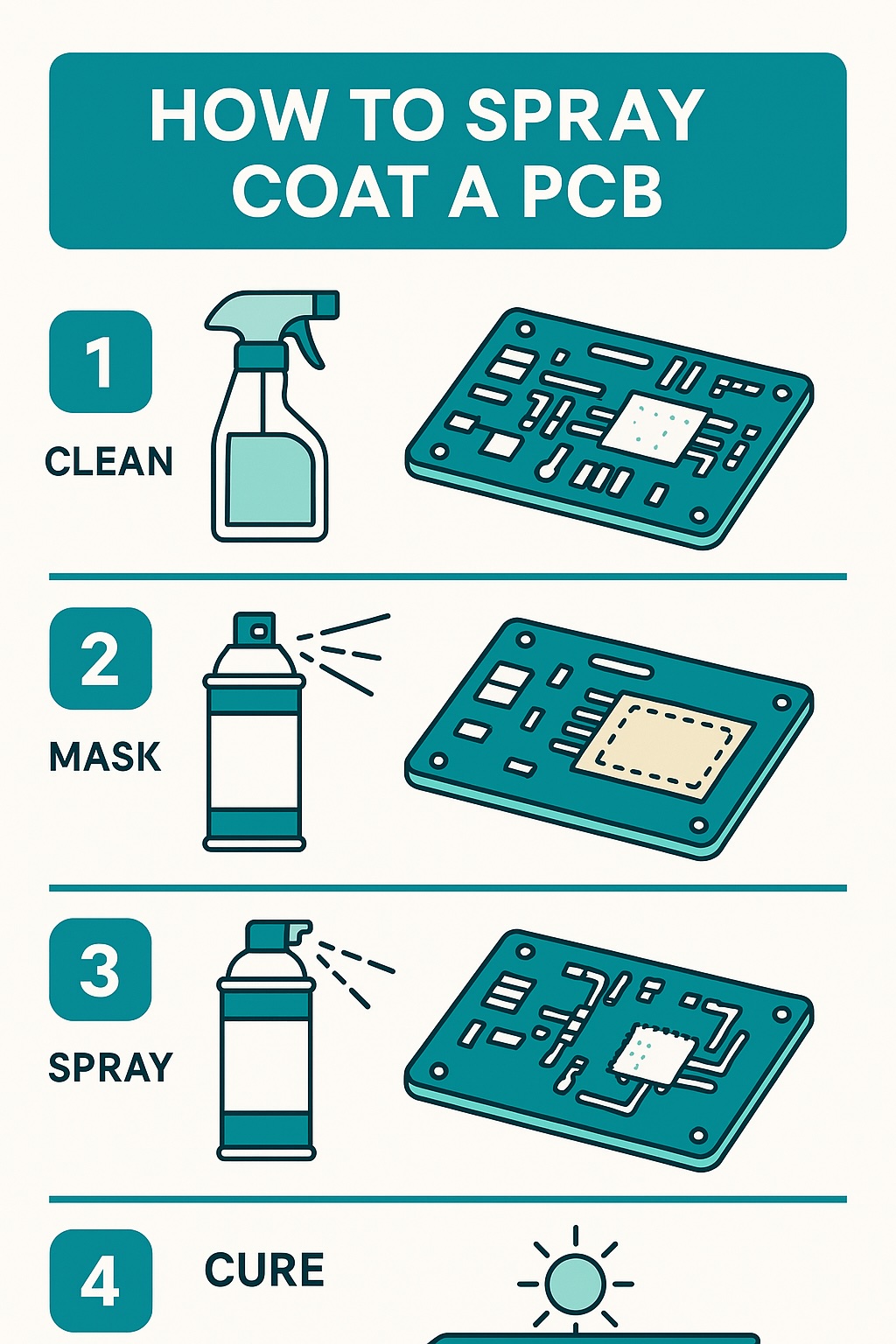
Spray application is one of the most widely used methods for applying conformal coating to printed circuit boards (PCBs).
It is ideal for prototypes, low-to-medium volume manufacturing and rework. This guide walks you through cleaning, masking, spraying, curing and inspecting a PCB using manual or aerosol-based conformal coating techniques while preventing common defects such as bubbles, de-wetting and orange peel.
1) Tools & Materials You’ll Need
- Conformal coating: aerosol or material blended to the right viscosity for a spray gun (acrylic, polyurethane, silicone, etc.)
- Spray equipment: aerosol can or HVLP spray gun
- Masking materials: tapes, dots, liquid latex, reusable boots or shields
- PPE: gloves, safety glasses, fume extraction or spray booth
- Inspection tools: UV light, white light, wet film gauge, PosiTector (dry thickness gauge)
2) Step 1 – Clean & Prepare the PCB
Conformal coating adheres best to a clean, dry PCB. Remove flux residues, dust, oils and ionic contamination using IPA wiping, DI water wash and bake, ultrasonic cleaning or engineered cleaning solutions. Ensure moisture is completely removed, particularly from connectors and under components, and avoid touching cleaned surfaces with bare hands.
3) Step 2 – Mask Components That Must Not Be Coated
Mask any areas where conformal coating is not allowed: connectors, switches, gold fingers, test pads or keep-out zones.
- Barrier masking: tapes, dots or liquid mask—ideal for flat areas and pads
- Shield masking: reusable boots or caps for connectors—fast and consistent
- Liquid mask: useful for odd geometries, but must fully cure before spraying
Learn about masking strategies and how to mask for barrier protection in the Masking Hub.
4) Step 3 – Set Up Your Spray Environment
- Temperature: 18–25 °C
- Humidity: < 60% RH
- Airflow: use a spray booth or extraction system with good UV lighting
- Aerosol prep: shake for 1–2 minutes
- Spray gun prep: mix coating to correct viscosity and set pressure to 15–25 psi
- PCB position: flat or tilted at 45° for good visibility and drainage
5) Step 4 – Spray the Conformal Coating
Technique: Hold the spray 15–25 cm from the PCB and use smooth, steady passes with approximately 50% overlap. Spray horizontally, then rotate the board 90° and repeat to help coverage around component sides and achieve an even film. Keep moving during the spray—pausing causes runs and pooling.
Target film thickness: around 30–75 µm wet, resulting in 10–50 µm dry depending on the coating system and specification.
Avoid: spraying too close (runs, bubbles), too thick (solvent entrapment, cracking), or too far (dry spray, orange peel).
6) Step 5 – Flash-Off and Cure
- Flash-off: allow a minimum of 2–5 minutes between coats and follow manufacturer instructions
- Multiple coats: apply thin layers rather than one heavy coat
- Curing: air-dry or force-cure at 60–80 °C (follow coating datasheet)
- UV-curable coatings: use correct UV lamp exposure if applicable
7) Inspection & Quality Control
- Visual inspection: check for full coverage, no bubbles, pinholes, skips or bridging
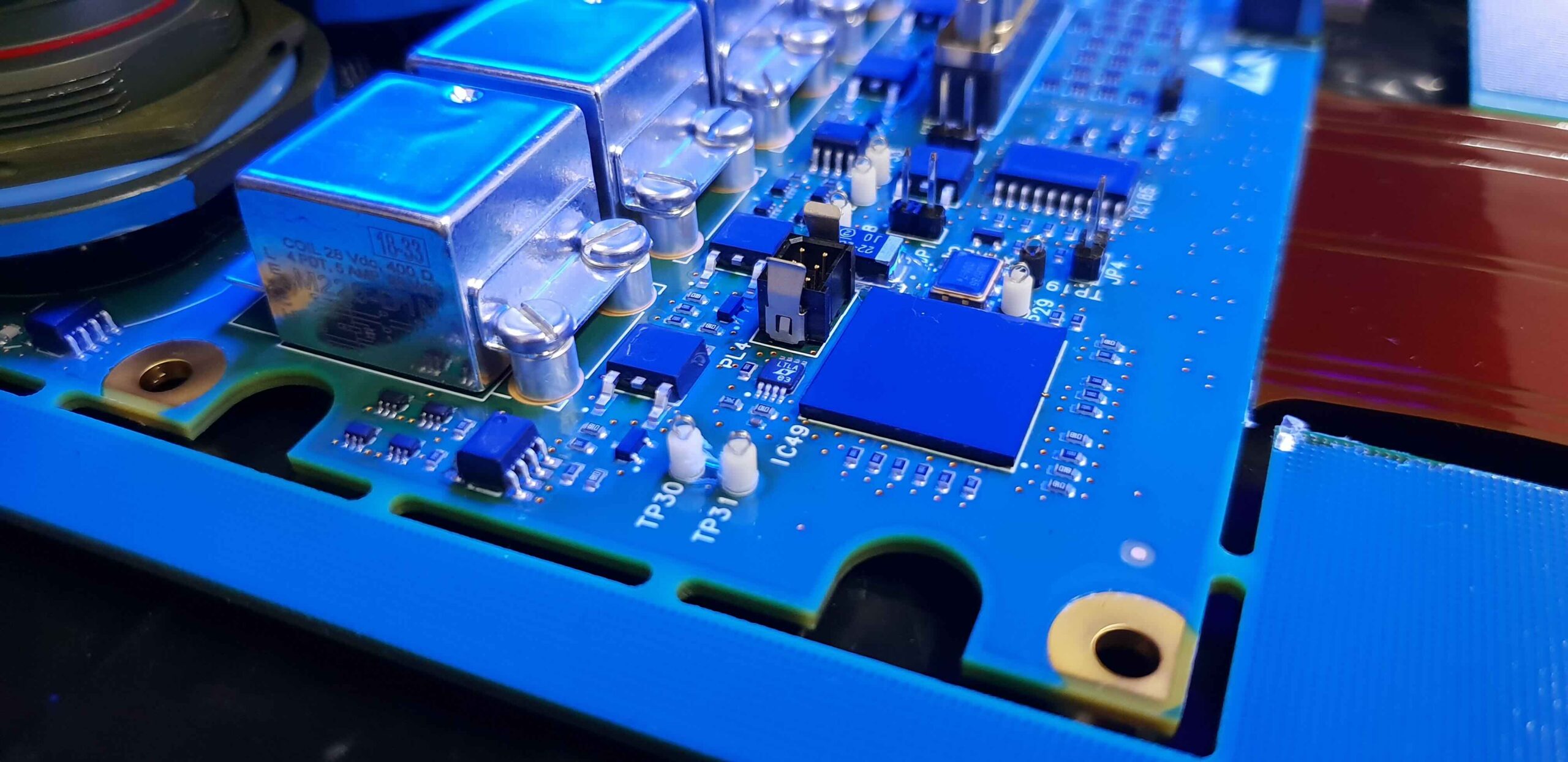
- UV check: use UV light if the coating fluoresces to reveal thin areas or misses
- Thickness verification: wet film gauge or dry film measurement (PosiTector)
- Standards: verify compliance with IPC-A-610 and IPC-CC-830 criteria
8) Common Defects and How to Prevent Them
Defect: Bubbles / Foam
Typical cause: over-aggressive shaking, high humidity, spraying too close / too heavy, trapped solvent.
Prevention: control RH, maintain distance, apply thin coats, allow flash-off, avoid whipping air into material.
Defect: Orange Peel
Typical cause: cold material/PCB, viscosity too high, dry spray (too far), airflow too aggressive.
Prevention: stabilise temperature, verify viscosity window, correct distance/pressure, reduce dry-spray conditions.
Defect: Dewetting / Fish Eyes
Typical cause: surface contamination (oils, flux residues, silicone), poor cleanliness control.
Prevention: improve cleaning/handling discipline, verify cleanliness, avoid silicone exposure, do not touch after clean.
Defect: Runs / Sags
Typical cause: too much material per pass, pausing while spraying, spraying too close.
Prevention: multiple thin coats, steady movement, correct distance, allow flash-off between coats.
Defect: Mask bleed / leakage
Typical cause: poor tape adhesion, wrong masking choice, unsealed edges, contamination.
Prevention: use proper masking, burnish/seal edges, validate under UV before spray, consider reusable boots for connectors.
9) Training & Industry Standards
If you want to develop skilled operators or achieve repeatable, audit-ready conformal coating processes, formal training is essential.
SCH provides hands-on training in spray coating, masking, inspection and IPC-A-610 / IPC-CC-830 acceptability standards, delivered on-site or at our training centre.
For official guidance on conformal coating inspection criteria and acceptance limits, you can also refer to the IPC standards:
- IPC-A-610 – Acceptability of Electronic Assemblies
- IPC-CC-830 – Qualification & Performance of Conformal Coatings
To discuss training or certification pathway for your team, contact us here.
10) Useful Links & Next Steps
- Masking Techniques: Shield vs Barrier (Masking Hub)
- Defect Library: Pinholes, bubbles, dewetting, cracking (Defects Hub)
- Removal & Rework: How to strip conformal coating safely (Rework Hub)
- Equipment: Spray booths, manual systems (Equipment Hub)
Why Choose SCH Services?
Manual spray coating only looks simple when the surrounding process is under control. SCH Services helps customers improve cleaning, masking, spray technique, inspection and operator training so manual and aerosol coating work becomes more consistent and less defect-prone.
- 🎯 Practical Spray-Coating Support – Guidance on masking, spray technique, flash-off, cure and common defect prevention.
- 🛠️ End-to-End Support – Help with coating selection, masking, inspection and wider process discipline.
- 📈 Scalable Solutions – From prototype batches and rework through to more controlled production workflows.
- 🌍 Global Reach – Responsive support across Europe, North America, and Asia.
- ✅ Proven Reliability – Built on quality, consistency, and customer satisfaction.
📞 Call: +44 (0)1226 249019
✉ Email: sales@schservices.com
💬 Contact Us ›