Mon - Thur 7.30-15.30   Fri 7.30-14.00

How ProShield ESD Fits Into the ESD Control Pyramid


Controlling electrostatic discharge (ESD) is not about a single product or measure—it’s about building layers of protection. The ESD Control Pyramid is a useful way of visualising this: grounding forms the base, conductive and dissipative materials provide the structure, and anti-static measures help at the top to prevent charge build-up.

At SCH Services Ltd, our ProShield ESD coatings integrate seamlessly into this pyramid, covering the entire range from conductive (10⁴ Ω) through dissipative (10⁹ Ω), ensuring permanent, reliable static control for modern manufacturing.

The Base: Grounding and Conductive Materials
At the bottom of the pyramid sits grounding. Conductive materials (10³–10⁴ Ω) provide a fast, direct path to discharge static energy safely into the ground.

⚡ How ProShield helps: By offering coatings at the conductive range, ProShield can be applied to fixtures, housings, or components that need a reliable path to ground—without resorting to costly molded conductive plastics.

The Middle: Dissipative Materials
Above grounding, the pyramid relies on dissipative materials (10⁴–10⁹ Ω) to control the speed of discharge. This is where most ESD-sensitive environments, like electronics, aerospace, and medical, need protection.

⚡ How ProShield helps: ProShield ESD coatings are engineered to be permanent dissipative solutions. Unlike filler-based paints that degrade or molded parts that are expensive, ProShield provides homogeneous, long-lasting protection across surfaces, ensuring charge dissipates safely without damaging sensitive electronics.

The Top: Anti-Static Measures
Finally, anti-static materials sit at the top of the pyramid. They prevent charges from generating in the first place. While they can’t remove existing charges, they minimise triboelectric effects caused by friction and separation.

⚡ How ProShield helps: ProShield integrates well into anti-static environments by ensuring that, if a charge does appear, it is either dissipated or conducted away safely—completing the pyramid of protection.

Why ProShield Outperforms Traditional Solutions
Many businesses rely on traditional ESD paints or molded ESD plastics, but both have limits:
❌ Paints = filler clumps, uneven coverage, reapplication needed
❌ Molded plastics = costly tooling, limited design flexibility, inconsistent resistivity

ProShield is different:
✅ Covers 10⁴–10⁹ Ω in one scalable solution
✅ Permanent and homogeneous (no fillers, no reapplication)
✅ Works on standard plastics, foams, housings, fixtures, and floors
✅ Eliminates the need for costly specialty paints or molded parts.

The ProShield Advantage in the Pyramid
The ESD Control Pyramid requires all three layers to function effectively. With ProShield ESD coatings, you gain:

⚡ Conductive protection at the base
✅ Dissipative performance in the middle
🔒 Compatibility with anti-static measures at the top

By bridging every level of the pyramid, ProShield ESD offers industries a smarter, permanent, and cost-effective way to achieve complete static protection—all without the compromises of older technologies.

For more information, please visit: ProShield ESD

Why less mistakes are made with conformal coating masking boots


Conformal coating masking boots reduce mistakes in handling and coating printed circuit boards (PCBs).

The simple reason is that when using tape there is a higher level of skill involved in applying it to the printed circuit board. When placing a boot over a component it is a lot simpler. Therefore, the conformal coating is less likely to leak.

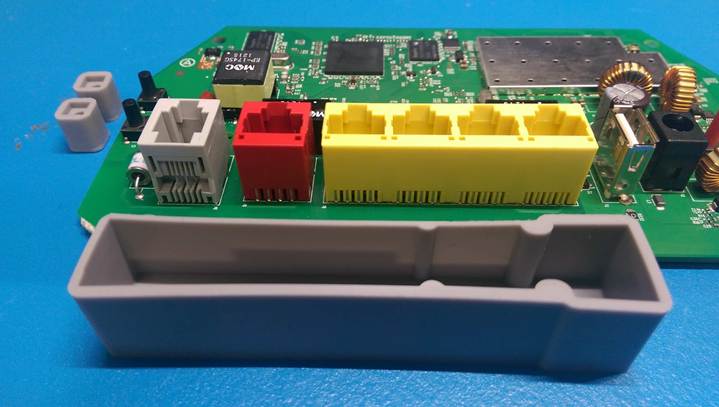
Conformal coating masking boots used on Printed circuit board as an alternative to masking tapesThree reasons conformal coating masking boots save you money
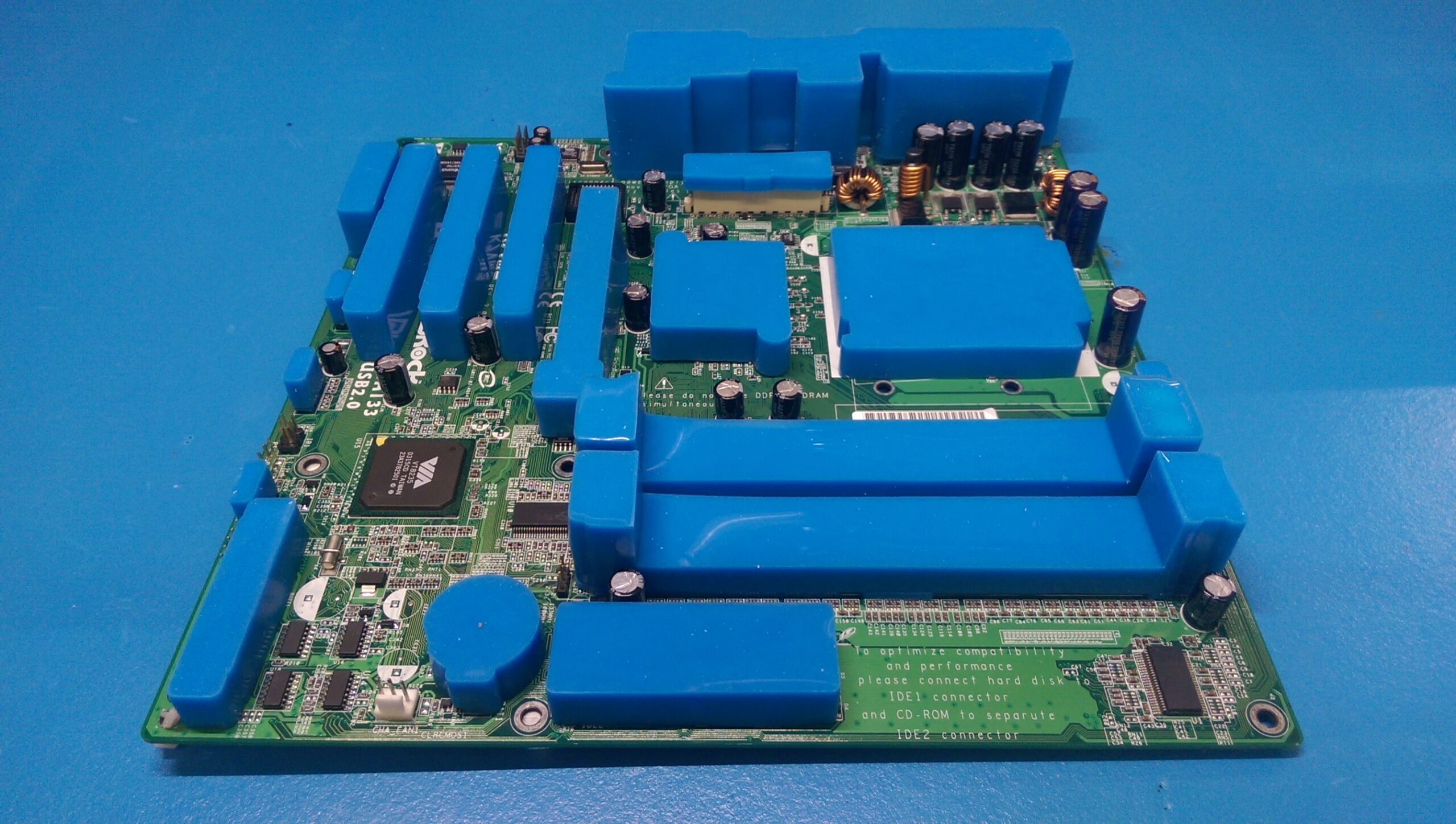

Here are three simple reasons that can save you up to 80% of your costs when using reusable masking boots compared to other conformal coating masking methods:

  1. Masking time is reduced because using boots can be 4-5 times quicker than masking tape.
  2. De-masking time is reduced since it is much quicker to remove boots
  3. Masking boots don’t leak. Therefore, there is less repair due to masking mistakes.

This means you can save a lot of money very quickly when switching to masking boots and reduce the mistakes made during the conformal coating process.

Call us on +44 1226 249019, email us at sales@schservices.com or click contact us to send us your requests.


How Custom Masking Boots Reduce Cost, Time and Risk in Conformal Coating


Custom conformal coating masking boots are an effective alternative to traditional masking materials such as tapes, dots, and liquid latex for protecting components from conformal coating ingress on printed circuit board assemblies.

While conventional masking methods can work, the masking and de-masking process is often labour-intensive and time-consuming, significantly increasing overall production costs. In many applications, masking and removal can account for over 75% of the total conformal coating process time and cost, particularly in medium- and high-volume production.

Three reasons to switch to reusable conformal coating masking boots

Using recyclable masking boots as an alternative to masking tapes, dots, and latex

Here are three good reasons to change to masking boots and save up to 80% of your costs compared to traditional methods like masking tape and dots:

  1. The masking time is reduced significantly. Masking boots can be 4-5 times quicker to use than masking tape.
  2. De-masking time is reduced significantly. Again it is much quicker to remove masking boots than tape.
  3. Masking boots don’t leak as easily as masking tape. So, there is less likely to be repaired.

These reasons mean you can save a lot of money very quickly when switching to masking boots.

Want to find out more about conformal coating masking boots?

Contact us now to discuss your conformal coating masking boot requirements and let us explain how we can help you.


Requirements for setting up a conformal coating facility


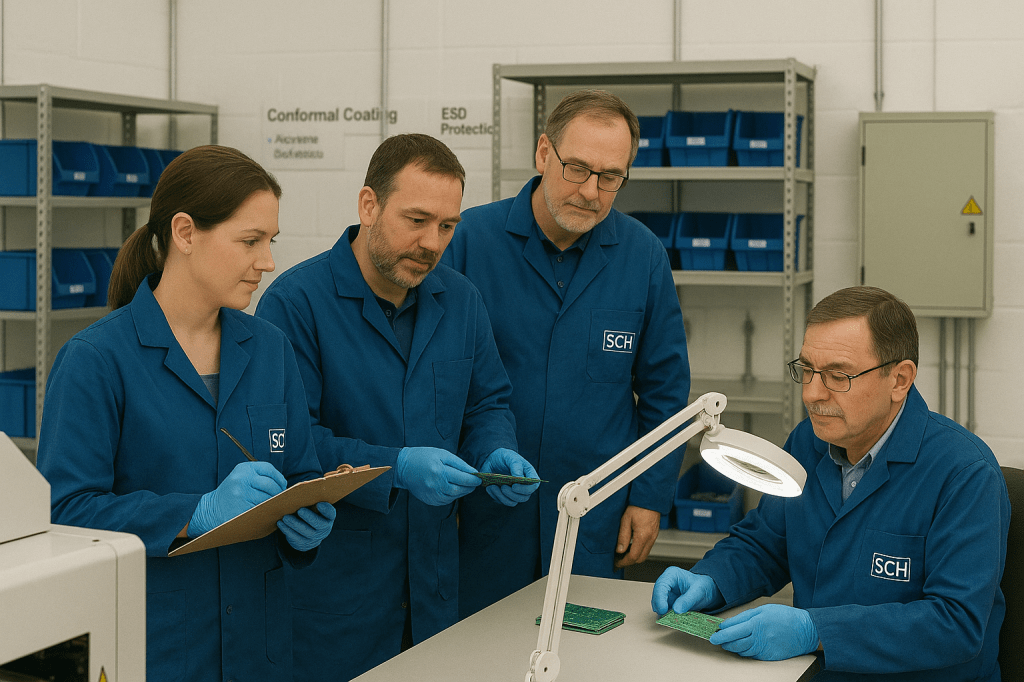
Conformal coating application and inspection at SCH Services

The set up of a conformal coating production line regardless of the application method has many similar characteristics.

Any coating facility will need the basic requirements put in place that would be standard for any piece of electronic manufacturing process. These include ESD systems, facilities for the machines, the environmental requirements and the normal Health & Safety (HSE) considerations.

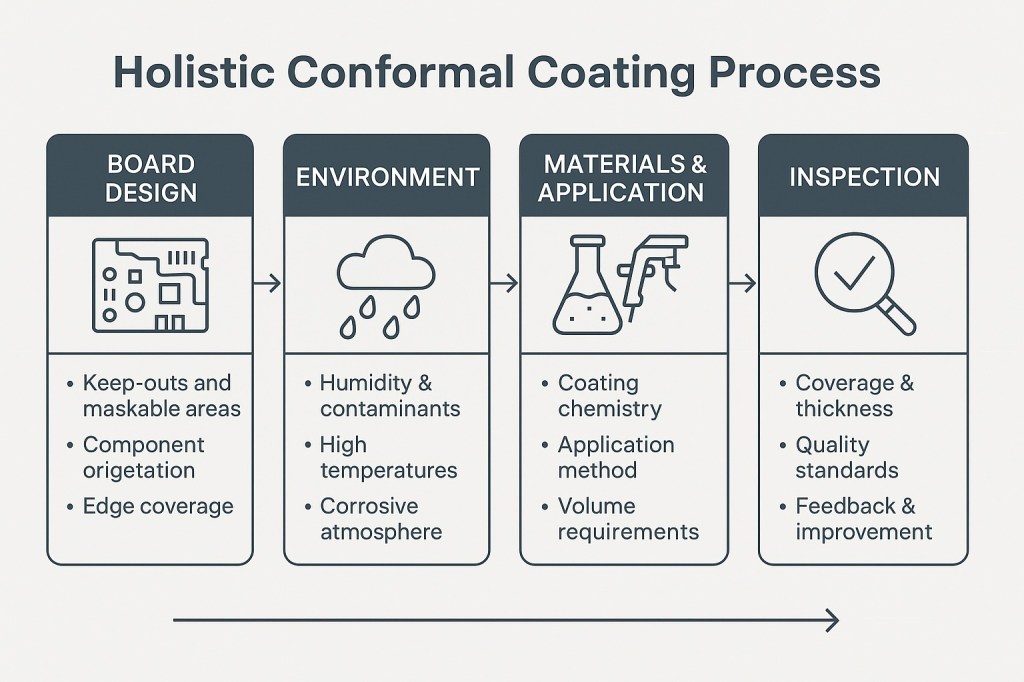
Also, the conformal coating production line, whether it is an operator manually brush coating printed circuit boards (PCBs) or an inline robotic spray coating process is typically made up of several stages. These stages are shown below:

Conformal coating process chart illustrating key stages and controls

Not all the stages are mandatory or may be required.  However, each should be considered on an individual basis.


Planning to set up a conformal coating facility?

Explore our Conformal Coating Processes Hub and read the detailed guide: How to set up a conformal coating production line. The article covers equipment selection, process flow, quality control and scale-up considerations for reliable, repeatable coating operations.

Prefer to talk it through? Our engineers can review your requirements and help you plan a coating facility that fits your volumes, materials and compliance needs.

Contact SCH to discuss your conformal coating setup ›

Three key points you should know about polyurethane conformal coatings when using them for protecting electronic circuit boards


SCH Services UK conformal coating facility and operations

A polyurethane (urethane for short and designated UR by IPC) conformal coating is part of the organic family of coating materials that also includes the acrylic and epoxy coatings.

Here are three key facts to consider when examining polyurethane conformal coatings:

  1. Most conformal coatings provide good humidity and moisture protection although some are slightly better in performance than others. UR type coatings are just as good on average as acrylic materials.
  2. A polyurethane coating has traditionally been used to protect electronic circuit boards against chemical attack due to their excellent chemical resistance. This protection allows electronic circuit boards to survive in highly aggressive environments and atmospheres such as the aerospace, military and industrial sectors. However, it does make repair a little more difficult as chemical resistance to a coating means more difficult to remove.
  3. Times are changing and whereas acrylic conformal coatings used to dominate 70-80% of the market, there is a shift in emphasis towards alternative materials due to higher specifications for protecting electronics. Many new conformal coatings (UV cure, two part thin film coatings) now comprise of urethane resin bases and are becoming more popular in high volume sectors such as automotive electronics. This is because the urethane resin lends itself to this type of technology more easily than the acrylic based resins.

Want to find out more about polyurethane conformal coating?

Contact us to discuss your needs and let us explain how we can help you.

Contact us now.

What are conformal coating masking boots and why do they save you money?


Conformal coating application and masking process at SCH Services facility

Reusable conformal coating masking boots are a highly cost-effective alternative to traditional masking tape.

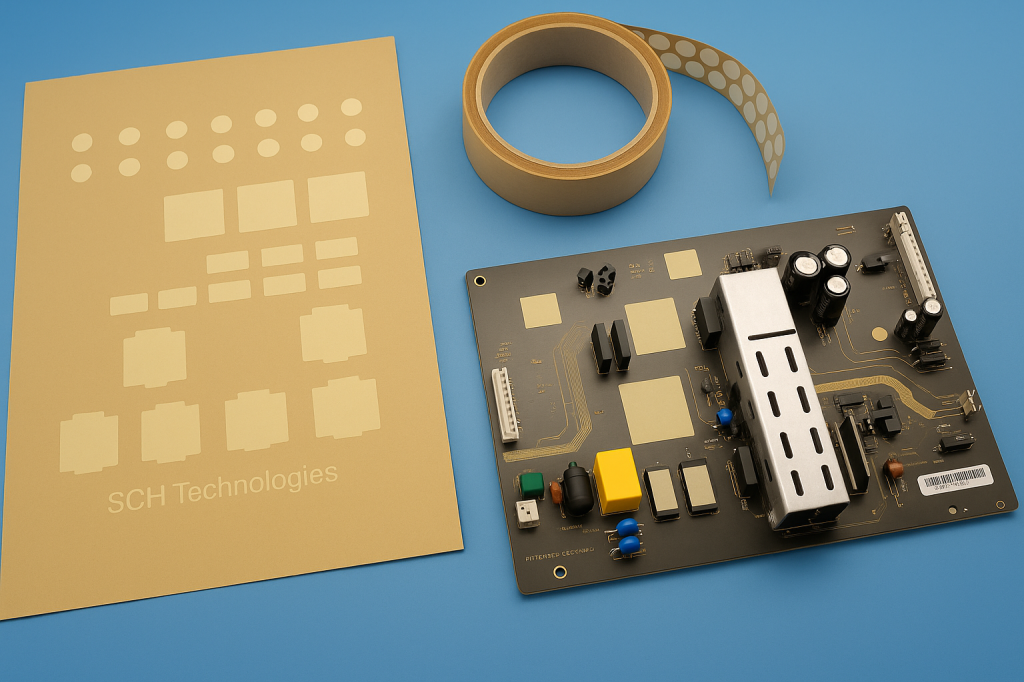
Many components on printed circuit boards must remain uncoated during the conformal coating process. The purpose of masking is to prevent migration of coating materials into connectors, contacts, and defined keep-out areas where coating would cause functional or reliability issues.

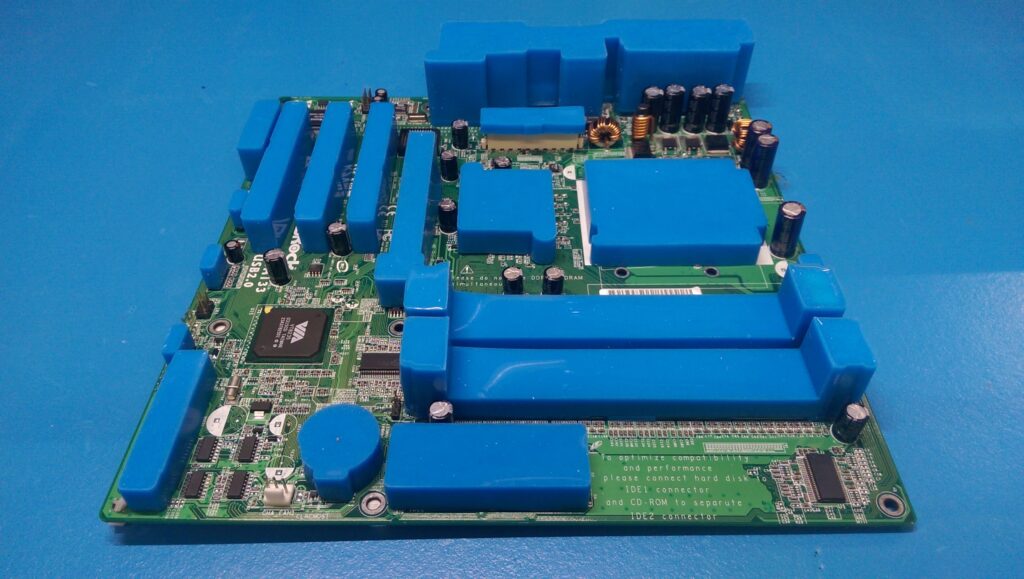
Custom-made masking boots provide a major labour-saving advantage during both the masking and de-masking stages of conformal coating. Unlike tape-based masking, these boots are fully reusable and are simply fitted over components such as connectors, plugs, and sockets prior to coating.

Reusable conformal coating masking boots can be designed as simple push-fit caps for standard connectors or as more sophisticated custom geometries for complex or high-density assemblies, as shown in the examples below.

They provide reliable, repeatable protection across all major conformal coating application methods, including:

  • Batch and selective robotic spraying (reducing the need for complex programming)
  • Vertical and horizontal dip coating
  • Vapour deposition processes such as Parylene coating

Reusable masking boots used in conformal coating operations at SCH Services

Three reasons to switch from masking tape to reusable masking boots

Switching from tape-based masking to reusable masking boots can reduce total masking costs by up to 80%:

  1. Faster application – masking boots can be applied 4–5× quicker than masking tape.
  2. Faster removal – de-masking boots is significantly quicker and cleaner than removing tape.
  3. Lower defect risk – masking boots are far less prone to leakage, reducing rework compared to tape.

The result is a rapid reduction in labour cost, improved process consistency, and fewer coating-related defects when compared to traditional masking tape methods.

Need expert advice on masking PCBs before conformal coating?

Effective PCB masking is critical to prevent coating ingress into connectors, test points, keep-out zones and mechanical interfaces. Poor masking choices can lead to coating defects, rework, reliability issues and unnecessary cost.

SCH supports customers with practical masking strategies tailored to your assembly, coating chemistry and production volume — from reusable masking boots and tapes to liquid masking systems and process optimisation.

If your assemblies also require preparation before coating, you can learn more about our subcontract PCB cleaning and coating services, or speak directly with our engineers to review your masking and coating requirements.

Contact SCH to discuss your PCB masking and conformal coating needs ›

What are the different methods available for cleaning electronic circuit boards?


SCH Services conformal coating facility and production environment

The topic of cleaning printed circuit board assemblies (PCBAs) effectively before application of conformal coating can be daunting. This is because the process of cleaning circuit boards can be difficult especially with so many variables to consider.

When considering cleaning the circuit you need to assess many factors including:

  1. The board and component compatibility with the cleaning method
  2. The ability of the cleaning method to remove the contamination effectively from the circuit
  3. Any residues the cleaning process may leave behind that may be harmful to the circuit in the long term.
  4. The reasons for cleaning the circuit (e.g. contamination removal, adhesion promotion etc.)?

After considering these factors you can compare with the processes available.

The main methods of cleaning printed circuit boards

The main methods of cleaning used in everyday electronics processing before conformal coating application can include:

  • Aqueous washing
  • Semi-aqueous washing
  • Solvent & chemical washing
  • Plasma surface cleaning

These processes can be mixed, the method can be varied but the fundamental concepts still apply.

However, whatever method you choose you still have to consider that the key to success in cleaning circuit boards is similar to the success made with conformal coating. You need to match the cleaning process, the cleaning materials and the circuit board together. If you do this then this will give you the best results for cleaning the circuit board assembly.

Want to find out more about cleaning?

Contact us now to discuss your needs and let us explain how we can help you.


The Science Behind Fluoropolymer Nano Coatings for Protecting Electronic Circuit Boards


Nano-coatings are being used regularly to protect printed circuit board assemblies. This is because the material they are made of fluorinated polymers and these materials have very specialized properties that produce very different results to traditional conformal coatings.

So, what are the unique properties of a Nano-coating?

To understand the properties of a Nano-coating you have to understand what a fluoropolymer coating is made of.

Typically, the coating itself is comprised of fluorocarbons and characterised by carbon-fluorine bonds. Since the coating is made of fluorocarbons then the film surface is not susceptible to Van der Waals forces (interfacial electrostatic bonds). Therefore, the surface energy of the fluoropolymer coating is extremely low and hydrophobic (water repellent). It acts like Teflon on a frying pan.

This non-wetting of water on the circuit board is one of the many key properties making them so popular.

SCH UK1


What other properties do Nano-coatings have that may help protect circuit boards?

For electronic circuit board assemblies there are several key properties that are being used.

These include being:

  • Hydrophobic: Being highly water repellent
  • Ultra-thin: Protection whilst being extremely thin
  • High moisture barrier: Low water vapor transmission rate provides excellent corrosion resistance
  • Chemically resistant: Having a high chemical resistance helps protect the circuits from chemical attack.
  • Good dielectrics: fluoropolymer coatings have high dielectric properties

However, to really understand the benefits you have to look at the key difference compared to a conventional conformal coating. That is that no masking is required when applying the Nano-coating.


So, why is there no need to mask when using a Nano-coating?

First, consider a normal conformal coating is applied at typical thicknesses of 25um or more. Also, the conformal coating is a high insulation material. Therefore, at this thickness the conformal coating would electrically insulate components like connectors and it must not be applied to any part that needs electrical conductivity.

However, this is not a problem for a Nano-coating.

Since the Nano-coating can be applied at ultra-thin thicknesses (1-2um in thickness or less) without any protection performance reduction, then the extremely soft coating is easily removed or scratched away when the connectors are joined and the electrical circuit is easily made.

This key parameter of not requiring masking during Nano-coating application combined with the hydrophobic nature of the coating material makes the Nano-coatings highly effective in protecting electronic circuit boards at a very low cost per unit.


Want to find out more about Nano-coatings?

At SCH Technologies, we supply ultra-thin Nano-coatings based on advanced fluoropolymer chemistries. These coatings provide a cost-effective way to protect printed circuit board assemblies (PCBAs) and other electronics from moisture, corrosion, and environmental damage.  We also offer a subcontract conformal coating service and can apply these nano-coatings for you.

Find out more and Contact us now to discuss your needs and let us explain how we can help you.

Five key facts about Parylene when protecting printed circuit board assemblies


Large industrial Parylene coating equipment featuring KR1200HS and KR1500HSU systems for high-volume medical, aerospace and electronics manufacturing

Here are five key facts about Parylene that are critical in understanding this process:

  1. The Parylene conformal coating process is a very specialised vapour deposition application method using specialist vacuum chamber systems. This differs significantly to all of the other liquid conformal coatings available on the market that are applied by spraying, brushing and dipping.
  2. Parylene coating is completely conformal and uniform to the surface of the Printed Circuit Board (PCB) or product. It is also pinhole free. Therefore, components with sharp edges, points, flat surfaces, crevices or exposed internal surfaces are coated uniformly without voids.
  3. Parylene coating provides an excellent moisture and gas barrier due its very low permeability. This means that electronics circuit boards coated in Parylene generally are more “waterproof” than the same electronics coated in a liquid conformal coating.
  4. Parylene is unaffected by solvents (it has very high chemical resistance) and is very effective against salt attack.
  5. Parylene has excellent electrical properties. This includes having low dielectric constant and loss with good high-frequency properties, good dielectric strength, and high bulk and surface resistance.

Find more in-depth details about Parylene materials, deposition principles, masking methods, thickness measurement and core application concepts at our Parylene Basics Hub now.

Or, if you’re interested in moving towards a Parylene process click through to our Parylene Solutions,  Parylene equipment and Parylene subcontract services pages.


Want to find out more about Parylene?

Contact us now to discuss your needs and let us explain how we can help you.

Five key facts about using fluoropolymer Nano-coatings for protecting printed circuit boards


June15-3

  1. A Nano-coating is hydrophobic. It repels water from the surface of the circuit board and water will not wet the circuit.
  2. The Nano-coatings are extremely thin (<2um). They are very different to traditional conformal coatings.
  3. Nano-coatings do not require masking. The circuit board can be completely submerged in the liquid with no masking applied without damaging components.
  4. They have excellent chemical resistance due its fluorine bonds. The Nano-coatings are perfect to protect against chemical attack.
  5. Using a Nano-coating is a fast simple process. The coating can be dipped quickly, without masking, and the coating dries extremely fast.

Want to find out more about Nano-coatings?

Contact us to discuss your needs and let us explain how we can help you. Or, read more on Nano-coating technology for protecting circuit boards now.

Find out how we can help you with your conformal coating process now.

Contact us  now.

0
  • Your current order total is £0.00 — you must have an order with a minimum of £75.00 to place your order.
0
Your Cart
Your cart is empty
  • Your current order total is £0.00 — you must have an order with a minimum of £75.00 to place your order.
Calculate Shipping
  • Your current order total is £0.00 — you must have an order with a minimum of £75.00 to place your order.

Conformal Coating UK

Conformal Coating UK
Privacy Overview

This website uses cookies so that we can provide you with the best user experience possible. Cookie information is stored in your browser and performs functions such as recognising you when you return to our website and helping our team to understand which sections of the website you find most interesting and useful.