Parylene vs Conformal Coating: How to Choose the Right Protection for Electronics
Comparing vapour-deposited Parylene with traditional liquid conformal coatings
Parylene and conformal coatings are both used to protect electronic assemblies from moisture, contamination and corrosion. However, they are fundamentally different technologies.
Traditional conformal coatings are liquid-applied polymers such as acrylic, silicone or polyurethane. These coatings are applied by spraying, dipping or brushing.
Parylene coatings are deposited using a chemical vapour deposition (CVD) process, forming an ultra-thin, pinhole-free polymer film that coats all exposed surfaces uniformly.
The deposition process is explained in more detail in the Parylene Deposition Process Parameters guide.
Understanding the differences between these technologies helps engineers select the most appropriate protection for reliability, manufacturing and cost.
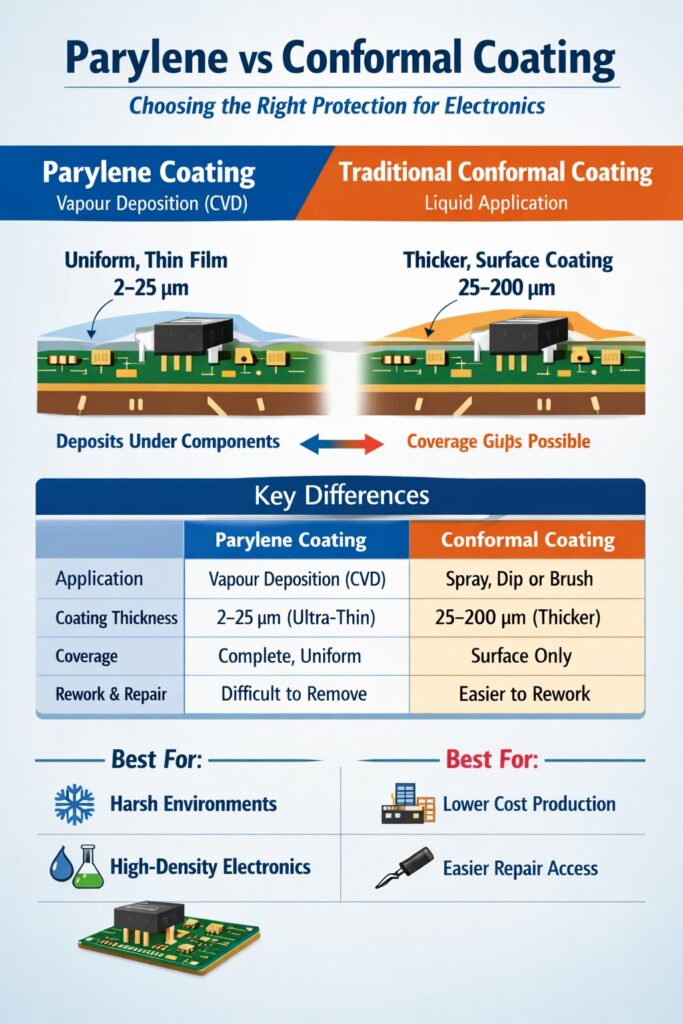
Comparison infographic showing the differences between parylene coating and traditional conformal coatings, including application method, coating thickness, coverage and typical use cases for electronic assemblies.
Key Differences Between Parylene and Conformal Coatings
| Feature | Parylene Coating | Liquid Conformal Coating |
|---|---|---|
| Application method | Vacuum CVD vapour deposition | Spray, dip, brush or selective coating |
| Coverage | True conformal coating including under components | Line-of-sight coating only |
| Film thickness | Typically 2–25 µm | Typically 25–200 µm |
| Pinholes | Virtually pinhole-free | Possible depending on application method |
| Edge build-up | Very uniform thickness | Meniscus and pooling possible |
| Processing environment | Vacuum deposition system | Atmospheric processing |
| Repair / rework | More complex removal | Usually easier to remove |
When Parylene Is the Better Choice
Parylene coatings are typically selected when maximum environmental protection and reliability are required.
Common scenarios include:
- Miniaturised electronics where coating thickness must remain extremely low.
- High-density PCBs where coating must penetrate beneath components. Parylene is commonly used for PCB protection applications where conventional coatings cannot reach underneath devices.
- Harsh environments including salt exposure, condensation and chemicals.
- Medical electronics where ultra-thin coatings are required.
- Aerospace electronics where reliability margins are critical.
For many assemblies the typical thickness window for Parylene protection is in the 5–25 µm range. A more detailed engineering explanation of thickness selection is provided in the Parylene Thickness Specification Guide.
When Traditional Conformal Coatings Are More Practical
Liquid conformal coatings remain widely used because they can be simpler and lower cost for certain applications.
They are typically preferred when:
- Large assemblies require lower processing cost.
- High-volume manufacturing uses selective coating systems.
- Rework access is important.
- The environment is moderate rather than extreme.
Common conformal coating chemistries include:
- Acrylic coatings
- Silicone coatings
- Polyurethane coatings
- Epoxy coatings
Each material provides different combinations of flexibility, chemical resistance and ease of repair.
Proper coating inspection and thickness verification are discussed in the conformal coating thickness verification guide.
Cost Comparison: Parylene vs Conformal Coating
Cost differences between Parylene and conformal coatings depend on several factors.
- Equipment requirements
- Production volumes
- Required thickness
- Masking complexity — see common conformal coating masking solutions used to protect connectors and keep-out areas
- Reliability requirements
Although Parylene coating is generally more expensive per coating cycle, it can provide superior protection at significantly lower thickness, which may reduce design constraints and increase product reliability.
Choosing the Right Coating Technology
Selecting the correct coating technology should consider:
- Environmental exposure
- Required service life
- Assembly complexity
- Thickness constraints
- Manufacturing process capability
Many manufacturers use both technologies depending on the application.
Frequently Asked Questions
Is Parylene better than conformal coating?
Parylene provides superior environmental protection, particularly for high-density electronics and harsh environments. However, traditional conformal coatings are often more cost-effective for larger assemblies or moderate environments.
How thick is Parylene compared to conformal coating?
Parylene coatings are typically applied at 2–25 µm, whereas most liquid conformal coatings are applied at 25–200 µm. Despite being much thinner, Parylene can provide excellent dielectric and environmental protection.
Can Parylene coat underneath components?
Yes. Because Parylene is deposited using a vapour phase CVD process, it can coat beneath components, inside small gaps and around complex geometries where liquid coatings cannot reach.
Is Parylene more expensive than conformal coating?
Parylene coating generally has a higher processing cost due to the vacuum deposition equipment required. However, the superior protection and thinner films can reduce reliability risks in critical applications.
Which industries use Parylene coatings?
Parylene coatings are commonly used in aerospace, medical devices, automotive electronics, MEMS sensors and other high-reliability applications.
Can Parylene coatings be removed for repair?
Parylene coatings can be removed using specialised processes such as micro-abrasive stripping or plasma etching. These processes allow localised rework while protecting the underlying electronics.
Why Choose SCH Services?
Partnering with SCH means gaining a complete, integrated platform for Parylene and conformal coating—services, equipment, materials and training—built around process control and repeatability.
- ✈️ 25+ Years – trusted worldwide
- 🛠️ End-to-End Support – coating, masking, validation and inspection
- 📈 Scalable Solutions – prototypes to steady production
- 🌍 Global Reach – support across Europe, North America and Asia
- ✅ Process Control – traceability, coupons and inspection discipline
📞 Call: +44 (0)1226 249019 | ✉ Email: sales@schservices.com | 💬 Contact Us ›
Fast links: Parylene Coating Services | Parylene Training & Support | Parylene Equipment