
Parylene Coating for Medical Devices & Health Technologies
Biocompatible Parylene Coating for Medical Devices and Implants
← Back to the Parylene Applications Hub
Parylene coating for medical devices — sometimes referred to as a medical-grade Parylene coating — is widely used to protect implants, minimally invasive tools and diagnostic systems where long-term biocompatibility, moisture protection and electrical insulation are critical. Applied as a vapour-deposited polymer film, Parylene forms an ultra-thin, pinhole-free barrier that conforms perfectly to complex geometries, lumens and sharp edges.
Parylene C, N and HT grades have a long track record in the medical sector and are tested to USP Class VI and ISO 10993 biocompatibility standards. These standards, published by organisations such as ISO 10993 (Biological Evaluation of Medical Devices) and United States Pharmacopeia (USP), help ensure that a Parylene coating for medical devices is suitable for skin contact and many implantable applications when correctly specified and validated.
For a wider overview of Parylene chemistry and properties, see the Parylene Basics Hub in our Knowledge Hub.
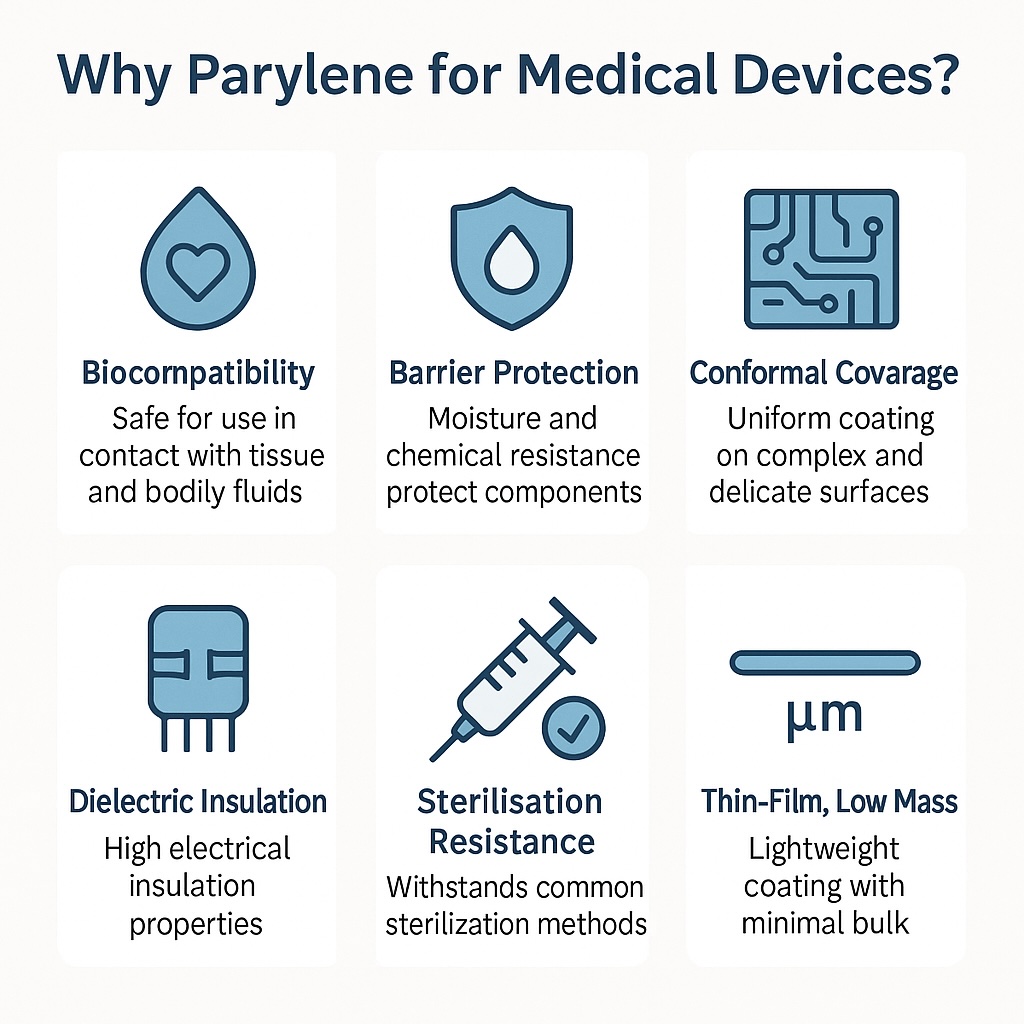
Core benefits of Parylene coating for medical devices, including biocompatibility, barrier performance, conformal coverage, dielectric insulation, sterilisation resistance and thin-film protection.
Why Parylene Coating for Medical Devices is Used
Medical devices must operate reliably in demanding environments: continuous exposure to bodily fluids, aggressive cleaning and sterilisation cycles, and stringent regulatory requirements. A well-specified Parylene coating for medical devices—sometimes referred to as a medical-grade Parylene coating or biocompatible Parylene coating—offers a unique combination of properties that make it an excellent choice for critical components:
- Proven biocompatibility – Parylene C, N and HT grades are extensively tested to USP Class VI and ISO 10993, with a long history of safe use in and on the human body.
- Excellent moisture and chemical barrier – The dense, pinhole-free film helps protect sensitive electronics, sensors and substrates from blood, saline, cleaning agents and other fluids.
- Highly conformal coverage – Vapour deposition ensures uniform coverage over sharp edges, fine features, internal bores and microstructures, which is essential for modern minimally invasive and implantable medical devices.
- Outstanding dielectric properties – Parylene provides high dielectric strength and low dielectric constant, allowing compact insulation of high-reliability medical electronics.
- Thin, lightweight protection – Typical thin-film Parylene coating for medical devices is in the 2–20 µm range, adding minimal mass and preserving tight dimensional tolerances.
- Lubricious, smooth surface – The low coefficient of friction can improve insertion characteristics for catheters and other devices that must pass through tissue or vasculature.
- Sterilisation resistance – Properly specified Parylene coatings can withstand typical sterilisation methods such as EtO, gamma irradiation and autoclave without significant loss of performance.
When engineers are choosing a protection strategy for new designs, a correctly engineered Parylene coating for medical devices remains one of the most reliable ways to combine biocompatibility, electrical insulation and long-term barrier performance.
For broader context on where Parylene fits alongside other applications, visit the Parylene Applications Hub.
Typical Medical Device Applications for Parylene Coating
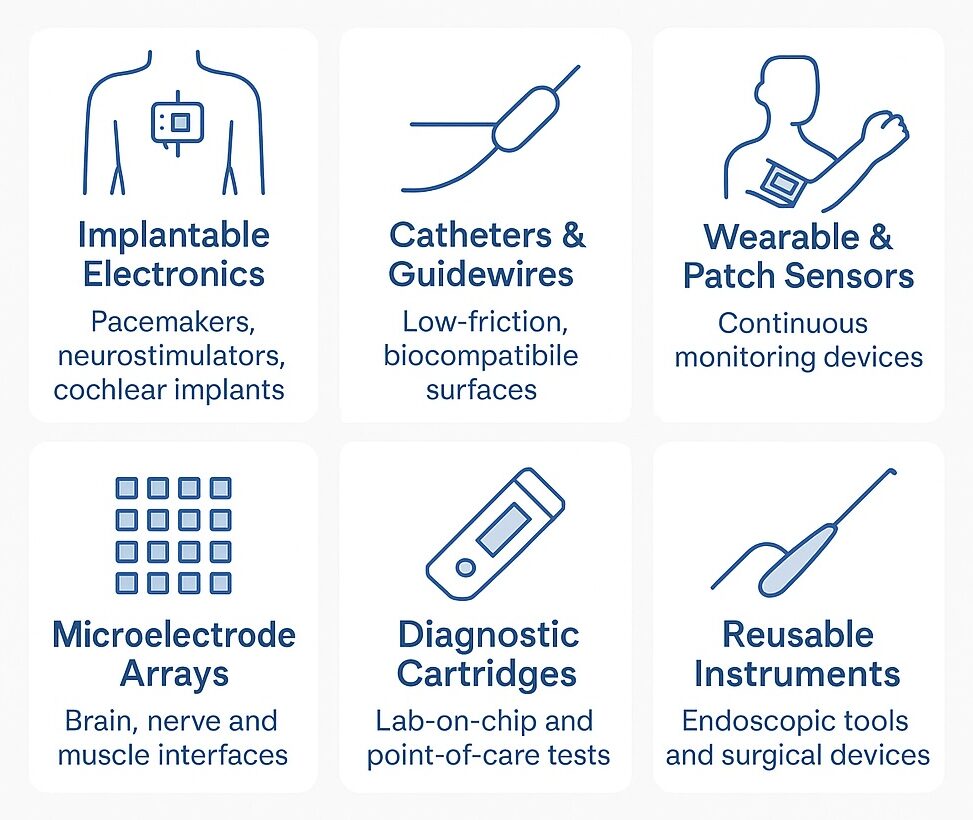
Typical applications of Parylene coating for medical devices, from implantable electronics and catheters to wearable sensors, diagnostic cartridges and reusable instruments.
Parylene coating for medical devices is used across a wide range of sectors, from active implantable devices to single-use disposables. Examples include:
Active Implantable Devices
- Pacemakers and implantable cardioverter-defibrillators (ICDs)
- Neurostimulators and spinal cord stimulators
- Cochlear implants and hearing devices
- Orthopaedic and dental implants incorporating electronics or sensors
Minimally Invasive & Interventional Devices
- Catheters and guidewires where lubricity, flexibility and biocompatibility are required
- Stents and drug-eluting stents (as part of a multi-layer coating system)
- Endoscopic tools and micro-instruments
- Microfluidic and lab-on-chip devices
Diagnostic & Monitoring Systems
- Implantable and wearable sensors
- Electrodes and microelectrode arrays
- Point-of-care diagnostic cartridges
- Reusable diagnostic probes and instrumentation
In many of these applications, Parylene coating for medical devices is the primary environmental barrier for electronics, interconnects and sensitive surfaces, helping to ensure long-term reliability and stable performance under in-vivo or clinical conditions.
Design & Engineering Considerations for Medical Parylene Coatings
To get the best results from any Parylene coating, the device must be designed and prepared with Parylene in mind. Key engineering considerations include:
Substrate & Material Compatibility
- Metals, ceramics and many polymers can be coated successfully, provided surfaces are clean and properly prepared.
- Certain low-surface-energy polymers (e.g. some fluoropolers and very smooth thermoplastics) may require specific adhesion promotion treatments or alternative design approaches.
- Materials that outgas heavily or contain volatile components may need pre-bake or special processing sequences before Parylene coating for medical devices can be applied.
Surface Preparation & Adhesion
- Thorough cleaning to remove machining oils, mould release agents, flux residues and fingerprints.
- Use of appropriate cleaning chemistries and rinsing protocols compatible with the device materials.
- Plasma or chemical surface activation, and where appropriate, adhesion promoters matched to the substrate type.
Masking & Keep-Out Areas
- Define no-coat regions early (e.g. mating surfaces, connectors, weld areas, mechanical interfaces).
- Use a combination of masking tapes, custom silicone boots, caps and fixtures to shield critical areas.
- Consider device geometry to minimise shadowing and ensure good vapour access to all features that require Parylene coating for medical devices.
Thickness Specification
- Specify a realistic thickness range based on the required barrier, dielectric strength and mechanical behaviour.
- Typical medical device coatings are in the 2–10 µm range, with higher thicknesses used where additional barrier performance is needed.
- Over-specifying thickness can drive cost and may increase mechanical stress at edges and sharp transitions; under-specifying may compromise long-term reliability.
For a deeper dive into how to write a robust, production-ready specification, see our guide on How to Specify Parylene Coating, which covers grade, thickness, masking and testing requirements in more detail.
Selecting the Right Parylene Type for Medical Devices
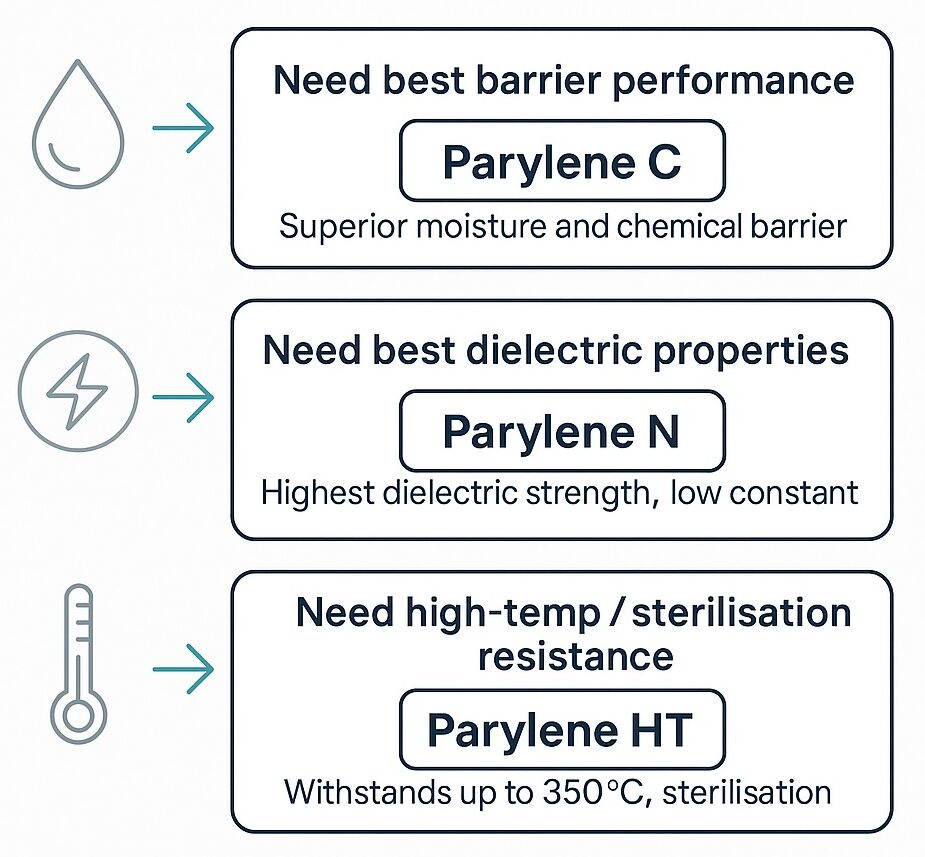
How to select the correct Parylene type for medical devices, comparing Parylene C, N and HT for barrier, dielectric and high-temperature needs.
Multiple Parylene types are available, each with slightly different barrier, dielectric and thermal properties. When designing a Parylene coating for medical devices, the most commonly used grades are:
- Parylene C – The workhorse medical grade, offering an excellent balance of moisture barrier, chemical resistance and dielectric strength. Widely used on implantables, sensors and interconnects.
- Parylene N – Offers superior dielectric properties and good flexibility. Often selected for very thin coatings where signal characteristics or very low dielectric constant are critical.
- Parylene HT (Parylene F / V3-type) – Fluorinated variant with improved high-temperature stability and better resistance to certain chemicals and sterilisation regimes.
The optimal Parylene type depends on factors such as device location in the body, intended service life, sterilisation method and regulatory classification. In many cases, Parylene C is the default choice, with N or HT considered for specific electrical or thermal requirements.
For more on dimer grades and their relative properties, visit the Parylene Dimers Hub. External guidance from standards and regulators, such as the U.S. FDA medical device framework, should be considered alongside internal risk management when selecting the Parylene type.
Sterilisation, Cleaning & Long-Term Stability
Medical devices must remain stable throughout their shelf life and use, including repeated cleaning and sterilisation where applicable. A properly engineered Parylene coating for medical devices can support this by:
- Withstanding typical sterilisation processes (EtO, gamma, e-beam and autoclave) when the right grade and thickness are selected.
- Resisting swelling, cracking and delamination under exposure to common hospital disinfectants and cleaning agents.
- Maintaining dielectric performance and barrier properties over the intended lifetime of the device.
However, full verification through device-specific testing is essential, especially for implantable applications. Parylene is one part of the overall risk management and validation strategy rather than a stand-alone guarantee of performance. Resources such as AAMI sterilisation and validation guidance can help shape appropriate test plans.
Regulatory, Biocompatibility & Testing Considerations
While Parylene is widely recognised as a biocompatible material, each device must be assessed in its final, coated form. When implementing a Parylene coating for medical devices, key considerations include:
- Biocompatibility testing to ISO 10993 appropriate to the device type, body contact and duration.
- Verification that the coating process, cleaning steps and any adhesion promoters do not introduce unacceptable extractables or leachables.
- Documentation of coating process parameters, batch traceability, inspection and test results as part of the device design history file.
- Where relevant, alignment with FDA, EU MDR and other regulatory expectations for coated medical devices and active implantables.
Working with an experienced Parylene partner helps ensure that material selection, process controls and documentation support the overall regulatory strategy for the device. External resources such as EU MDR guidance can be helpful references when planning verification activities for coated components.
SCH Support: Turnkey Parylene Coating for Medical Devices
SCH Services supports medical device manufacturers with a full range of capabilities focused specifically on Parylene coating for medical devices, from early feasibility to full-scale production:
- Parylene coating services for prototypes, clinical builds and production volumes.
- Parylene coating equipment from lab-scale systems to high-volume production tools for in-house coating lines.
- High-purity Parylene dimers with batch traceability suitable for medical applications.
- Design-for-Parylene guidance to help engineers specify thickness, masking and materials correctly for medical devices.
- Training and knowledge transfer so in-house teams can operate and maintain systems with confidence and comply with quality system requirements.
If you are developing or updating a medical device and need to evaluate Parylene coating for medical devices as part of your protection strategy, contact SCH to discuss your application, regulatory constraints and reliability targets.
🔧 Related Parylene Resources
- Parylene Coating Services
- Parylene Deposition Equipment
- Parylene Dimer Supply
- Design for Parylene – Masking & DfC Guidelines
🔗 Explore More Parylene Applications
- Parylene Coating for Medical Devices & Health Technologies
- Parylene Coating for PCB Protection
- Parylene Coating for Aerospace & Defence Electronics
- Parylene Coating for Automotive & EV Electronics
- Parylene Coating for Sensors, MEMS & High-Density Electronics
- Parylene Coating for Harsh Environments
🌐 External Technical Reference
Disclaimer: The information on this page provides general guidance on Parylene coating for medical devices and health technologies. Performance, suitability and compliance depend on the specific design, materials and application environment. SCH Services can review assemblies and specifications to confirm the correct coating approach.
