
Mon - Thur 7.30-15.30   Fri 7.30-14.00

Hybrid ALD/CVD Coatings for LED Protection – Where Do They Really Fit?


Understanding the role of ultra-thin coatings in LED protection without the hype

Protecting LEDs from long-term exposure to harsh environments is becoming increasingly critical, particularly for outdoor and high-reliability applications. Moisture, salt, UV exposure and thermal cycling all create failure risks that must be managed through coating selection.

There are already multiple established protection strategies including Parylene, liquid conformal coatings, ultra-thin fluoropolymers and encapsulation. Each offers advantages, but all involve trade-offs between protection level, process complexity, optical performance and cost.

Hybrid ALD (Atomic Layer Deposition) / CVD (Chemical Vapour Deposition) coatings are often presented as a new alternative. The key question is not whether they are interesting, but where they realistically fit alongside existing coating technologies.

What is a Hybrid ALD/CVD Coating?

Hybrid coatings combine two thin-film deposition techniques into a layered structure.

  • CVD (used in Parylene) deposits a conformal coating in a vacuum environment
  • ALD deposits extremely thin, controlled layers at atomic scale

In hybrid systems, these layers are applied sequentially to build a multi-layer film. The structure is fundamentally different from traditional coatings, as properties can be engineered layer-by-layer rather than relying on a single material.

The result is an ultra-thin coating system, typically in the nanometre range, with tailored barrier, adhesion and surface properties.

Compare this with traditional coating approaches β†’

Why is this approach relevant for LEDs?

LED protection introduces constraints that are not always present in standard PCB coating.

  • Optical clarity – coatings must not reduce light output
  • UV stability – long-term outdoor exposure
  • Moisture resistance – prevention of corrosion and failure
  • Thermal stability – cycling and elevated temperatures

Hybrid coatings are often positioned as suitable because they are extremely thin, highly transparent and can provide good barrier performance relative to thickness.

In applications where traditional coatings create optical or masking challenges, this type of approach becomes more attractive.

Masking Reduction – Not Elimination

One of the most common claims is that hybrid coatings do not require masking due to their extremely low thickness.

Reality check: Ultra-thin coatings can reduce masking requirements, but they do not remove interface risks completely. Connectors, contact surfaces and critical electrical interfaces still require validation.

Whether masking can be reduced depends on:

  • Connector design and contact force
  • Electrical sensitivity of interfaces
  • Long-term wear and fretting behaviour
  • Customer acceptance criteria

In practice, masking strategy becomes an engineering decision rather than being eliminated entirely.

Performance Compared to Established Coatings

Hybrid coatings are often compared with Parylene and liquid conformal coatings. The comparison is not simply performance-based, but application-dependent.

  • Hybrid coatings – ultra-thin, optically clear, engineered film structure
  • Parylene – proven barrier performance and long-term reliability
  • Liquid coatings – scalable, robust and well understood processes

Hybrid coatings can offer advantages in specific LED applications, particularly where optical performance is critical. However, established coatings still dominate in many applications due to proven reliability and process maturity.

The decision is not which coating is β€œbest”, but which is most appropriate for the application and risk profile.

Process and Cost Considerations

Hybrid ALD/CVD processes are often described as low cost due to reduced masking and simple operation. However, real cost depends on the full system.

  • Equipment investment and process control requirements
  • Throughput and batch size limitations
  • Cycle time and scalability
  • Validation and qualification requirements

While operator interaction may be simple, the overall process must be evaluated at production scale rather than individual step level.

Where Hybrid Coatings Actually Fit

From a practical engineering perspective, hybrid ALD/CVD coatings are best positioned as a specialist solution rather than a universal replacement.

  • Suitable for optically sensitive applications such as LEDs
  • Useful where ultra-thin coatings provide a design advantage
  • Complementary to existing coating technologies

For most applications, coating selection remains driven by environment, geometry, process capability and reliability requirements.

In many cases, structured coating strategies using established materials remain the most robust approach.

Final Perspective

Hybrid ALD/CVD coatings represent a technically interesting development, particularly for LED protection where optical and environmental requirements must be balanced.

However, they should be viewed as part of a broader coating strategy rather than a direct replacement for Parylene or conformal coatings.

The key is selecting the right coating approach for the application, not chasing a single β€œbest” material.

Need support selecting the right coating approach?

SCH supports coating selection, process design and validation across conformal coatings, Parylene and hybrid strategies.

Contact us to discuss your application.
↑ Back to top

Note: This article provides general technical guidance only. Final design, safety and compliance decisions must be validated against application requirements and relevant standards.

What is Plasma Coating?


Where plasma-deposited nano films fit in surface engineering and electronics protection

Plasma coating is a surface treatment process in which a reactive coating precursor is introduced into a plasma and deposited onto a substrate as an ultra-thin functional film. It is typically used where very low film thickness, tailored surface behaviour or specialist adhesion performance is required.

In practical terms, plasma coating is not the same as traditional conformal coating and it is not the same as Parylene deposition. It belongs more to the world of surface engineering, where the goal is often to modify how a surface behaves rather than build a thick physical barrier.

That makes plasma coating interesting, but also easy to misunderstand. The key question is not whether it is advanced, but where it actually fits and what problems it is designed to solve.

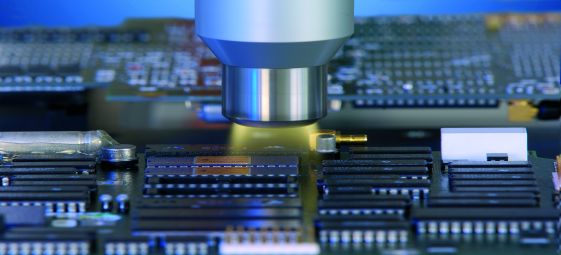
Plasma treatment of the surface of a circuit board before conformal coating

How plasma coating works

In a plasma coating process, a precursor material is introduced into a plasma zone, often through a jet nozzle or controlled gas-phase system. The plasma activates the chemistry, increasing its reactivity and allowing it to bond to the substrate surface more effectively.

This process can be adjusted for different materials including metals, glass, ceramics and plastics. Depending on the chemistry used, the resulting film can be tailored to create different surface properties such as water repellence, improved adhesion or barrier enhancement.

Because the film is extremely thin, plasma coating is usually used to change surface function rather than build the kind of thick protective layer associated with conventional conformal coatings.

Important: Plasma coating should not be confused with plasma surface preparation. Plasma preparation activates or cleans a surface before coating, while plasma coating deposits a functional film onto the surface itself.

What plasma coatings can do

Plasma-deposited coatings are typically used to alter surface behaviour in a very targeted way. Depending on the chemistry and process design, they can be made hydrophobic or hydrophilic and can improve how a surface performs in later manufacturing or service.

  • Barrier improvement for selected plastic or functional surfaces
  • Adhesion improvement for bonding or paint application
  • Release properties for tooling and mould-related applications
  • Corrosion resistance support where ultra-thin barrier behaviour is beneficial
  • Surface energy modification to improve how a material interacts with liquids, adhesives or later coatings

These are specialist functions. They are not direct equivalents to the role of a conventional PCB conformal coating.

Where plasma coating fits in electronics

In electronics, plasma coating is best understood as a niche or specialist surface engineering option rather than a mainstream replacement for conformal coating. It may be relevant where very thin deposited functionality is needed, but it does not automatically replace the insulation, thickness or physical protection provided by traditional coating systems.

That is why it is important to compare it in the right way. If the real need is full electrical insulation, environmental barrier performance or robust film build, then conventional conformal coatings or Parylene may still be the more appropriate technologies.

For a broader comparison of established protection strategies, see Parylene vs Conformal Coating: How to Choose the Right Protection for Electronics.

What plasma coating does not replace

Plasma coating is often interesting because it is thin, highly engineered and flexible at surface level. But those same features also mean it should not be overstated.

  • It does not automatically replace conformal coating where thickness and dielectric protection are required
  • It does not automatically replace Parylene where true conformal vapour-deposited coverage is needed
  • It does not remove the need for proper process selection, testing and validation

Like other advanced thin-film technologies, it is best viewed as a specialist tool for specific problems rather than a universal answer.

Reality check: If the requirement is mainstream PCB protection in a harsh environment, plasma coating is usually not the first question to ask. The first question is what level of barrier, insulation, coverage and process control the product actually needs.

Final perspective

Plasma coating is a legitimate and highly specialised surface engineering technology. Its value lies in controlled surface modification, ultra-thin deposited functionality and application-specific performance tuning.

For most electronics users, the important thing is understanding where it fits relative to better-known technologies such as conformal coating and Parylene. The goal is not to use the most advanced process available, but to select the process that matches the product, environment and manufacturing reality.

If you are trying to choose between different protection strategies, it is usually better to start with the function required and then work back to the most appropriate coating technology.

Need help reviewing a coating or surface protection problem?

SCH supports customers with coating selection, process review and technical guidance across conformal coating, Parylene and specialist protection strategies.

Contact us to discuss your application.

↑ Back to top

Note: This article provides general technical guidance only. Final design, process and compliance decisions must be validated against the actual substrate, coating chemistry and application requirements.
0
  • Your current order total is £0.00 β€” you must have an order with a minimum of £75.00 to place your order.
0
Your Cart
Your cart is empty
  • Your current order total is £0.00 β€” you must have an order with a minimum of £75.00 to place your order.
Calculate Shipping
  • Your current order total is £0.00 β€” you must have an order with a minimum of £75.00 to place your order.

Conformal Coating UK

Technical banner showing PCB and process icons representing conformal coating, masking, inspection and training on the SCH technical knowledge hub.
Conformal Coating UK
Privacy Overview

This website uses cookies so that we can provide you with the best user experience possible. Cookie information is stored in your browser and performs functions such as recognising you when you return to our website and helping our team to understand which sections of the website you find most interesting and useful.