Mon - Thur 7.30-15.30   Fri 7.30-14.00

Find out how one company saved 60% of their process costs by changing to custom conformal coating masking boots


Diamond MT, a conformal coating and Parylene coating service provider in the USA, found they saved more than 60% of their current costs by switching to the SCH range of conformal coating masking boots.

Sean Horn, Diamond MT, explains how they did it.

β€œWe had initially wanted to try SCH’s conformal coating masking boots for price savings. However, once we began to work with Lee on our specific masking application, we realised that we could extend the life of our boots over 200%. We switched immediately!

We then realised the importance of working with someone who understands coatings. We will not being going back to our previous supplier.”

Sean Horn, Director, Diamond MT, Parylene and conformal coating subcontract service provider.

So why did Diamond MT switch to our range of masking boots?

When the analysis was completed, it was found pricing for our conformal coating masking boots was lower by 30% compared to their current supplier. This made a significant saving to Diamond MT and immediately a trial production run was started.

What was really interesting was after using them in the first month, Diamond MT found the masking boots lasted twice as long as their original boot from the alternate supplier. This meant that now Diamond MT has halved the volume of boots they order and this has reduced their costs by 60% for the year.

What started as a simple trial led to a huge saving to Diamond MT as a partner with SCH.

Diamond MT saved more than 60% of their masking costs by switching to reusable conformal coating masking boots from SCH Services

Diamond MT reduced their masking costs by more than 60% after switching to SCH’s reusable conformal coating masking boots.

Read our article in the Conformal Coating Masking Knowledge Hub on Reusable masking boots and find out how they give fast, repeatable seals around connectors and keep-outs, so you can lift first-pass yield and cut masking labour.

Need to know more about using conformal coating masking boots in your application process?

Contact us now and we can discuss how we can help you. Give us a call at (+44) 1226 249019 or email your inquiries at sales@schservices.com


How do I correctly dip coat my circuit board in conformal coating?


The dip process for conformal coating is a method used to coat printed circuit boards for a very long time. The process in its simplest form is as follows:

  1. The printed circuit board (PCB) is lowered into a tank of coating.
  2. This can be complete submersion or partial dip.
  3. The board can be dipped vertically, horizontally or at another angle.
  4. The board can be dipped manually or automatically.
  5. The board is removed from the coating and the excess coating drains away.

This process is highly effective in applying a conformal coating to a printed circuit board (PCB).
Dip conformal coating process showing a PCB being immersed using dip coating equipment for consistent, high-volume application


A simple approach involves dipping a circuit board by hand into a container of conformal coating, which can deliver acceptable results for low-volume work. However, dedicated dip coating equipment is typically usedβ€”particularly for medium- and high-volume productionβ€”where consistency, control, and repeatability are critical.

What equipment may you need for dipping circuit boards?

The reason for using dipping machines in conformal coating is because the process has variables that are critical to film integrity and they are controlled by the system. The variables that are critical for film quality and thickness are:

  • The speed of immersion
  • Dwell time in the coating
  • The withdrawal speed of the board

These factors, plus the viscosity of the conformal coating, are important to create a high quality finish and reduce costs.

How cost effective is the dip process for conformal coating?

The conformal coating dip process itself can be extremely low cost. The cost of a dip system can be low compared to many other processes and when balanced against the speed of application.

However, if the circuit board demands a lot of components be masked before processing then the overall coating process can be expensive. Masking for dipping can be very demanding and very difficult to complete successfully.

Find out more about effective masking strategies for dip coating at our Conformal Coating Masking Hub.

Need to know more about using a conformal coating in your application process?

Contact us now and we can discuss how we can help you. Give us a call at (+44) 1226 249019 or email your inquiries at sales@schservices.com


How do I brush coat my conformal coating?


The correct technique for applying conformal coating by brush is to flow the coating on.

The material should not be brushed on like you are decorating with paint. The coating should be loaded on to the brush and flowed onto the printed circuit board.

The correct technique for applying by brush is to flow the conformal coating on to the circuit board. The material should not be brushed on like you are decorating with paint.

What conformal coatings can be applied by brush?

All conformal coatings can be applied by brush and most lend themselves well to the technique. The key points to be aware of are the material pot life and the conformal coating viscosity.

  • Material pot life. The pot life of the material may be finite so the conformal coating could cure during use. This may make the material useless to apply after a certain amount of time.
  • Conformal coating viscosity. The way the conformal coating flows is critical when applied by brush coating. Therefore, the viscosity of the coating material is highly influential on the flow so control of the viscosity is critical to allow good coverage.

What Factors Control the Quality of Conformal Coating Finish with Brushing?

Although brushing is often considered the simplest conformal coating application method, achieving a consistent, defect-free finish requires careful control of several interacting variables. Unlike automated processes, brushing relies heavily on human input, making process understanding and training especially important.

The key factors that influence coating quality when brushing include:

  • Operator skill and technique – Brush loading, stroke direction, pressure control, overlap, and rework handling all directly affect film thickness, edge definition, and defect formation. Inconsistent technique is a common cause of bubbles, streaking, and uneven coverage.
  • Brush quality and selection – Bristle material, stiffness, tip shape, and cleanliness determine how evenly the coating is deposited. Poor-quality or worn brushes can introduce fibres, air entrapment, and surface texture defects.
  • Viscosity of the conformal coating – Coatings that are too viscous may leave heavy brush marks or uneven films, while overly thinned coatings can lead to runs, pooling, or insufficient coverage. Viscosity must be matched to both the coating chemistry and the brushing technique.
  • Coating environment – Temperature, humidity, airflow, and cleanliness influence solvent evaporation, levelling, and cure behaviour. Uncontrolled environments can increase the risk of bubbles, contamination, and poor surface finish.
  • Board size, layout, and complexity – Dense assemblies, fine-pitch components, connectors, and vertical features increase the likelihood of shadowing, wicking, and thickness variation when brushing. Design choices can significantly impact how practical brushing is as an application method.
  • Conformal coating material type – Acrylics, silicones, polyurethanes, epoxies, and UV-curable coatings all behave differently under manual application. Dry time, reworkability, solvent content, and levelling characteristics must be understood to avoid defects.

The Role of Training in Brushed Conformal Coating

Because brushing is highly operator-dependent, training is one of the most effective ways to improve quality, repeatability, and yield. Structured training helps operators understand not just how to apply a coating, but why defects occur and how to prevent them.

SCH provides conformal coating training covering:

  • Correct brush selection and handling techniques
  • Coating preparation, thinning, and viscosity control
  • Defect recognition (bubbles, streaking, dewetting, pinholes)
  • Environmental control and best-practice setup
  • Inspection criteria aligned with IPC standards
  • Rework and repair considerations for brushed coatings

Training can be delivered as part of a wider process review or focused specifically on manual application methods, helping manufacturers reduce rework, improve consistency, and build operator confidence.

To learn more, explore our conformal coating training programmes or review our wider guidance in theΒ Conformal Coating Processes Hub, which covers brushing, spraying, dipping, selective robotic coating, and Parylene deposition.

Need to know more about using a conformal coating in your application process?

Contact us now and we can discuss how we can help you. Give us a call at (+44) 1226 249019 or email your inquiries at sales@schservices.com

How Do I Measure Conformal Coating Thickness?


There are several ways to measure the conformal coating thickness on a printed circuit board (PCB).Β  They can be either used on dry or wet film coating.

These techniques include:

  • Non-destructive eddy current system
  • Micrometer screw gauge
  • Wet film gauge

These techniques are explored further below. Alternatively, click through to our article Conformal Coating Thickness Measurement: Wet, Dry & Optical Methods to get a more detailed review.


Non-destructive eddy current system

A fast method for measure coating thickness is a system using eddy currents. The process can be extremely quick and accurate to Β±1 um.

Using a gauge and flying probe for the measurement the system is extremely easy to use. The process works by placing the test probe head flat on the surface of the conformal coating and the measurement is almost instantaneous. The system provides an immediate repeatable result for thickness measurement of conformal coating.

Using a test probe system like the Positector 6000 can quickly give you conformal coating thickness measurements without damaging the circuit board.

Test coupons are the ideal method for measuring the coating thickness, whether is it spraying or dipping, and can be kept as a physical record of the performance.

Apply the coating to the test coupons at the same time as the circuit board then provides a permanent measurement and an accurate guide to the coating thickness.

There are a couple of issues using a system like this.

First, there needs to be metal in the circuit board directly below the tested point. Otherwise, the system cannot work.

Second, there needs to be a flat area large enough for the test probe. The smallest practical probe is approximately 6mm diameter so any area smaller than this is not practical.

Finally, the surface measured for the probe needs to be flat. If not then there will be errors in the measurement.


Micrometer screw gauge

The low cost method is using a calibrated micrometer screw gauge that can measure down to Β± 10 um. First measure a point on the board or test coupon, apply the coating, cure and measure the test coupon again at the same point. The difference gives you the coating thickness.

A couple of pitfalls to avoid are ensuring the coating is cured hard enough since if it is soft it could compact and give a false reading. Also, do not measure one point. Take an average of at least 3 or 4 points since this will give a better result statistically.

Test coupons are the ideal method for measuring the coating thickness, whether is it spraying or dipping, and can be kept as a physical record of the performance.


Wet film gauge

A final method is a wet film measurement technique that is very cost effective.

The technique uses a comb with different size patterns that is placed in the wet coating and the imprint left indicates the wet film thickness. Knowing the solids content of the material means that the material thickness can be calculated.

A wet film gauge is a low cost method for measuring coating thickness while the conformal coating is wet. Using the solids content in the material and the wet film thickness allows the dry film thickness to be estimated.

Need to know more about conformal coating thickness measurement?

Find out more from our article Conformal Coating Thickness Measurement: Wet, Dry & Optical Methods to get a more detailed review.

Or, contact us now and we can discuss how we can help you. Give us a call at (+44) 1226 249019 or email your inquiries at sales@schservices.com


What are the alternative materials to liquid conformal coatings?


There are several alternative coatings available to the traditional conformal coating materials.

These alternative coatings include:

  • Parylene and other Chemical Vapour Deposition (CVD) films
  • Fluorinated ultra-thin and thin film coatings
  • Molecular Vapour Deposition (MVD) coatings
  • Atomic Layer Deposition (ALD) coatings

They can provide extremely high protection to circuit boards if used correctly for the right product.

There are several new and old alternative coatings available to the traditional conformal coating materials. They include Parylene, fluorinated Nano-coatings, Molecular Vapour Deposition (MVD) and Atomic Layer Deposition (ALD) thin films.

Parylene (XY) Coatings

Parylene is the trade name for a variety of chemical vapor deposited poly(p-xylylene) polymers used as moisture and dielectric barriers.

Parylene is a conformal coating that is deposited as a gas in a vacuum chamber. It is a dry process compared to the standard β€œwet” liquid conformal coatings.

Find out more about our Parylene Coating Solutions or compare Parylene vs liquid conformal coatings in our knowledge hub.

Fluoropolymer (FC) Nano Coatings

Surface Modifiers are ultra thin nano coatings that are applied at less than a few microns in thickness. Liquid conformal coatings are applied in the range of 25-75um so they are considerably thicker in nature.

There are several variations in ultra thin conformal coatings out in the market now but two of the most popular types are liquid materials and partial vacuum deposition.

Read more about our full range of Fluoropolymer Nano Coatings.

Atomic Layer Deposition (ALD)

ALD belongs to the family of chemical vapor deposition methods (CVD).

  • It is a deposition process at a Nano-scale level within a vacuum chamber.
  • The deposition process forms ultra-thin films (atomic layers) with extremely reliable film thickness control.
  • This provides for highly conformal and dense films at extremely thin layers (1-100nm).

Molecular vapour deposition (MVD)

MVD belongs to both the families of chemical vapor deposition (CVD) and atomic layer deposition (ALD) methods.

  • Unlike traditional CVD and ALD flow systems the MVD reaction takes place in a chamber under static pressure resulting in extremely low chemical use.
  • The MVD process produces highly conformal thin film coatings, typically less than 100nm in thickness.
  • The coating provides excellent barrier properties and surface energy control.

Need to know more about alternative materials to the traditional liquid conformal coatings?

Contact us now and we can discuss how we can help you. Or, give us a call at (+44) 1226 249019 or email your inquiries at sales@schservices.com
Is There a Free Guide on Conformal Coating Defects?


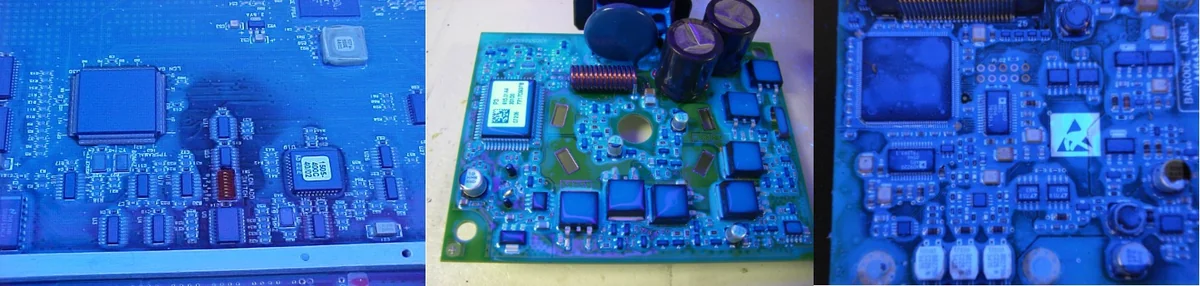
Collage of conformal coating capillary flow and wicking defects around PCB components.

SCH services Ltd provide an information section on conformal coating defects in their Defects Knowledge Hub.

This hub explains the most common defects and failure mechanisms, their root causes, and practical actions to prevent or correct them in production.

Conformal coating defects can undermine PCB protection, reduce insulation resistance, and cause costly rework or field failures. This hub explains the most common defects like de-wetting, de-lamination, corrosion and cob-webbing and details their causes and how to prevent them.

All this is linked to detailed technical articles and inspection guidance.


Need to know more about coating defects?

Contact us now and we can discuss how we can help you. Or, give us a call at (+44) 1226 249019 or email your inquiries at sales@schservices.com
 

Why Does Cleaning Improve the Adhesion of a Conformal Coating?


In general it is important that conformal coatings have good adhesion in order to be effective. However, there is no single theory that describes the property of adhesion for conformal coatings.

There are three basic mechanisms for conformal coatings that are known to help with good adhesion. They are:

  1. Adsorption
  2. Chemical Bonding
  3. Mechanical Interlocking
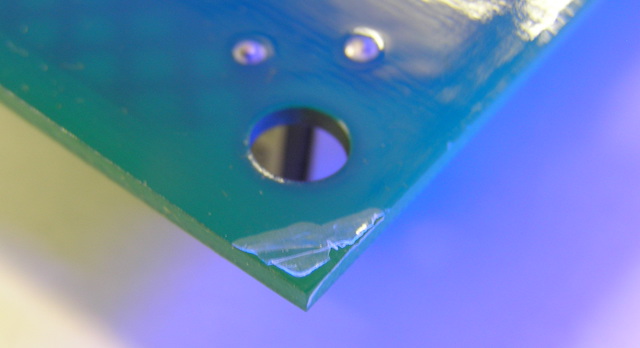
There are three basic mechanisms for conformal coatings that are known to help with good adhesion. They are adsorption, chemical bonding and mechanical Interlocking

Adsorption

This is where the molecules in the conformal coating wet or flow freely over the substrate and make intimate contact with the substrate. This forms interfacial (electrostatic) bonds with van-der-Waal forces.

Any contamination between the two will weaken the adsorption. Any de-wetting (prevention of wetting) will also hinder the adsorption.

Cleaning the surface of contamination will help with adsorption.

Chemical bonds

The bonds are formed at the interface between the conformal coating and the substrate.

Good bonding gives strong adhesion of the conformal coating to the substrate. If bonding cannot be achieved due to contamination then poor adhesion may result.

Cleaning the surface of contamination will help the chemical bonding process.

Mechanical interlocking

The conformal coating film penetrates the roughness on the substrate surface and is achieved once the coating dries.

If the surface is smooth then the mechanical bonding is less effective. If the surface can be cleaned, leaving a rough surface, then more effective bonding can be achieved.

Cleaning the surface of contamination will help.


Achieving the best conformal coating adhesion

Surface contamination can be critical when considering conformal coating and the process. If you can clean the contamination from the surface then the adhesion should improve.

All three mechanisms do not have to occur to form good adhesion. Depending on the specific conformal coating system, substrate, and application method, different mechanisms could work. However, good wetting or adsorption is normally required for good bonding.

So, if in doubt clean the surface of the substrate to achieve good conformal coating bonding.


Need to know more about conformal coating adhesion?

Effective surface preparation and cleanliness are critical for conformal coating reliability. Contaminants such as flux residues, oils, and ionic salts can cause adhesion loss, corrosion, or electrical leakage.

To find out more read our guide, Surface Preparation & Cleanliness for Reliable Conformal Coating, which covers cleaning methods, cleanliness testing, adhesion promoters, and industry standards.

Contact us now and we can discuss how we can help you. Or, give us a call at (+44) 1226 249019 or email your inquiries at sales@schservices.com
Are there design rules for applying conformal coatings?


Conformal coating is not simply a consumable material. Unfortunately, for too many designers, conformal coating is simply a part number, to be applied to circuit boards. However, this can be a major problem especially in the conformal coating production stage of the process.

There are guidelines in the IPC standards that may help with Design for Manufacture (DFM) principles. These are worth considering. Unfortunately, there are no official design guidelines that will help directly with the application process and conformal coating.

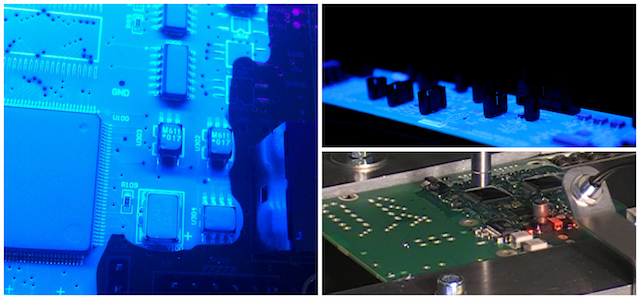
Conformal coating treated as a part number rather than a design consideration can cause production issues

When conformal coating is treated as a simple part number rather than a design consideration, it can create significant problems during the production stage.

Conformal Coating Design Hub

SCH Services Ltd has developed design rules for conformal coating in their Design Hub to help users get the fundamentals right.

The hub focuses on designing PCBs and assemblies for coating, including keep-out zones, component spacing, creepage and clearance, and applying DfM/DfCC principles before manufacture. The philosophy is that for companies embracing lean philosophies and applying conformal coatings, a failure to appreciate the subtleties of the application process can result in an un-coatable (at least as specified) assembly process.

The problem is if the rules are not followed, the resultant circuit board design can challenge even the most sophisticated conformal coating system and its operator to achieve the finish desired.

For further information visit conformal coating design rules to learn more.


Need Process Support?

Optimising electronics coating methods requires the right combination of materials, equipment, and operator training. Partner with SCH Services for:

Infographic explaining whether MIL-SPEC qualification is required for conformal coating and how legacy MIL-I-46058C references relate to modern standards.

Do you need MiL spec qualification for your conformal coating?


A common question from aerospace and defence customers is: β€œDo we need MIL-SPEC qualification for our conformal coating?”

The short answer is: sometimes β€” but only when it is contractually required.

Confusion usually arises because legacy military standards are still referenced on drawings, purchase orders, or coating datasheets, even though the underlying standards landscape has changed.

For a full explanation of how military (MIL) requirements relate to modern conformal coating standards, see: MIL-I-46058C (Cancelled) & MIL Standards for Conformal Coating
.


When is MIL-SPEC actually required?

In practice, manufacturers usually know they require MIL-related compliance when:

  • The product is for a military or defence programme
  • MIL requirements are explicitly called up on the customer drawing
  • The purchase order or contract includes MIL flow-down requirements

If none of these are present, β€œMIL-SPEC” is often being used as shorthand for high reliability rather than a defined manufacturing requirement. This is where misunderstandings commonly occur.


Be cautious with datasheets claiming β€œmeets MIL-I-46058C”

Many conformal coating datasheets state that the material β€œmeets the requirements of MIL-I-46058C”. This wording should be treated with caution.

MIL-I-46058C is a cancelled standard, and simply stating compliance does not mean the coating has been independently approved or qualified. In many cases, the claim refers only to internal or historical test data.

Where defence programmes genuinely require MIL-style material qualification, customers will often expect evidence beyond a datasheet statement.


What is the Qualified Product List (QPL)?

Historically, conformal coatings tested against MIL-I-46058C were listed on the Qualified Product List (QPL).

The MIL-I-46058C Conformal coating standard has been inactive for new designs since the late 1990s, but QPL listings are still referenced in legacy documentation and long-lifecycle programmes.

Coatings appearing on the QPL would have undergone independent third-party testing rather than self-certification. This is an important distinction.

However, the presence (or absence) of a coating on the QPL does not automatically determine its suitability for modern programmes. What matters today is how customer requirements are defined and verified.


What is normally used instead today?

Modern defence and aerospace programmes typically rely on a combination of:

  • IPC-CC-830 for conformal coating material performance and qualification
  • IPC-A-610 for workmanship and acceptance criteria
  • Customer drawings and specifications defining coverage, keep-out zones and inspection evidence

MIL requirements are therefore usually met through industry standards plus contractual flow-downs, rather than through a single active β€œMIL-SPEC” document.


Need to understand how the standards fit together?

The Conformal Coating Standards Hub brings together SCH’s guidance on IPC-A-610, IPC-CC-830, IEC 60664, UL 746, NASA workmanship standards and how they relate to conformal coating and Parylene.

It is designed to help engineering, quality and procurement teams understand:

  • What each standard actually covers
  • How acceptance, material qualification and inspection requirements interact
  • Where legacy MIL references still appear β€” and how to interpret them safely

You can also explore related hubs covering Design, Inspection & Quality and Parylene Coating.


If you need help interpreting customer requirements, legacy MIL references, or selecting compliant coating materials and inspection criteria, contact SCH Services.

πŸ“ž Call: +44 (0)1226 249019 Β | βœ‰ Email: sales@schservices.com

What is Plasma Cleaning?


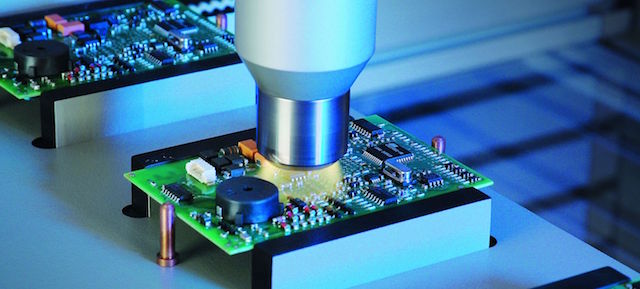
Plasma cleaning is a process of using plasma energy to clean and modify the surface of a substrate like a circuit board assembly. It is a highly effective surface cleaning and treatment process before application of conformal coatings and Parylene and is gaining more popularity due its highly effective performance.

Plasma cleaning is a process of using plasma energy to clean and modify the surface of a substrate like a circuit board assembly. It is a highly effective surface cleaning and treatment process before application of conformal coatings and Parylene.

What is Plasma?

Plasma is the energy-rich gas state (also known as the fourth state of matter) that can be used to modify the surface of a product to improve its performance.

Plasma technology is based on a simple physical principle. Matter changes its state when energy is supplied to it. Solids become liquid. Liquids become gas. If additional energy is then fed into a gas by means of electrical discharge it eventually ionises and goes into the energy-rich plasma state, plasma is created.

This modification can be improving the adhesion of a conformal coating or change the surface characteristics of the board.


How is Plasma used for improving the performance of coatings with printed circuit boards?

For electronic circuit surfaces, plasma treatment can be used in two highly effective ways.

That is it can:

  • Clean the surface of the circuit board. The surface will be free of residues and 100% contamination free including release agents and additives.
  • Activate the surface of the circuit board assembly. This will allow easier bonding and better adhesion of conformal coatings and Parylene.

These properties make it an interesting technique for improving the surface performance of an electronic circuit board.

In fact, plasma treatment can clean, activate or coat nearly all surfaces. These surfaces include plastics, metals, (e.g., aluminum), glass, recycled materials and composite materials. This means the plasma process can be highly effective on many different products.


How is the plasma applied to a circuit board to clean and activate the surface?

For materials like liquid conformal coatings and Parylene then atmospheric pressure plasma is an excellent process for cleaning surfaces and improving adhesion and surface energy performance of circuit boards.

Atmospheric plasma is generated under normal pressure. This means that low-pressure chambers are not required. The plasma is created with clean and dry compressed air and does not require forming gases. It is possible to integrate plasma directly into manufacturing processes under normal pressure conditions.

Typical plasma components used for cleaning surfaces on circuits are:

  • Plasma jets (nozzles) to apply the plasma to the surface of the circuit board. They could be controlled by a robotic system.
  • The plasma generators that create the plasma to clean or supply the coatings as required. They provide output power and, in conjunction with complete pretreatment stations, assume various control functions.
  • The process monitoring that controls the nozzles, the movement of the system and the quality of the output.

These three parts form the plasma cleaning process.


Want to know more about plasma cleaning and conformal coating performance?

Contact us now to discuss what we can do to help. Or, give us a call at (+44) 1226 249019 or email your inquiries at sales@schservices.com

0
  • Your current order total is £0.00 β€” you must have an order with a minimum of £75.00 to place your order.
0
Your Cart
Your cart is empty
  • Your current order total is £0.00 β€” you must have an order with a minimum of £75.00 to place your order.
Calculate Shipping
  • Your current order total is £0.00 β€” you must have an order with a minimum of £75.00 to place your order.

Conformal Coating UK

Technical banner showing PCB and process icons representing conformal coating, masking, inspection and training on the SCH technical knowledge hub.
Conformal Coating UK
Privacy Overview

This website uses cookies so that we can provide you with the best user experience possible. Cookie information is stored in your browser and performs functions such as recognising you when you return to our website and helping our team to understand which sections of the website you find most interesting and useful.