Mon - Thur 7.30-15.30   Fri 7.30-14.00
ProShield ESD permanent dissipative coating applied across multiple substrates for long-term static control

Introducing ProShield ESD: A New Era in Dissipative Coatings


Electrostatic discharge (ESD) is a silent but costly risk in industries where sensitive electronics, packaging, and materials must be protected. Traditional anti-static coatings β€” including temporary sprays, carbon fillers, and metal-based additives β€” have long been used to manage static. In reality, many of these solutions degrade over time, deliver uneven performance, and create hidden costs through repeated reapplication.

ProShield ESD represents a new generation of dissipative coatings. It is designed to provide permanent static protection, broad substrate compatibility, and a lower lifetime cost in a single, scalable solution.

For a deeper technical explanation of why filler-based ESD paints lose performance over time, see the Conductive Polymer Technology hub.


Why Industries Need a Better Static Control Solution

Industries such as electronics manufacturing, automotive, aerospace, and medical devices demand higher levels of reliability than ever before. However, many conventional ESD protection methods struggle to meet modern requirements:

  • Limited lifespan – Traditional coatings can degrade, requiring frequent reapplication.
  • Narrow compatibility – Performance can vary widely across plastics, foams, packaging, and flooring.
  • High hidden costs – Short service life increases downtime, rework, and material waste.

As electronic components become smaller and more sensitive, and supply chains more demanding, manufacturers need static control solutions that deliver reliable, long-term performance rather than temporary fixes.

Fundamentals of static control and resistance ranges are explained in the ESD Fundamentals hub.


What Makes ProShield ESD Different?

ProShield ESD is engineered to deliver uniform, dissipative performance without relying on temporary sprays or unstable conductive fillers. Instead, it provides a consistent static control layer designed to remain effective for the working life of the substrate.

Key benefits of ProShield ESD

  • Permanent ESD protection – Designed to eliminate routine reapplication cycles.
  • Low-cost solution – Positioned to reduce both upfront and lifetime costs.
  • Versatile substrate compatibility – Effective on plastics, foams, packaging, walls, and flooring.
  • No carbon or metal fillers – Consistent performance without contamination risks.
  • Lifecycle reliability – Protects components during production, handling, and transport.

Applications Across Modern Industries

ProShield ESD is suited to a wide range of environments where static control is critical, including:

  • Electronics manufacturing – Protecting semiconductors and circuit assemblies from ESD damage.
  • Automotive and aerospace – Safeguarding sensitive onboard systems with long-term static protection.
  • Medical devices – Supporting reliability where performance and safety are essential.
  • Logistics and packaging – Enabling ESD-safe handling and storage of high-value components.

Typical industry use cases are outlined in more detail on our ProShield ESD applications page.


A Smarter, More Sustainable Approach

By reducing the need for repeated coating applications, ProShield ESD helps lower downtime, minimise material waste, and cut overall operating costs. This approach supports modern sustainability goals while improving process efficiency and reliability.


The Future of Dissipative Coatings

ProShield ESD is more than a single product β€” it is a long-term static control strategy for industries that cannot afford compromise. By combining permanent performance, wide compatibility, and reduced lifetime cost, it sets a new benchmark for dissipative coatings.

Businesses that adopt ProShield ESD gain measurable advantages in reliability, cost control, and compliance β€” helping secure performance in an increasingly demanding manufacturing landscape.

If you’re evaluating alternatives to traditional ESD paints, speak to our team via the contact page to discuss suitability and cost.
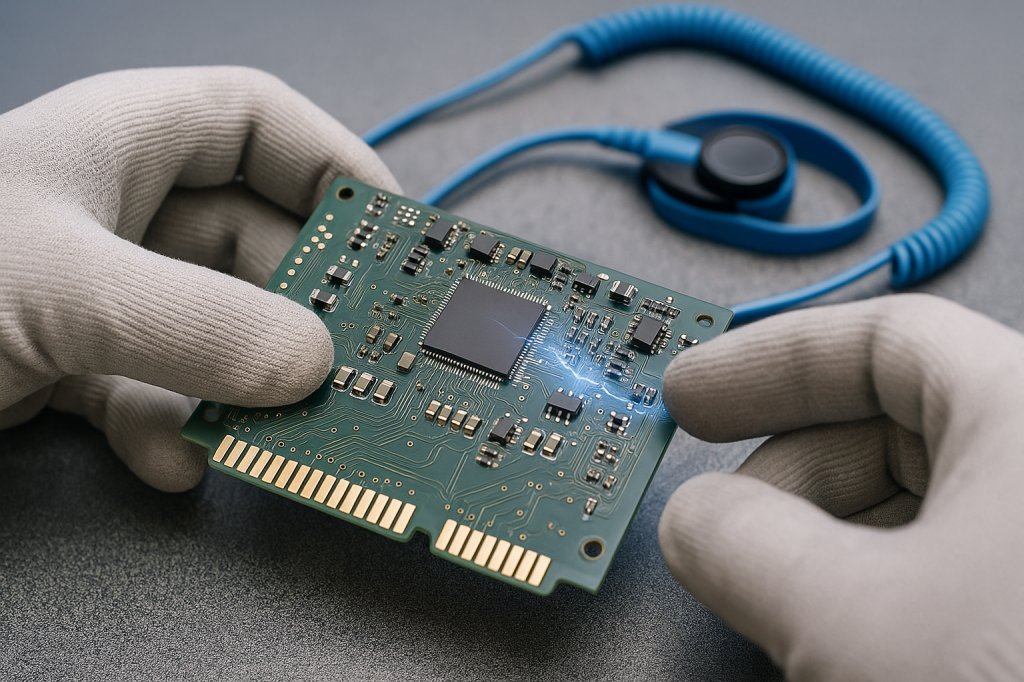
Static control and electrostatic discharge protection in industrial electronics manufacturing

Why Static Control Matters More Than Ever in Modern Industries


In today’s high-tech manufacturing and logistics environments, static electricity is far more than an occasional nuisance β€” it represents a significant commercial, quality, and safety risk. Across electronics manufacturing, medical devices, automotive systems, aerospace, and logistics, uncontrolled electrostatic discharge (ESD) can damage sensitive components, disrupt production, and compromise long-term reliability.

The Hidden Risk of Electrostatic Discharge (ESD)

Electrostatic discharge occurs when two objects with different electrical charges come into contact or close proximity, allowing charge to transfer rapidly. While a human may only feel a static shock at around 3,000 volts, modern electronic components can be permanently damaged by discharges as low as 30 volts. As electronics continue to shrink and performance densities increase, tolerance to ESD continues to decline.

This means effective static control is no longer optional β€” it is a fundamental requirement for modern manufacturing and handling environments.

Industry Impact: Where ESD Causes the Most Damage

  • Electronics Manufacturing – ESD can cause latent damage to semiconductors, leading to early-life failures, reduced yield, and costly field returns.
  • Automotive & Aerospace – Modern vehicles and aircraft rely heavily on complex electronics; ESD-related failures can impact safety-critical systems.
  • Medical Devices – Reliability is essential. ESD damage in medical electronics can compromise performance and patient safety.
  • Logistics & Packaging – Poor static control increases the risk of component damage during storage and transport and can introduce ignition hazards in sensitive environments.

Why Static Control Is Becoming More Critical

  • Component Miniaturisation – Smaller geometries and thinner insulating layers increase ESD sensitivity.
  • Extended Global Supply Chains – ESD damage can occur at any stage, from manufacture through shipping and final assembly.
  • Compliance and Quality Expectations – Standards and customer requirements increasingly demand robust ESD controls.
  • Waste Reduction and Sustainability – Preventing scrap and rework lowers environmental impact and total cost.

Modern Approaches to Static Control

Traditional static control methods β€” such as temporary sprays or heavily filled conductive paints β€” often degrade over time, require frequent reapplication, or introduce contamination risks. Modern ESD strategies focus on permanent, homogeneous dissipation methods that provide stable performance throughout the product lifecycle.

Innovative conductive polymer technologies, such as those used in ProShieldESD, enable uniform static dissipation across a wide range of substrates including plastics, foams, paper, cardboard, packaging, and flooring. These solutions provide long-term protection without the drawbacks associated with carbon or metal-filled systems.

Static Control as a Long-Term Strategy

Effective static control is not a one-off fix β€” it is a strategic decision that supports quality, safety, and operational efficiency. Organisations that invest in robust ESD protection reduce downtime, minimise losses, and protect their reputation for reliability.

For businesses operating in high-reliability industries, controlling static electricity is not simply good practice β€” it is mission-critical.

Learn more about advanced static control solutions: ProShieldESD

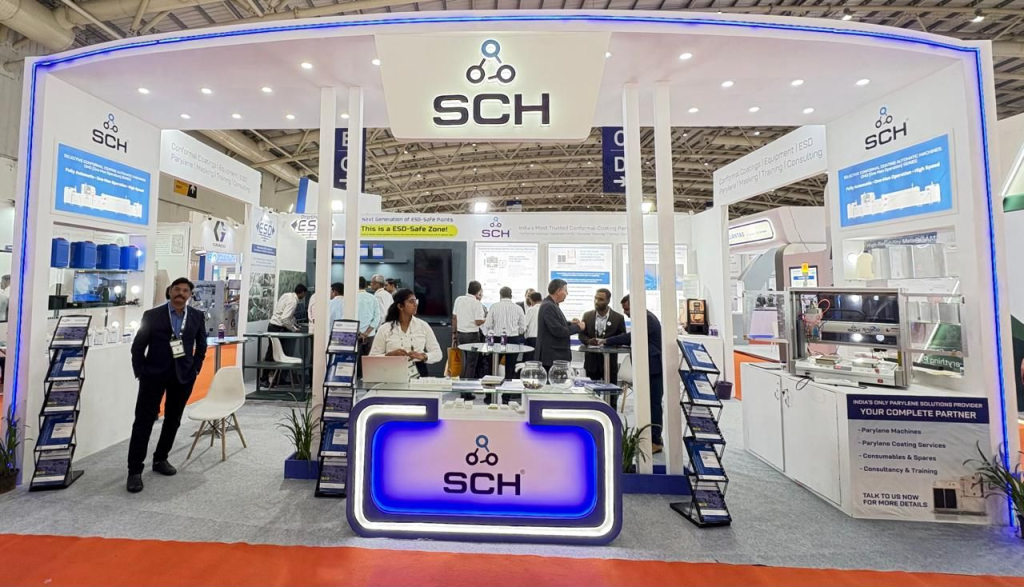
SCH India showcasing Parylene technologies and ProShield ESD solutions at Productronica India 2025 in Bangalore

SCH Coating Solutions to Present Complete Parylene and ProShieldESD Portfolio at Productronica India 2025


Bangalore, India – 17/09/2025 – SCH Coating Solutions Pvt. Ltd. (SCH India), a specialist in advanced electronics protection and surface engineering, will showcase its full portfolio of Parylene technologies and ProShield ESD solutions at Productronica India 2025, taking place 17–19 September at BIEC, Bangalore.

Visitors to Hall 4 – Booth H4.C71 can explore SCH’s end-to-end offering, spanning high-purity Parylene dimers, CE-ready deposition machines, technical consulting and training, in-house coating services and rapid prototyping, plus ProShield ESD paints and field services.

Explore ProShield ESD solutions, applications, and technical information here.

Comprehensive Parylene Solutions: Materials, Equipment, Services and Prototyping

SCH India delivers a complete Parylene package for OEMs, EMS providers, start-ups, and high-reliability electronics manufacturers. Customers can engage with SCH at any point in the value chain, from raw material supply through to prototype coating and full-scale in-house implementation.

  • High-Purity Parylene Dimers – Reliable supply of major grades including N, C, D, and HT/F to support consistent, high-quality film formation.
  • Deposition Machines – CE-ready Parylene deposition systems from compact R&D platforms to production-scale chambers, engineered for uniform, pinhole-free coatings.
  • In-House Coating Service and Rapid Prototyping – ISO-controlled capability in India supporting quick-turn coating, proof-of-concept builds, small batches, and pilot runs ahead of full production scale-up.
  • Consulting and Training – Support covering process design, equipment commissioning, cost modelling, and operator training to help companies adopt Parylene in-house or outsource with confidence.

This integrated approach enables customers to qualify materials, outsource coating, validate prototypes quickly, or establish a full in-house Parylene line with expert guidance at every step.

ProShield ESD: Product, Paint and Services

Alongside Parylene, SCH India will present ProShield ESD β€” a 100% polymer, filler-free conductive paint technology designed to deliver permanent electrostatic discharge (ESD) protection across a wide range of substrates.

  • Ready-to-Apply Paint Supply – Suitable for metals, plastics, wood, paper, EVA foam, PVC sheets, walls, and floors.
  • On-Site Coating Services – Application support and site work for factories, cleanrooms, and high-tech facilities requiring defined ESD performance and documentation.
  • OEM and Private Label Supply – Bulk supply and white-label options for distributors and integrators.

Innovation That Protects Electronics

β€œAt SCH India, we provide a true end-to-end electronics protection ecosystem,” said Praveen Kumar Munipally, Director – Technical & Marketing.

β€œFrom high-purity Parylene dimers, turnkey deposition systems, and in-house coating with rapid prototyping to ProShield ESD paints and field-applied coatings, we enable customers to accelerate development and meet high reliability requirements.”


Visit SCH India at Productronica India 2025

Attendees at Hall 4 – Booth H4.C71 can explore:

  • Live demonstrations of ProShield ESD coatings on multiple substrates
  • Sample Parylene-coated prototypes showing barrier and dielectric performance
  • Technical consultations on Parylene adoption, prototyping, and ESD compliance

About SCH Coating Solutions

SCH Coating Solutions Pvt. Ltd. is a global specialist in Parylene coatings, conformal coatings, ESD protection, and turnkey equipment. With operations in India and the UK, SCH provides materials, machines, rapid-prototype coating services, and consulting support across electronics, defence, automotive, aerospace, and medical sectors.

Media Contact

SCH India – Praveen Kumar M S, Technical Director – Asia – praveen@schservices.com
SCH UK – Dr. Lee Hitchens, Technical Director – Europe – lee.hitchens@schservices.com

For SCH India services, local support, and electronics protection capability in the region, visit the SCH India website.

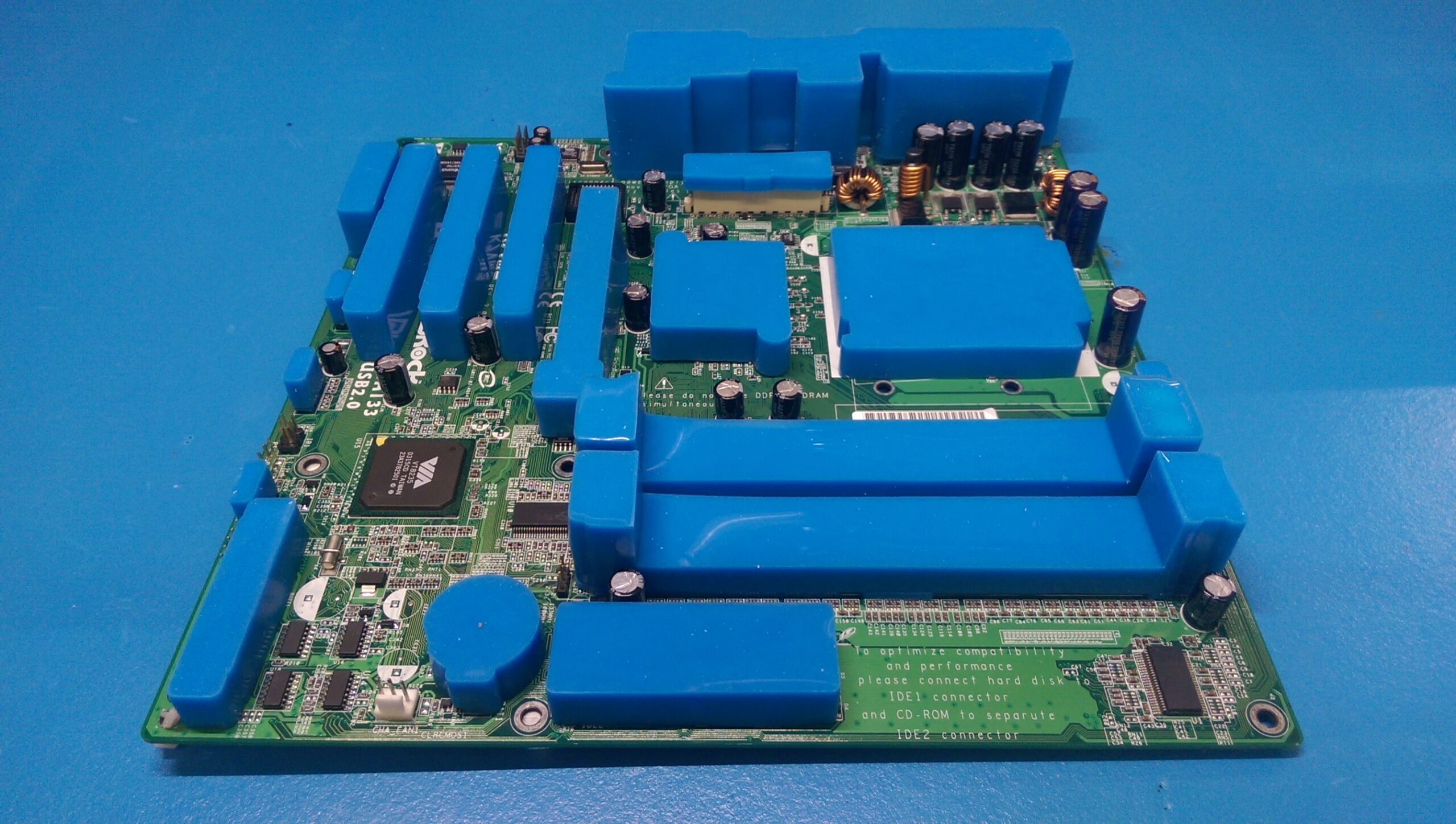
Conformal coating masking boots used on Printed circuit board as an alternative to masking tapes

Using custom masking boots for the conformal coating masking process saves time, money and improves quality. Find out why….


Masking is a critical step in conformal coating processes, protecting connectors, test points, and keep-out areas from unwanted coating ingress. Traditional masking materials such as tapes, dots, and liquid latex can be effective, but they are often labour-intensive and inconsistent.

In many conformal coating operations, masking and de-masking account for a significant proportion of overall process time and cost. In some cases, these steps can represent more than 75% of the total coating effort, driving up labour costs and limiting throughput.

To understand how masking boots fit into a complete conformal coating process, explore our masking solutions.


Using Recyclable Masking Boots as an Alternative to Tapes, Dots, and Latex

Reusable conformal coating masking boots offer a faster, more reliable alternative to traditional masking methods. By switching to masking boots, manufacturers can significantly reduce process time while improving consistency and repeatability.

Three key reasons to change to masking boots:

  1. Reduced masking time – Masking boots can be four to five times faster to apply than traditional masking tape or dots.
  2. Reduced de-masking time – Removal of masking boots is quicker and cleaner than peeling tape or removing cured latex.
  3. Improved sealing – Masking boots provide a more consistent seal and are less prone to leakage, reducing the need for inspection and repair.

These benefits allow manufacturers to achieve rapid cost savings and improve process efficiency when transitioning away from tape- and latex-based masking.


Find Out More About Conformal Coating Masking Boots

If you are reviewing your masking process or looking to reduce coating-related labour costs, SCH Services Ltd can help assess whether masking boots are suitable for your application.

If you would like to discuss masking boots for your assemblies or compare them against tape-based methods, contact our team.

Why Solids Content Matters When Costing Conformal Coating Application


The solids content of a conformal coating represents the proportion of material that remains on the printed circuit board once solvents have evaporated. In simple terms, solids content determines how much usable coating you actually obtain from each litre of material.

The higher the solids content, the more circuit boards can be coated from the same volume β€” directly impacting material efficiency and cost.

High Solids Means Real Coverage

When selecting a conformal coating, it is tempting to focus solely on the price per litre. However, this can be misleading. What truly matters is the final solids content at application viscosity, not the as-supplied specification on the datasheet.

In many cases, a large proportion of the purchased material is solvent that will evaporate during application, contributing nothing to protection.

To understand how solids content fits into overall coating selection and process design, explore our conformal coating materials.

Be Careful When Comparing Coating Materials

Conformal coatings from different manufacturers can vary significantly in both solids content and viscosity. These differences can lead to substantial hidden cost variations, even when products appear similar on paper.

A meaningful comparison must always consider the true solids content of the coating as applied in production, once diluted to the correct working viscosity.

A Typical Industry Example

Consider a common scenario seen across the conformal coating industry:

  • Material X is supplied at 35% solids with a viscosity of approximately 190 cps.
  • To achieve correct spray application, the coating must be reduced to around 24 cps.
  • This reduction requires approximately 50% dilution with solvent.

After dilution:

  • The coating now contains only 17.5% solids.
  • More than 80% of the applied material evaporates during application.

In practical terms, less than one-fifth of the purchased material contributes to actual PCB protection.

Not All Coatings Deliver the Same Value

It is incorrect to assume all conformal coatings perform β€” or cost β€” the same in real-world use.

For example, SCH supplies a UL-approved acrylic conformal coating that is 44% solids at 24 cps, supplied ready to spray without dilution.

When compared directly:

  • Material X: 17.5% solids at spray viscosity
  • High-solids coating: 44% solids at spray viscosity

The higher-solids material provides more than twice the effective coverage per litre. If both coatings are similarly priced per litre, over twice as much of the lower-solids material would be required to achieve equivalent protection.

The Takeaway

Careful evaluation of solids content at application viscosity can deliver substantial material cost savings, reduced solvent handling, and more predictable coating performance.

When costing conformal coating processes, always look beyond headline datasheet values β€” real efficiency is defined by what remains on the board, not what evaporates away.

Want to Calculate Your True Coating Cost?

If you would like a spreadsheet that allows you to calculate coating coverage and cost per PCB using your own process parameters, SCH can provide this directly.

If you would like a coverage and cost calculation spreadsheet or want to discuss your coating process, contact our technical team.

0
  • Your current order total is £0.00 β€” you must have an order with a minimum of £75.00 to place your order.
0
Your Cart
Your cart is empty
  • Your current order total is £0.00 β€” you must have an order with a minimum of £75.00 to place your order.
Calculate Shipping
  • Your current order total is £0.00 β€” you must have an order with a minimum of £75.00 to place your order.

Conformal Coating UK

Conformal Coating UK
Privacy Overview

This website uses cookies so that we can provide you with the best user experience possible. Cookie information is stored in your browser and performs functions such as recognising you when you return to our website and helping our team to understand which sections of the website you find most interesting and useful.