Parylene Material Compatibility and Adhesion
Design rules for substrates, surface preparation and long-term coating stability
← Back to the Parylene Design Hub
Parylene material compatibility and adhesion are critical to coating performance. Even though Parylene deposits uniformly from the vapour phase, long-term reliability depends on how well the coating bonds to the underlying materials.
This guide explains which materials are compatible with Parylene, how surface condition affects adhesion and what design and preparation steps are needed to achieve stable, repeatable coating performance.
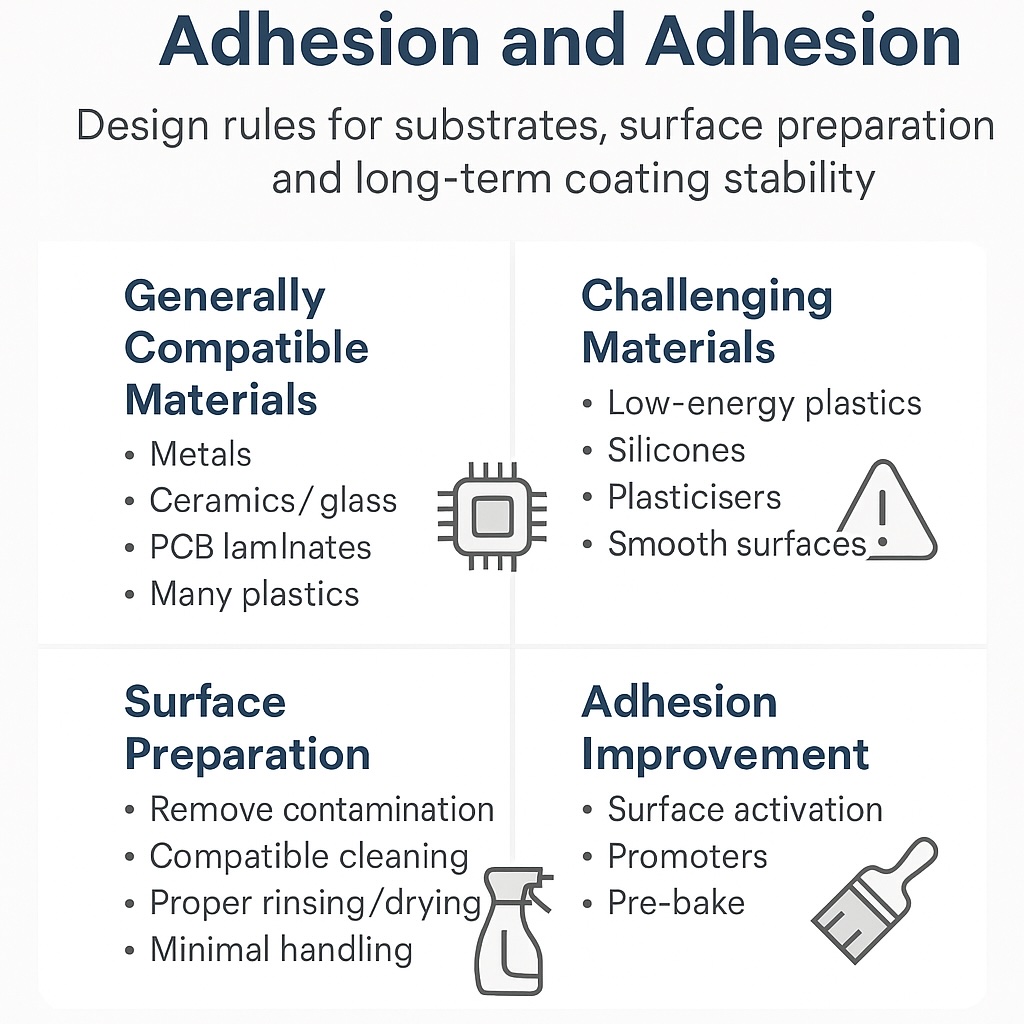
How material selection affects Parylene adhesion, stability and long-term coating performance.
Why Material Compatibility Matters
Parylene material compatibility and adhesion directly influence:
- Risk of delamination over time
- Resistance to moisture and chemicals
- Stability through thermal cycling and sterilisation
- Electrical insulation performance
Adhesion failures are one of the most common causes of field returns and reliability issues in coated assemblies.
Generally Compatible Materials
Many materials bond well to Parylene when properly prepared:
- Metals such as stainless steel, aluminium and titanium
- Ceramics and glass
- FR-4 and common PCB laminates
- Many engineering plastics
Cleanliness and surface condition still play a major role, even for otherwise compatible materials.
Challenging or Conditional Materials
Some materials require additional attention for reliable Parylene material compatibility and adhesion:
- Low-surface-energy plastics
- Silicones and elastomers
- Materials containing plasticisers or uncured resins
- Highly polished or very smooth surfaces
These materials often require surface activation or adhesion promoters.
Surface Preparation & Cleaning
Good adhesion begins with surface preparation:
- Removal of oils, flux residues and mould release agents
- Use of compatible cleaning chemistries
- Controlled rinsing and drying
- Minimising handling after cleaning
Poor cleaning undermines even the best Parylene coating process.
Adhesion Promotion Techniques
To improve Parylene material compatibility and adhesion, processes may include:
- Plasma or corona surface activation
- Chemical adhesion promoters
- Controlled pre-bake to remove volatiles
The correct approach depends on substrate type, environment and regulatory constraints.
Design Decisions That Affect Adhesion
Design choices strongly influence adhesion performance:
- Avoid trapping contaminants in tight gaps
- Specify compatible inks, labels and adhesives
- Consider surface finishes and roughness
Adhesion should be considered a design requirement, not just a process step.
Explore Topic Hubs
Why Work with SCH on Parylene Materials & Adhesion?
SCH supports customers managing Parylene material compatibility and adhesion through:
- Design-led reviews focused on substrates and surface condition
- Turnkey capability covering coating services, equipment and dimers
- Cross-sector experience in medical, aerospace, automotive and industrial applications
- Qualification support through trials, testing and process optimisation
Call: +44 (0)1226 249019 · Email: sales@schservices.com
Contact SCH to discuss materials and adhesion requirements ›
Disclaimer: This article provides general guidance on Parylene material compatibility and adhesion. Performance, suitability and compliance depend on the specific design, materials and environment. SCH Services can review assemblies and specifications to confirm the most appropriate Parylene coating approach.