Mon - Thur 7.30-15.30   Fri 7.30-14.00

Parylene vs Traditional Coatings: Which is Right for You?


When it comes to protecting sensitive electronics, medical devices, and mission-critical components, the choice of coating can define long-term performance. Two common options are Parylene coating and traditional conformal coatings such as acrylics, silicones, and urethanes. Each offers unique benefits β€” but which is right for your application?

For an overview of vapour-deposited protection and where it fits within modern electronics manufacturing, see our Parylene coating solutions.


What Makes Parylene Different?

Parylene is applied using a vapour deposition process, producing a pinhole-free, highly uniform film that coats every exposed surface β€” including hidden spaces and complex geometries.

This process helps deliver:

  • Exceptional moisture barrier performance
  • Ultra-thin yet durable protection
  • Strong resistance to chemicals, solvents, and temperature extremes

Because it forms a truly conformal layer, Parylene is often selected where reliability cannot be compromised.

Our Parylene coating services are used where uniform coverage, low thickness, and high reliability are critical.


Where Traditional Conformal Coatings Excel

Traditional conformal coatings are typically applied by brushing, spraying, or dipping. They remain highly effective in many environments and offer practical advantages such as:

  • Faster application and curing (process dependent)
  • Lower cost compared to Parylene (in many cases)
  • Easier rework and repair during production

For applications where cost sensitivity or rapid turnaround is key, traditional coatings can be the most commercially sensible option.

For applications where cost, speed, or rework access are priorities, our liquid conformal coating solutions remain a highly effective option.


Making the Right Choice

The right choice depends on your environment and performance requirements. If your device must endure harsh conditions or complex 3D coverage requirements, Parylene coating can provide unmatched protection. For less demanding applications, traditional conformal coatings may strike the best balance between performance, reworkability, and budget.

The right choice depends on environment, geometry, and compliance requirements, which is why many manufacturers engage our coating services for application-specific guidance and discuss the options.


SCH Services Ltd: Your Coating Partner

At SCH Services Ltd, we provide both Parylene and liquid conformal coating solutions β€” helping you select the right option for your project. Whether you need high-performance protection or cost-effective coverage, our expertise ensures your product is protected for the long term.

Learn more: Parylene coating services
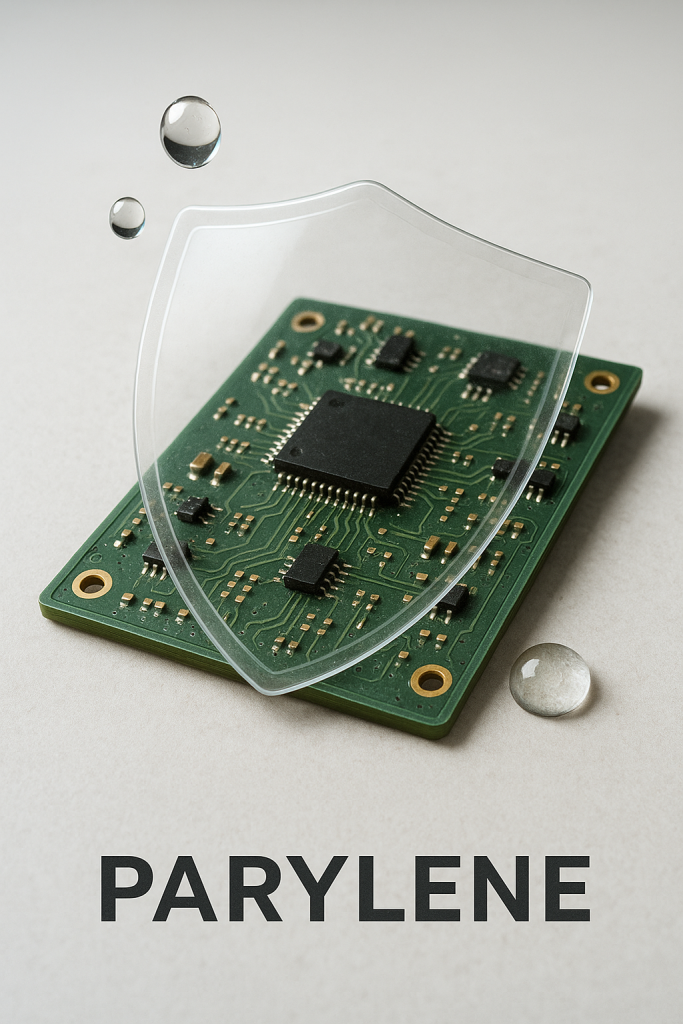
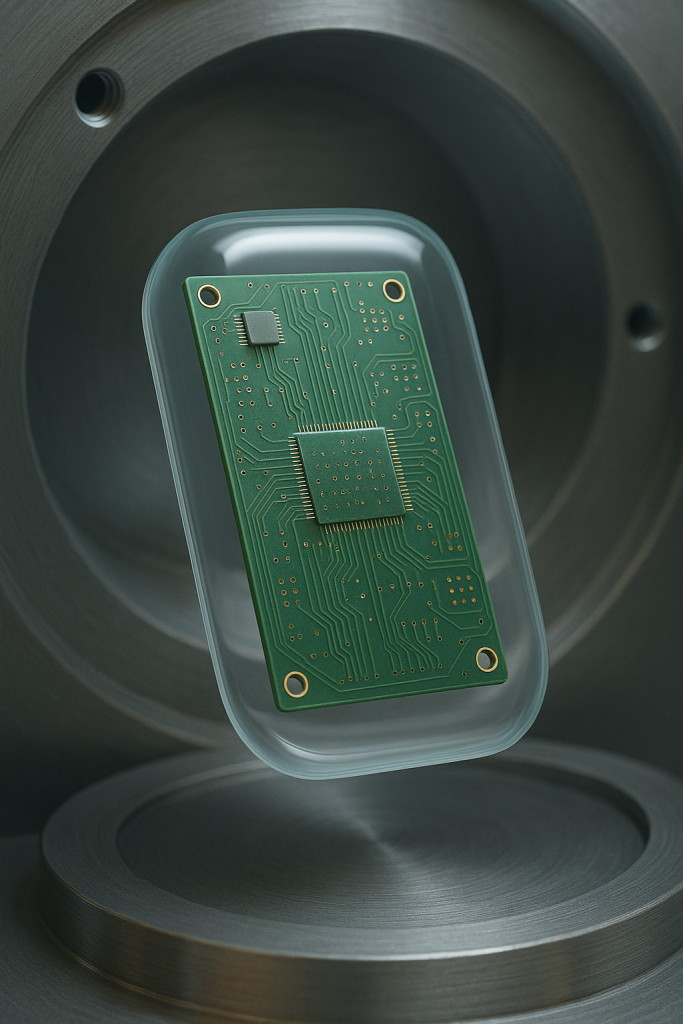
Parylene coating providing invisible protection for electronic components against moisture and environmental damage

The Hidden Protector: How Parylene Safeguards What You Don’t See


When it comes to protecting modern electronics and critical components, the greatest threats are often the ones you cannot see. Microscopic cracks, invisible moisture, and environmental contaminants all pose silent risks to performance and long-term reliability. This is where Parylene coating excels β€” acting as an ultra-thin, invisible shield that delivers durable, long-term protection.

Learn more about SCH Services’ specialist Parylene coating services here.

The Power of Parylene Coating

Unlike traditional conformal coating methods that are brushed, dipped, or sprayed, Parylene is applied using a specialised vapour deposition process. This process allows the coating to polymerise directly onto the surface, forming a uniform, pinhole-free layer that fully encapsulates components.

The result is a truly conformal barrier that coats not only visible surfaces but also sharp edges, internal geometries, and hidden crevices that liquid-applied coatings often struggle to reach.

Invisible Moisture Protection

Moisture remains one of the leading causes of electronic failure. Even minimal condensation can lead to corrosion, leakage currents, or short circuits. Parylene provides exceptional moisture resistance by forming a continuous microscopic film that significantly reduces water vapour ingress.

This makes Parylene particularly effective in harsh, humid, or environmentally demanding applications where traditional coatings may degrade or fail over time.

Why Industries Rely on Parylene

Industries such as aerospace, automotive, medical devices, and consumer electronics rely on Parylene because of its proven performance and reliability. It is lightweight, chemically resistant, biocompatible, and stable across a wide temperature range β€” making it suitable for applications where failure is not acceptable.

SCH Services Ltd – Your Partner in Invisible Protection

At SCH Services Ltd, we specialise in both liquid and Parylene conformal coating services, providing tailored solutions to meet specific environmental and performance requirements. Whether protection is needed against moisture, chemicals, or long-term environmental exposure, Parylene offers reliable defence against unseen threats.

Because in many applications, the best protection is the protection you never notice.

For detailed information on Parylene coating capabilities, applications, and process control, visit our Parylene coating services page.

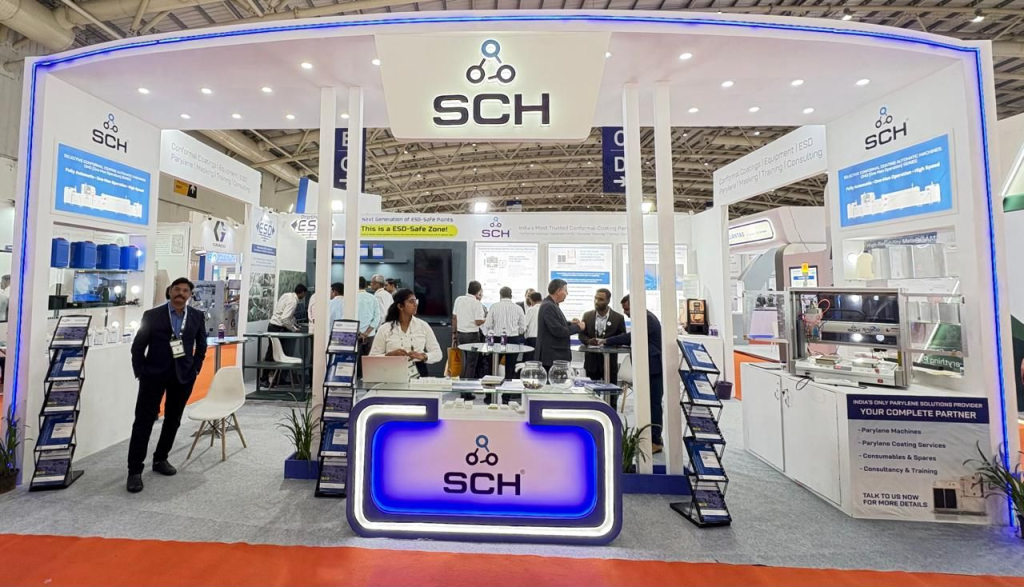
SCH India showcasing Parylene technologies and ProShield ESD solutions at Productronica India 2025 in Bangalore

SCH Coating Solutions to Present Complete Parylene and ProShieldESD Portfolio at Productronica India 2025


Bangalore, India – 17/09/2025 – SCH Coating Solutions Pvt. Ltd. (SCH India), a specialist in advanced electronics protection and surface engineering, will showcase its full portfolio of Parylene technologies and ProShield ESD solutions at Productronica India 2025, taking place 17–19 September at BIEC, Bangalore.

Visitors to Hall 4 – Booth H4.C71 can explore SCH’s end-to-end offering, spanning high-purity Parylene dimers, CE-ready deposition machines, technical consulting and training, in-house coating services and rapid prototyping, plus ProShield ESD paints and field services.

Explore ProShield ESD solutions, applications, and technical information here.

Comprehensive Parylene Solutions: Materials, Equipment, Services and Prototyping

SCH India delivers a complete Parylene package for OEMs, EMS providers, start-ups, and high-reliability electronics manufacturers. Customers can engage with SCH at any point in the value chain, from raw material supply through to prototype coating and full-scale in-house implementation.

  • High-Purity Parylene Dimers – Reliable supply of major grades including N, C, D, and HT/F to support consistent, high-quality film formation.
  • Deposition Machines – CE-ready Parylene deposition systems from compact R&D platforms to production-scale chambers, engineered for uniform, pinhole-free coatings.
  • In-House Coating Service and Rapid Prototyping – ISO-controlled capability in India supporting quick-turn coating, proof-of-concept builds, small batches, and pilot runs ahead of full production scale-up.
  • Consulting and Training – Support covering process design, equipment commissioning, cost modelling, and operator training to help companies adopt Parylene in-house or outsource with confidence.

This integrated approach enables customers to qualify materials, outsource coating, validate prototypes quickly, or establish a full in-house Parylene line with expert guidance at every step.

ProShield ESD: Product, Paint and Services

Alongside Parylene, SCH India will present ProShield ESD β€” a 100% polymer, filler-free conductive paint technology designed to deliver permanent electrostatic discharge (ESD) protection across a wide range of substrates.

  • Ready-to-Apply Paint Supply – Suitable for metals, plastics, wood, paper, EVA foam, PVC sheets, walls, and floors.
  • On-Site Coating Services – Application support and site work for factories, cleanrooms, and high-tech facilities requiring defined ESD performance and documentation.
  • OEM and Private Label Supply – Bulk supply and white-label options for distributors and integrators.

Innovation That Protects Electronics

β€œAt SCH India, we provide a true end-to-end electronics protection ecosystem,” said Praveen Kumar Munipally, Director – Technical & Marketing.

β€œFrom high-purity Parylene dimers, turnkey deposition systems, and in-house coating with rapid prototyping to ProShield ESD paints and field-applied coatings, we enable customers to accelerate development and meet high reliability requirements.”


Visit SCH India at Productronica India 2025

Attendees at Hall 4 – Booth H4.C71 can explore:

  • Live demonstrations of ProShield ESD coatings on multiple substrates
  • Sample Parylene-coated prototypes showing barrier and dielectric performance
  • Technical consultations on Parylene adoption, prototyping, and ESD compliance

About SCH Coating Solutions

SCH Coating Solutions Pvt. Ltd. is a global specialist in Parylene coatings, conformal coatings, ESD protection, and turnkey equipment. With operations in India and the UK, SCH provides materials, machines, rapid-prototype coating services, and consulting support across electronics, defence, automotive, aerospace, and medical sectors.

Media Contact

SCH India – Praveen Kumar M S, Technical Director – Asia – praveen@schservices.com
SCH UK – Dr. Lee Hitchens, Technical Director – Europe – lee.hitchens@schservices.com

For SCH India services, local support, and electronics protection capability in the region, visit the SCH India website.

What Is Parylene Coating and Why Is It Different From Other Conformal Coatings?


In electronics and advanced manufacturing, protecting sensitive components from moisture, chemicals, and environmental stress is critical. Conformal coatings play a key role in improving reliability and reducing field failures β€” but not all coatings perform the same. Parylene stands out as a highly effective solution when coverage, consistency, and long-term performance matter most.

What Is Parylene?

Parylene is a family of thin, transparent polymer coatings applied using a chemical vapour deposition (CVD) process. Unlike liquid conformal coatings that are sprayed, brushed, or dipped, Parylene is deposited as a vapour in a vacuum chamber. This allows it to coat external and internal surfaces with a uniform, pinhole-free film.

Common Parylene types include:

  • Parylene N – Excellent dielectric properties and strong performance in high-frequency applications.
  • Parylene C – Widely used for outstanding moisture and chemical resistance.
  • Parylene F (AF-4) – Enhanced high-temperature stability and chemical resistance.

How Parylene Differs From Liquid Conformal Coatings

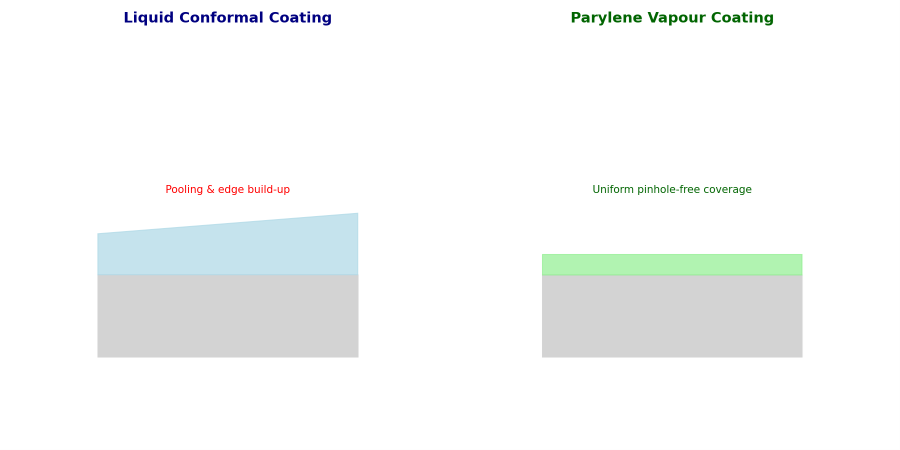
  1. Application method – Vapour deposition in a vacuum chamber delivers even coverage without pooling, meniscus effects, or edge build-up.
  2. Coverage – Parylene can penetrate tight gaps, coat under components, and reach complex geometries that liquid coatings often cannot.
  3. Film properties – Typically ultra-thin (commonly 1–50 Β΅m), transparent, flexible, and suitable for demanding environments.
  4. Performance – Strong resistance to moisture and many chemicals, with stable electrical and dielectric characteristics.
  5. Cleanliness – As a dry, solvent-free deposition process, Parylene avoids solvent residues and is well suited to sensitive applications including medical and aerospace electronics.

Liquid vs Parylene Coating

Comparison between liquid conformal coating and Parylene vapour deposition on electronic assemblies

Comparison between traditional liquid conformal coating and Parylene vapour deposition.

Where Is Parylene Used?

  • Medical devices – Catheters, sensors, pacemakers, and implantable or body-contact components.
  • Aerospace and defence – High-reliability electronics, sensors, and mission-critical assemblies.
  • Automotive – EV electronics, sensors, and ADAS-related components.
  • Consumer electronics – Wearables, IoT products, and microelectronics.

Why Choose SCH for Parylene?

At SCH Services Ltd, we combine decades of coating expertise with a complete Parylene offering:

  • Subcontract coating services – ISO-controlled Parylene coating capability for prototypes through to production.
  • Turnkey Parylene systems – Equipment, dimers, training, and long-term technical support for in-house deployment.
  • Reliable materials supply – Official European distribution partnership supporting consistent dimer availability and quality.

Whether you need immediate coating capacity or a full in-house solution, SCH provides the knowledge, equipment, and materials to support success.

If you would like to discuss Parylene coating for your assemblies or compare options against liquid coatings, get in touch with SCH. To explore SCH’s wider Parylene capabilities, including services, equipment, dimers, and support, visit our Parylene solutions page.

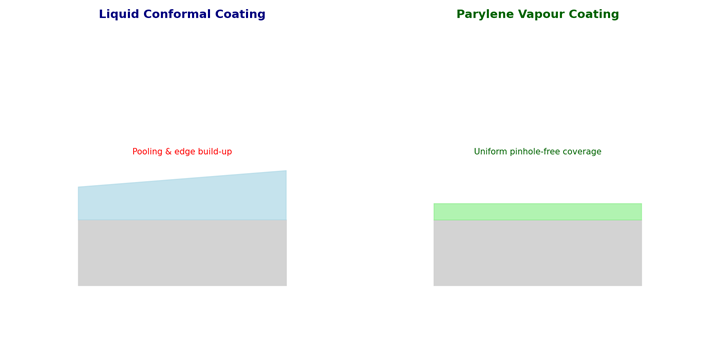
Comparison between liquid conformal coating and Parylene vapour deposition on electronic assemblies

What Is Parylene Coating and Why Is It Different From Other Conformal Coatings?


In electronics and advanced manufacturing, protecting sensitive components from moisture, chemicals, and environmental stress is critical. Conformal coatings play a vital role in ensuring long-term reliability, but not all coatings perform in the same way. Among available technologies, Parylene stands out as a unique and highly effective solution.

What Is Parylene?

Parylene is a family of thin, transparent polymer coatings applied using a chemical vapour deposition (CVD) process. Unlike liquid conformal coatings that are sprayed, brushed, or dipped, Parylene is deposited as a vapour inside a vacuum chamber. This enables it to coat all exposed surfaces β€” internal and external β€” with a uniform, pinhole-free film.

The most common Parylene variants include:

  • Parylene N – Excellent dielectric properties, often used in high-frequency applications.
  • Parylene C – The most widely used type, offering strong moisture and chemical resistance.
  • Parylene F (AF-4) – Enhanced high-temperature and chemical resistance.

How Parylene Differs From Other Conformal Coatings

  1. Application method – Vapour deposition in a vacuum environment ensures even coverage without pooling, meniscus effects, or edge build-up.
  2. Coverage – Parylene penetrates tight gaps, coats under components, and reaches complex geometries that liquid coatings cannot.
  3. Film properties – Ultra-thin (typically 1–50 Β΅m), transparent, flexible, and biocompatible.
  4. Performance – Superior resistance to moisture, chemicals, and many extreme environments.
  5. Cleanliness – A dry, solvent-free process that leaves no residues, making it ideal for medical, aerospace, and high-reliability electronics.

Where Is Parylene Used?

  • Medical devices – Catheters, stents, pacemakers, sensors, and implantable electronics.
  • Aerospace and defence – Flight electronics, sensors, and mission-critical systems.
  • Automotive – EV electronics, sensors, and ADAS components.
  • Consumer electronics – Wearables, IoT devices, and microelectronics.

Why Choose SCH for Parylene?

At SCH Services Ltd, we combine over 30 years of coating expertise with a complete Parylene offering that supports both outsourced coating and in-house capability.

  • Subcontract coating services – ISO-controlled, production-ready Parylene coating.
  • Turnkey Parylene systems – Complete equipment, dimers, training, and long-term technical support.
  • Reliable materials supply – Official European distribution supporting quality and continuity.

Whether you need immediate coating capacity or a fully validated in-house process, SCH provides the knowledge, equipment, and materials to ensure long-term success.

If you would like to discuss whether Parylene is the right solution for your application, get in touch with SCH. Β To explore SCH’s complete Parylene capability, including services, equipment, dimers, and technical support, visit our Parylene solutions page.

How to Remove Parylene From a Printed Circuit Board


conformal coating rework collage 640_SCH UK

Removing conformal coatings from a printed circuit board (PCB) is a hard process to do well. Removing Parylene coating is even more difficult.

The problems are many but a key reason is that the Parylene coating itself is chemically inert. It has a very high chemical resistance so the solvents don’t work well. This means any chemical attack tried with solvents or other liquid chemicals on the Parylene is as much likely to damage the circuit board than remove the actual coating.

This leaves the basic option of mechanical abrasion.

Mechanical Abrasion

Mechanical abrasion is a well known method for Parylene Removal. It can be done crudely by scraping off the Parylene with a knife or tool. Or, removal can be done with a media blast system like a Vaniman Problast system that gradually erodes the Parylene coating away.

However, mechanical abrasion is a time consuming process and is highly skilled. Also, it tends to be a localised repair and removal technique.

The concept of completely removing all of the Parylene off a circuit by mechanical abrasion is considered almost impossible unless a ridiculous amount of time and effort is injected into the process.


Find out now how much money you can save by using our Parylene removal service

We are happy to provide a quotation for removing Parylene through our coating services so you can see for yourself how much you can save.

Contact us now to request your quotation for complete removal of Parylene from a circuit board. Or, give us a call at (+44) 1226 249019 or email your inquiries at sales@schservices.com

Β 

0
  • Your current order total is £0.00 β€” you must have an order with a minimum of £75.00 to place your order.
0
Your Cart
Your cart is empty
  • Your current order total is £0.00 β€” you must have an order with a minimum of £75.00 to place your order.
Calculate Shipping
  • Your current order total is £0.00 β€” you must have an order with a minimum of £75.00 to place your order.

Conformal Coating UK

Technical banner showing PCB and process icons representing conformal coating, masking, inspection and training on the SCH technical knowledge hub.
Conformal Coating UK
Privacy Overview

This website uses cookies so that we can provide you with the best user experience possible. Cookie information is stored in your browser and performs functions such as recognising you when you return to our website and helping our team to understand which sections of the website you find most interesting and useful.