Cracking of conformal coating is most often discovered not during initial inspection, but after thermal cycling, environmental testing, or extended service exposure.
In field investigations, cracking is rarely caused by a single factor. Instead, it is usually the result of combined stresses, such as excessive coating thickness, rigid material selection, and differential thermal expansion between the coating and substrate.
We commonly see cracking:
- Over sharp component edges or solder fillets
- Where coating thickness exceeds recommended limits
- On assemblies exposed to wide thermal excursions
Importantly, coatings that appear compliant and defect-free at room temperature may still fail under thermal stress if thickness and material flexibility are not properly controlled.
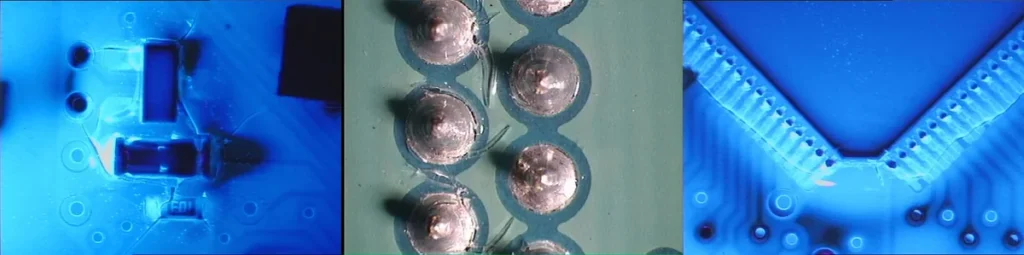
Cracking of conformal coating after thermal cycling, typically occurring at stress points such as solder joints, sharp edges and areas of excessive coating thickness.
In practice, cracking risk is also closely tied to how the coating is applied and cured. Poor control of film build, flash-off and cure conditions can increase internal stress and make later failure more likely. For broader process guidance, see Conformal Coating Curing & Drying.
A deeper technical breakdown of cracking mechanisms and prevention is available in our Defects Hub article on cracking in conformal coating.