
Mon - Thur 7.30-15.30   Fri 7.30-14.00

Parylene vs Traditional Coatings: Which is Right for You?


When it comes to protecting sensitive electronics, medical devices, and mission-critical components, the choice of coating can define long-term performance. Two common options are Parylene coating and traditional conformal coatings such as acrylics, silicones, and urethanes. Each offers unique benefits β€” but which is right for your application?

For an overview of vapour-deposited protection and where it fits within modern electronics manufacturing, see our Parylene coating solutions.


What Makes Parylene Different?

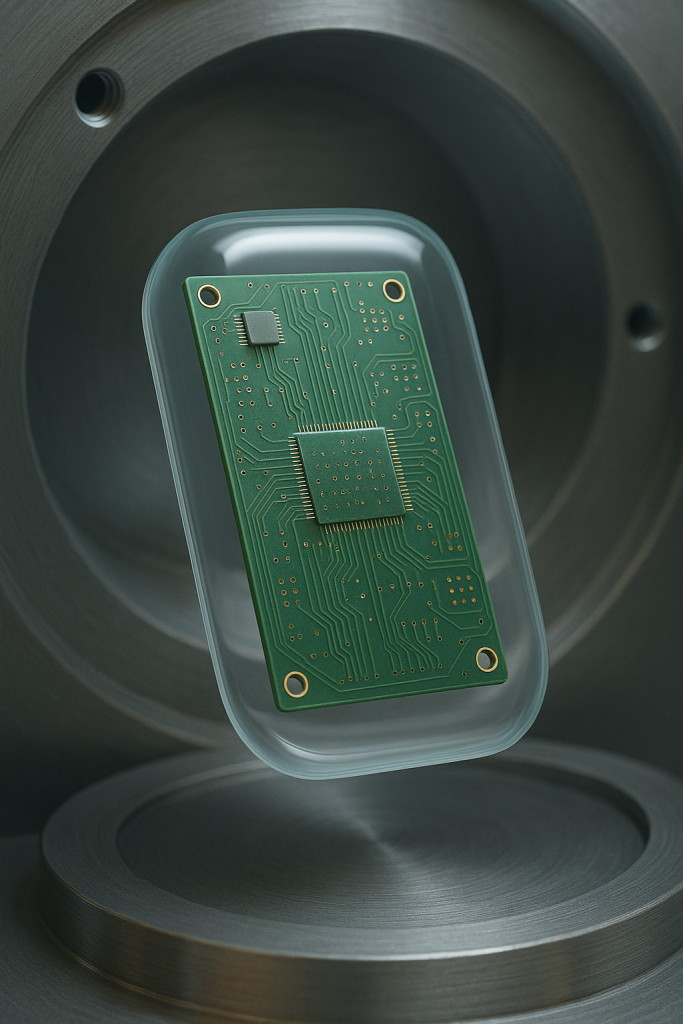
Parylene is applied using a vapour deposition process, producing a pinhole-free, highly uniform film that coats every exposed surface β€” including hidden spaces and complex geometries.

This process helps deliver:

  • Exceptional moisture barrier performance
  • Ultra-thin yet durable protection
  • Strong resistance to chemicals, solvents, and temperature extremes

Because it forms a truly conformal layer, Parylene is often selected where reliability cannot be compromised.

Our Parylene coating services are used where uniform coverage, low thickness, and high reliability are critical.


Where Traditional Conformal Coatings Excel

Traditional conformal coatings are typically applied by brushing, spraying, or dipping. They remain highly effective in many environments and offer practical advantages such as:

  • Faster application and curing (process dependent)
  • Lower cost compared to Parylene (in many cases)
  • Easier rework and repair during production

For applications where cost sensitivity or rapid turnaround is key, traditional coatings can be the most commercially sensible option.

For applications where cost, speed, or rework access are priorities, our liquid conformal coating solutions remain a highly effective option.


Making the Right Choice

The right choice depends on your environment and performance requirements. If your device must endure harsh conditions or complex 3D coverage requirements, Parylene coating can provide unmatched protection. For less demanding applications, traditional conformal coatings may strike the best balance between performance, reworkability, and budget.

The right choice depends on environment, geometry, and compliance requirements, which is why many manufacturers engage our coating services for application-specific guidance and discuss the options.


SCH Services Ltd: Your Coating Partner

At SCH Services Ltd, we provide both Parylene and liquid conformal coating solutions β€” helping you select the right option for your project. Whether you need high-performance protection or cost-effective coverage, our expertise ensures your product is protected for the long term.

Learn more: Parylene coating services

Why Solids Content Matters When Costing Conformal Coating Application


The solids content of a conformal coating represents the proportion of material that remains on the printed circuit board once solvents have evaporated. In simple terms, solids content determines how much usable coating you actually obtain from each litre of material.

The higher the solids content, the more circuit boards can be coated from the same volume β€” directly impacting material efficiency and cost.

High Solids Means Real Coverage

When selecting a conformal coating, it is tempting to focus solely on the price per litre. However, this can be misleading. What truly matters is the final solids content at application viscosity, not the as-supplied specification on the datasheet.

In many cases, a large proportion of the purchased material is solvent that will evaporate during application, contributing nothing to protection.

To understand how solids content fits into overall coating selection and process design, explore our conformal coating processes hub.

Be Careful When Comparing Coating Materials

Conformal coatings from different manufacturers can vary significantly in both solids content and viscosity. These differences can lead to substantial hidden cost variations, even when products appear similar on paper.

A meaningful comparison must always consider the true solids content of the coating as applied in production, once diluted to the correct working viscosity.

A Typical Industry Example

Consider a common scenario seen across the conformal coating industry:

  • Material X is supplied at 35% solids with a viscosity of approximately 190 cps.
  • To achieve correct spray application, the coating must be reduced to around 24 cps.
  • This reduction requires approximately 50% dilution with solvent.

After dilution:

  • The coating now contains only 17.5% solids.
  • More than 80% of the applied material evaporates during application.

In practical terms, less than one-fifth of the purchased material contributes to actual PCB protection.

Not All Coatings Deliver the Same Value

It is incorrect to assume all conformal coatings perform β€” or cost β€” the same in real-world use.

For example, SCH supplies a UL-approved acrylic conformal coating that is 44% solids at 24 cps, supplied ready to spray without dilution.

When compared directly:

  • Material X: 17.5% solids at spray viscosity
  • High-solids coating: 44% solids at spray viscosity

The higher-solids material provides more than twice the effective coverage per litre. If both coatings are similarly priced per litre, over twice as much of the lower-solids material would be required to achieve equivalent protection.

The Takeaway

Careful evaluation of solids content at application viscosity can deliver substantial material cost savings, reduced solvent handling, and more predictable coating performance.

When costing conformal coating processes, always look beyond headline datasheet values β€” real efficiency is defined by what remains on the board, not what evaporates away.

Want to Calculate Your True Coating Cost?

If you would like a spreadsheet that allows you to calculate coating coverage and cost per PCB using your own process parameters, SCH can provide this directly.

If you would like a coverage and cost calculation spreadsheet or want to discuss your coating process, contact our technical team.

0
  • Your current order total is £0.00 β€” you must have an order with a minimum of £75.00 to place your order.
0
Your Cart
Your cart is empty
  • Your current order total is £0.00 β€” you must have an order with a minimum of £75.00 to place your order.
Calculate Shipping
  • Your current order total is £0.00 β€” you must have an order with a minimum of £75.00 to place your order.

Conformal Coating UK

Conformal Coating UK
Privacy Overview

This website uses cookies so that we can provide you with the best user experience possible. Cookie information is stored in your browser and performs functions such as recognising you when you return to our website and helping our team to understand which sections of the website you find most interesting and useful.