Conformal Coating Removal Methods (Wet & Micro-abrasion)
Wet chemical stripping and precision micro-abrasion for PCB rework & repair
← Back to the Removal & Rework Hub
Conformal coating removal methods are essential for PCB rework, repair, and selective component replacement. The two most common techniques are wet chemical stripping and micro-abrasion, each offering distinct benefits and limitations. Choosing the right approach ensures coatings are removed safely without damaging delicate electronics.
Wet Chemical Stripping
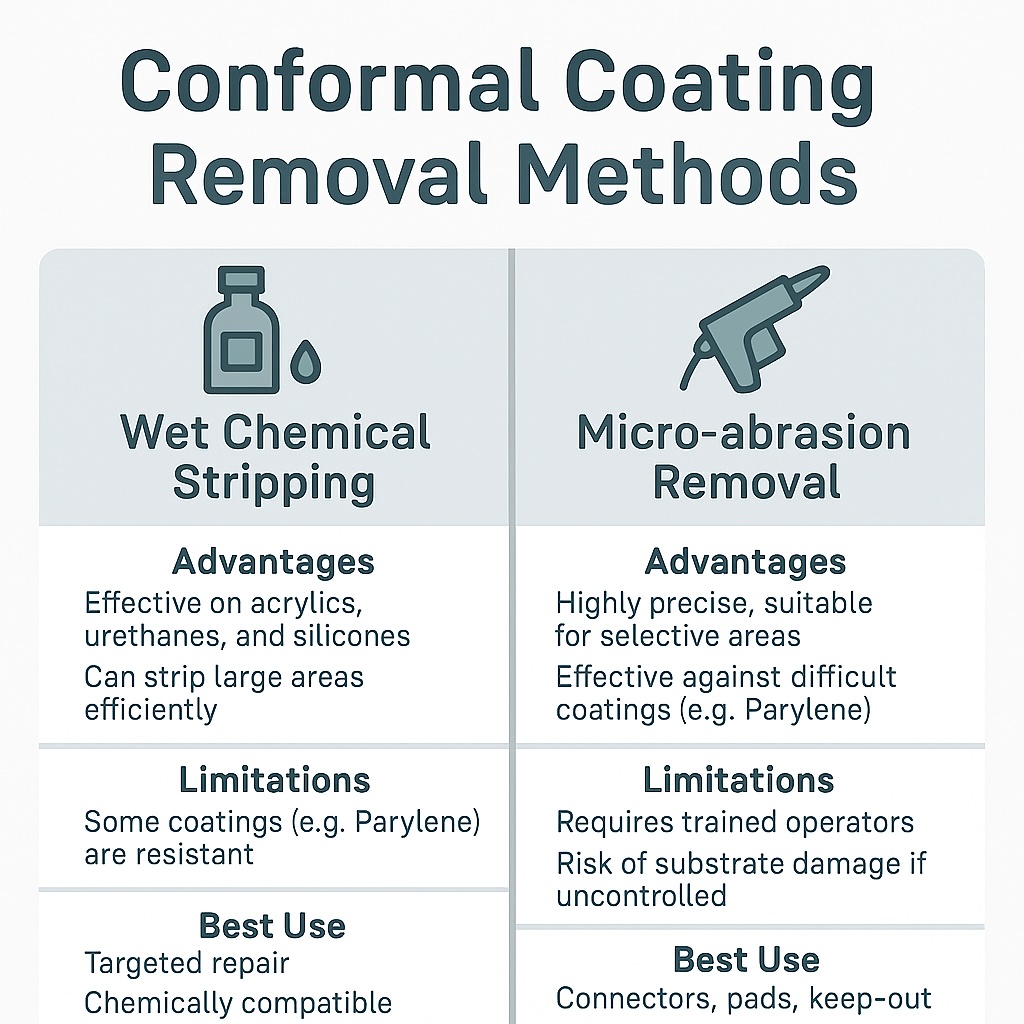
Wet removal uses solvents or stripping agents designed to dissolve or swell the conformal coating for easy removal.
- Advantages: Effective on acrylics, urethanes, and silicones. Can strip large areas efficiently.
- Limitations: Some coatings (e.g., Parylene, fluoropolymers) are resistant. Risk of solvent attacking substrates, components, or adhesives.
- Best Use: Targeted repair or when coatings are chemically compatible with safe removal solvents.
See our conformal coating wet stripping system for further information.
Micro-abrasion Removal
Micro-abrasion uses a controlled abrasive stream to physically remove the coating from PCB surfaces.
- Advantages: Highly precise, suitable for selective areas, and effective against difficult coatings like Parylene.
- Limitations: Requires trained operators; potential risk of substrate damage if poorly controlled.
- Best Use: Removing coatings from connectors, pads, or defined keep-out zones in rework and repair.
Explore our micro-abrasion systems designed for safe, accurate coating removal.
Choosing the Right Method
The decision between wet and micro-abrasion removal depends on the coating chemistry, component sensitivity, and scope of repair. In many cases, repair teams combine methods—for example, solvent softening followed by precision abrasion—to balance speed and control.
See the IPC Rework Standards for more information.
Summary
Conformal coating removal methods like wet chemical stripping and micro-abrasion give engineers the flexibility to handle diverse PCB repair challenges. By selecting the right method and equipment, you ensure coatings are removed efficiently while maintaining board integrity.
Related Technical Guides
If you are planning controlled coating removal or rework, the following guides expand on method selection, process control, and high-reliability applications:
- Understand process variables, media behaviour and repeatability in the Micro-Abrasive Blasting Process Guide.
- For solvent-resistant coatings and high-precision access windows, see Parylene Removal by Precision Micro-Abrasion.
- If coating type is unknown, reduce damage risk using IPC-7711 Behaviour-Based Coating Identification.
- When scoping rework cost and risk, compare Local vs Full Conformal Coating Removal.
Why Choose SCH Services?
Partnering with SCH means gaining a complete, integrated platform for Conformal Coating, Parylene & ProShieldESD with equipment, materials, and training, backed by decades of expertise.
- ✈️ 25+ Years – trusted worldwide
- 🛠️ End-to-End Support – coating, masking, application, inspection
- 📈 Scalable Solutions – prototypes to high-volume
- 🌍 Global Reach – support in EU, NA, Asia
- ✅ Proven Reliability – consistent quality & service
📞 Call: +44 (0)1226 249019 | ✉ Email: sales@schservices.com | 💬 Contact Us ›